
Accountability
Sri Lankan President declares state-of-emergency amid protests

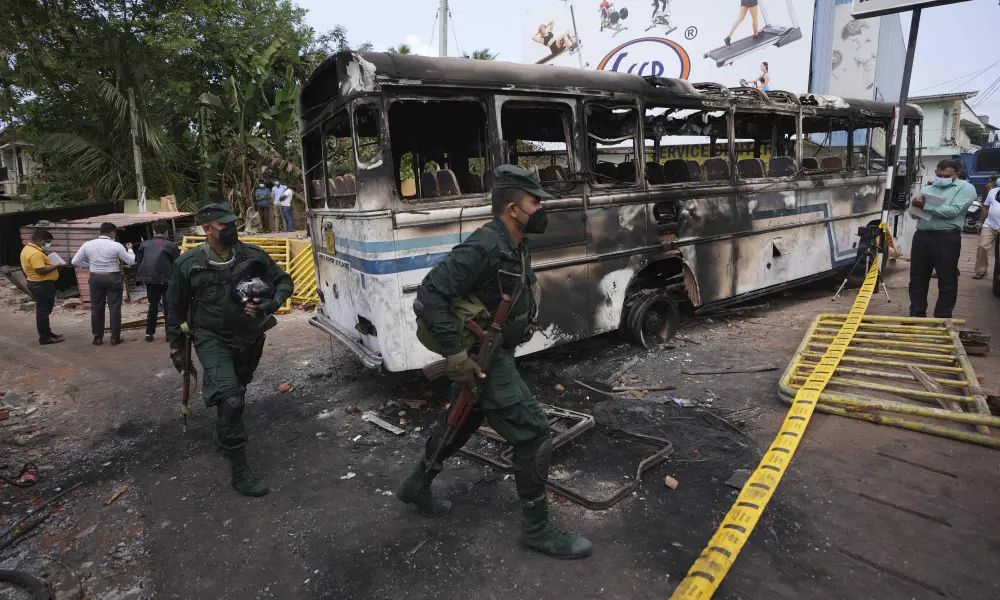
Sri Lanka’s President Gotabaya Rajapaksa declared a state of emergency on Friday, after prolonged protests and a general strike shuttered schools, businesses, and transport services.
A spokesman for President Gotabaya Rajapaksa said he invoked the tough laws to “ensure public order” after shops closed and public transport was halted Friday, bringing the nation of 22 million people to a standstill after weeks of unrest.
Earlier Friday, police used tear gas and water cannon to disperse students attempting to storm the national parliament demanding Rajapaksa resign. The emergency gives sweeping powers to security forces to arrest and detain suspects for long periods without judicial supervision. It also allows the deployment of troops to maintain law and order in addition to police.
“The president used his executive powers to invoke emergency regulations to ensure the maintenance of essential services and public order,” the spokesperson said. He said the laws will go into effect from midnight on Friday.
Rajapaksa had declared an earlier state of emergency on the 1st of April, a day after thousands of protesters attempted to storm his private home in the capital. That emergency was allowed to lapse on the 14th of April. Protests have escalated since then, fuelling Sri Lanka’s worst crisis since independence in 1948.
Protestors blame Rajapaksa and his ruling family for mismanaging the economy. Months of blackouts and acute shortages of food, fuel and pharmaceuticals have caused widespread suffering across the island.
This week Sri Lanka’s Finance Minister Ali Sabry admitted the country’s financial reserves are close to empty. The country has appealed to the International Monetary Fund for emergency financing.

-
 Civilization4 days ago
Stealth, Sensors, and Staying Power: What the F-35 Just Proved—and What Comes Next
-

 Executive4 days ago
Citizen Sleuths Spotlight Red Flags Galore in Government Spending
-

 Civilization3 days ago
Dems Scramble After California Governor’s Debate Implodes
-
 Executive5 days ago
A Consent Decree for Freedom of Speech
-

 Civilization5 days ago
Waste of the Day: Cybersecurity Programmers Have Foreign Ties
-
 Executive3 days ago
America’s $130 Trillion Blind Spot
-
 Civilization2 days ago
Iran Could Reshape the Middle East and the Global Balance of Power
-

 Civilization2 days ago
The conversation women are having
[…] I believe is first because of its massive population already controlled by a small ruling elite. In Sri Lanka, which was food independent, but is now totally dependent because of changes in farming caused by […]