
Executive
Waste of the Day: States Failed to Recover Pandemic Overpayments
Ten State Departments of Labor paid out more than ten billion dollars in improper payments for pandemic relief.


Topline: Ten state-level agencies accidentally overpaid $10.4 billion — and possibly much more — to people filing for unemployment during the COVID-19 pandemic. Most of the overpayments were genuine mistakes, but an estimated $676.3 million was fraud.
Pandemic presents an opportunity for fraud – and plain laxity
Key facts: That’s according to a report from the Department of Labor that was conducted by the consulting group Regis & Associates. It reviewed labor departments in Connecticut, Florida, New Jersey, North Carolina, Pennsylvania, Rhode Island, South Carolina, Texas, Washington and Wisconsin from April 2020 to September 2022. Each state was paying unemployment insurance using federal funds sent through the CARES Act.
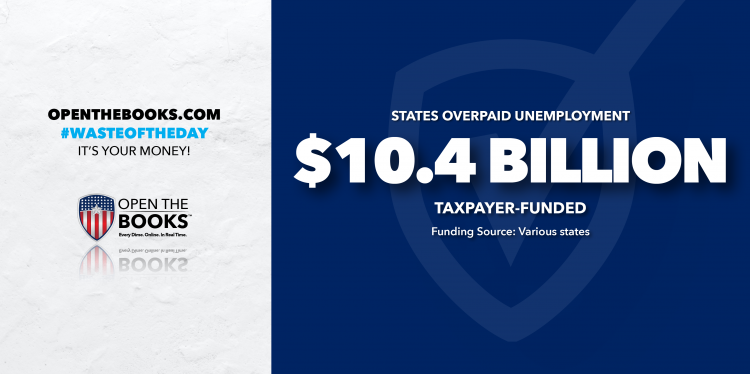
The 10 states officially reported $10.4 billion of overpayments out of $176.1 billion spent on unemployment, but the report says it’s possible the states may have failed to identify some of their own mistakes. A previous audit showed that states were overpaying unemployment claims by 17%. At that rate, the total for the 10 states would be $33.9 billion.
States were required to try and recover overpayments, except “in cases where the claimant was without fault and recovery would have been against equity and good conscience.” A recovery rate of at least 68% was considered acceptable by the federal government, but some of the 10 states had a “far lower” recovery rate. Some unemployment programs recouped just 6% of their overpayments.
The fraud recovery numbers were also concerning. All 50 states combined lost $3.6 billion to fraud and clawed back just $145.3 million of it (4%).
State labor agencies “need to do more to recover improper payments,” the auditors wrote. The agencies “did not consistently perform mandatory and strongly recommended activities to recover overpayments.”
Further than unemployment insurance
Search all federal, state and local government salaries and vendor spending with the AI search bot, Benjamin, at OpenTheBooks.com.
Background: Unemployment insurance was just one way the government handed out money during the pandemic, and other programs were even more questionable. Large accounting and law firms received $1.4 billion in forgiven loans, and the country’s 20 largest nonprofit hospitals received $23 billion in aid while their assets increased by even more.
The COVID Complete Collections Act, introduced by Sen. Joni Ernst, would extend the authorization of the Special Inspector General for Pandemic Recovery and allow the office to continue tracking down fraudulent payments. Ernst previously found that almost 15,000 millionaires managed to collect unemployment checks during the pandemic.
Summary: Even though the pandemic has ended, it’s the government’s responsibility to ensure that all relief money went to the people who were actually entitled to it, and nothing more.
The #WasteOfTheDay is brought to you by the forensic auditors at OpenTheBooks.com
This article was originally published by RealClearInvestigations and made available via RealClearWire.

Jeremy Portnoy, former reporting intern at Open the Books, is now a full-fledged investigative journalist at that organization. With the death of founder Adam Andrzejewki, he has taken over the Waste of the Day column.







-

 Civilization4 days ago
Stealth, Sensors, and Staying Power: What the F-35 Just Proved—and What Comes Next
-
 Executive4 days ago
Citizen Sleuths Spotlight Red Flags Galore in Government Spending
-

 Civilization3 days ago
Dems Scramble After California Governor’s Debate Implodes
-
 Executive5 days ago
A Consent Decree for Freedom of Speech
-

 Civilization5 days ago
Waste of the Day: Cybersecurity Programmers Have Foreign Ties
-
 Executive3 days ago
America’s $130 Trillion Blind Spot
-

 Civilization2 days ago
Iran Could Reshape the Middle East and the Global Balance of Power
-
 Civilization2 days ago
The conversation women are having