
Executive
Scott Kupor: Trump’s Kinder, Gentler Human Resources Director
Scott Kupor takes over the Office of Personnel Management after Elon Musk’s turbulent tenure as head of DOGE, which used OPM’s offices.


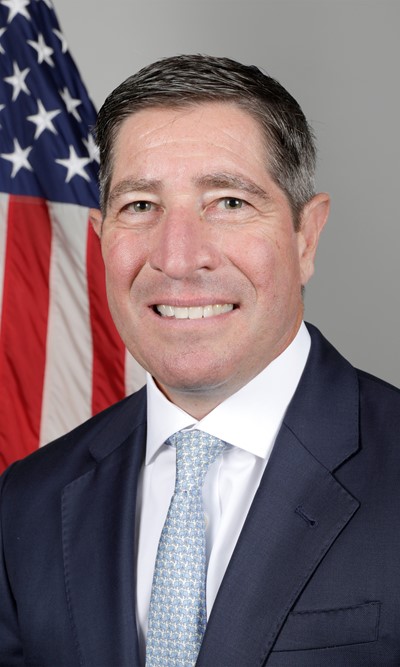
Scott Kupor faced the press for the first time as director of the Office of Personnel and Management inside the same suite of boardrooms where, not long ago, an over-caffeinated and reportedly Adderall-addled team of DOGE staffers tried to cut the federal leviathan down to size.
Kupor promises a different pathway to change
Change is still coming, Kupor promised, but differently now.
He has been on the job for just eight days and has already announced that OPM expects to shed roughly one-third of its workforce by the end of the year – not through mass firings, but through voluntary resignations, early retirements, and employee buyouts.
Kupor promises a more targeted and realistic approach than the one taken by Elon Musk. The richest man in the world was last seen marching through the administrative state with a literal chainsaw in tow.
Efficiency remains the theme, but under President Trump’s kinder, gentler director of human resources, expectations are more measured. While Musk promised at one point to cut $2 trillion by rooting out waste, fraud, and abuse, Kupor said it was “Pollyanna-ish” to suggest that deficits could be eliminated in “one fell stroke.”
“We’re not going to save $2 trillion by just literally zeroing out discretionary spending,” he said when asked about a mammoth promise from Musk that was later revised to $1 trillion.
Not unlike the president, Kupor comes from a long line of business executives without government experience, promising to deliver cold efficiency. During a wide-ranging conversation with reporters inside OPM headquarters, he expressed belief, almost as articles of faith, in both “the idea of fiscal responsibility” and the business school tautology that organizations are made up of people who “will effectively respond to incentives.”
Musk and his confrontational style
This is familiar boilerplate from an administration initially obsessed with waste, fraud, and abuse. Social Security payments allegedly going to the dead, a limestone mine housing retirement paperwork for federal employees, half a million needless credit cards – a steady drumbeat of assertions about government largesse defined the first 100 days of the second Trump administration. But behind the scenes Musk clashed with Cabinet officials, Secretary of State Marco Rubio and Treasury Secretary Scott Bessent among them, over cuts to their federal fiefdoms.
Kupor seems more cognizant of his mandate.
“We’ve got to recognize that we don’t control budgets in other agencies. We don’t control their systems,” he recalled telling his staff upon his arrival last week. “At the end of the day,” the new OPM chief continued, “We will win, our ideas will win, because of the power of persuasion.”
Kupor also takes a more humane approach to confronting a federal workforce that is faceless in the aggregate. “We ought to treat people with the appropriate level of respect and humility,” he said, “and recognize that any time obviously somebody loses their job, they’ve got families and communities and other people who rely on them.”
How Kupor will hand reductions-in-force
OPM expects to cut its workforce from 3,000 full-time employees and 1,200 contractors to a staff of 2,000 salaried workers and 600 contractors by the end of the year. The agency hasn’t gone on a mass firing spree. Nearly 1,000 staffers volunteered for deferred resignations and early retirements, while just 129 were fired, according to an agency readout.
Though a political novice, the new human resources officer also seems quite confident in his convictions. He says he doesn’t want another government job after this one. He already made his money in Silicon Valley as a partner at the venture capital firm Andreessen Horowitz. Hence what he described to reporters as “a sense of calmness.”
“If I get run out of town because people don’t like what I’m doing,” Kupor insisted, “I’m okay with that.”
For now, that seems unlikely. His plan for an agency reboot includes three broad planks: Turning OPM into “a leader in operational efficiency and government services,” using incentives to create “a high-performance culture,” and preparing a government workforce for first contact with artificial intelligence.
An HR department in an unusual spotlight
During normal times the human resources department often goes unnoticed. That ended when Musk turned OPM into the ad hoc nerve center for DOGE, and it will remain in the spotlight as Trump continues to remake the federal bureaucracy in his own image. A blockbuster Supreme Court ruling earlier this month cleared the way for the White House to move forward with sweeping reductions in force and plans to reorganize government agencies. Kupor will have a hand in all of it.
What Kupor told reporters he won’t do is Monday-morning-quarterback the decisions made by DOGE. “I’m certainly not here to do that,” he said before reporting that, even though his former VC firm was an investor in SpaceX and xAI, “I have zero personal relationship with Elon Musk. I’ve talked to Elon Musk once on the phone in my life.”
Stressing that the DOGE buzzsaw predated his time in government, Kupor was broadly complimentary of how that campaign provided “a catalyst” within the sprawling bureaucracy for returning efficiency. And while Kupor admitted that the now famous “five things” emails that DOGE required government employees to send and that OPM managed was “not efficient,” he credited it for setting the appropriate tone.
He likened those early efforts to how legendary Intel CEO Andy Grove encouraged the company in the 1990s to reuse paper clips – not because it would balance the books, but to communicate urgency and “turn around a culture.”
Summary
Kupor plans to introduce AI as a limited efficiency accelerator to streamline certain agency responsibilities. He pointed to customer service for federal employees as one area potentially ripe for reform, as well as using technology to summarize the public comment section required by law for all new regulations, a process that can elicit tens of thousands of responses.
Another area singled out by the new HR manager: how the overwhelming majority of federal employees receive glowing performance reviews despite public dissatisfaction with the government. An incentive structure properly ordered, he said, could fix that.
The mantra he intends to hardwire at the agency? “OPM equals ‘other people’s money.’”
This article was originally published by RealClearPolitics and made available via RealClearWire.

Philip Wegmann is White House Correspondent for Real Clear Politics. He previously wrote for The Washington Examiner and has done investigative reporting on congressional corruption and institutional malfeasance.


-

 Civilization5 days ago
Stealth, Sensors, and Staying Power: What the F-35 Just Proved—and What Comes Next
-

 Executive5 days ago
Citizen Sleuths Spotlight Red Flags Galore in Government Spending
-

 Civilization4 days ago
Dems Scramble After California Governor’s Debate Implodes
-

 Executive4 days ago
America’s $130 Trillion Blind Spot
-

 Civilization3 days ago
Iran Could Reshape the Middle East and the Global Balance of Power
-

 Civilization2 days ago
The conversation women are having
-

 Executive2 days ago
Waste of the Day: NYC Thermostat Repairers Made $325K, Thanks to OT
-

 Executive3 days ago
The Assisted Suicide of Lofty State and Local Taxes