
Civilization
ODNI 2.0: With Trump’s ‘Greenlight’ Gabbard Launches Historic Intel Overhaul
Tulsi Gabbard, Director of National Intelligence, is overhauling her entire agency to address inefficiency and abuse of power.


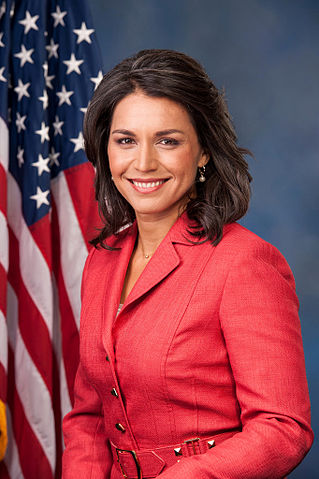
Tulsi Gabbard told President Trump before her nomination that she had come to peace with serving as last director of national intelligence if eliminating the post was necessary to permanently reform the sprawling intelligence community.
Tulsi Gabbard promises ODNI 2.0
Now six months after her confirmation and with the president’s blessing, Gabbard will launch a campaign to dramatically overhaul the entire agency by returning it to its original purpose and thereby preserving its future.
According to senior officials who assisted in the review, the plan includes cutting the workforce by 40%, eliminating redundant mission centers whose work is already being fulfilled elsewhere in the intelligence community, and doubling down on the core function of the agency: intelligence integration. As the director of national intelligence, Gabbard, and the agency she leads, create the President’s Daily Brief, an intelligence summary assembled each morning for the chief executive.
Promising to usher in “a new era,” Gabbard calls the transformation “ODNI 2.0.” Some personnel, whose positions have been deemed unnecessary, will receive pink slips as soon as Wednesday afternoon. The payroll will shrink to around 1,300, down from more than 2,000 employees when Gabbard took over. Annual savings of $700 million are expected.
Overseeing all 18 of the U.S. intelligence agencies, the office was created in the wake of 9/11 to serve as a sort of orchestra conductor for the intelligence community, integrating operations and mediating feuds between shadowy three-letter agencies. Intended to be a small coordinating office, intelligence experts have concluded that the ODNI became sprawling and bureaucratic in the decades since.
Hence the Gabbard overhaul.
A bloated, inefficient, and abusive agency
“Over the last 20 years, ODNI has become bloated and inefficient, and the intelligence community is rife with abuse of power, unauthorized leaks of classified intelligence, and politicized weaponization of intelligence,” Gabbard said in a statement calling for “serious changes” in order to reorient the agency she now leads “to fulfill its responsibility to the American people and the US Constitution.”
None of the developments should be surprising to those who took the president at his word. Trump returned to office promising to purge a deep state which Republicans believe was weaponized against them. And Gabbard vowed to deliver.
She had already cut the ODNI staff by more than 25% before the summer, slashing so-called diversity, equity, and inclusion programming in particular. Compared to the root-and-branch cuts she now plans, that was low-hanging fruit.
Gabbard will downsize, or entirely eliminate, no less than seven centers within the agency. According to senior intelligence officials, she presented her plans to Trump two weeks ago and received his “green light.” Vice President JD Vance and Secretary of State Marco Rubio were also read into the plans.
Eliminating some centers; redirecting others
Some centers slated for elimination include the Strategic Futures Group, an operation meant to serve as the forecasting arm of the agency, and the External Research Council, an advisory body of outside advisors created during the previous administration.
Other centers will have their core functions refocused elsewhere. This includes the Foreign Malign Influence Center, once charged with monitoring foreign efforts to meddle in U.S. elections, but which Republicans accuse of colluding with social media companies to suppress free speech. It will be folded into the ODNI Mission Integration and the National Intelligence Council.
Also deemed redundant: the National Counterproliferation and Biosecurity Center. Senior ODNI officials say the center is pursuing a mission that is being fulfilled by the National Intelligence Council. The Cyber Threat Intelligence Integration Center will also meet a similar fate.
Officials say that the review was so comprehensive that no part of the ODNI was left unexamined, including the often-overlooked National Intelligence University. Under Gabbard’s leadership and in coordination with Defense Secretary Pete Hegseth, the standalone university will be transferred under the umbrella of the National Defense University.
Officials also stressed that the overhaul is aimed at eliminating wasteful programs and positions, not targeting specific personnel, though Gabbard recently stripped the security clearances of 37 intelligence officials, many of them already retired and some of them with ties to Joe Biden.
Gabbard takes over a work in progress
Gabbard arrived to take over an ongoing experiment. The agency she leads is comparatively new. It was established in 2004 after a sprawling intelligence community failed to prevent the Sept. 11, 2001, terror attacks. Petty rivalries between three-letter agencies, particularly between the CIA and FBI, had hampered intelligence sharing.
“There was some resentment throughout the intelligence community but more broadly, throughout Washington, D.C., that the CIA had blown it on WMDs in Iraq and had blown it on 9/11 to a large degree, and therefore, didn’t warrant being the great leader of the intelligence community,” said Loch Johnson, professor at the University of Georgia whom the New York Times once dubbed “the dean of American Intelligence Scholars.”
A director was needed to oversee and integrate all the intelligence agencies, Johnson said, recalling the debate at that time. “And that made some sense,” he told RCP, “except for one problem: The office was never given the tools that it needed to get the integration job done.” Without the authority to hire and fire or oversee budgets, he concluded, the agency often struggles to wrangle a vast intelligence apparatus.
A necessary corrective
With Trump’s stamp of approval, the new Gabbard reforms aim to fix that problem. Officials say the director sought input from stakeholders far and wide: longtime staff who had worked at DNI for two decades and lawmakers on Capitol Hill who oversee the agency.
This includes Arkansas Sen. Tom Cotton, the hawkish chairman of the Senate Intelligence Committee, who has introduced legislation to slash the ODNI to just 650 employees. One intelligence official previously complained to RealClearPolitics that the plan would “just give the CIA more power.”
The new overhaul will go forward as that legislation remains pending. Whether it diminishes petty rivalries among the three shadowy letter agencies remains to be seen. When one official briefing reporters said that the CIA may even start referring to the ODNI as “headquarters,” another replied, “That is never going to happen.”
This article was originally published by RealClearPolitics and made available via RealClearWire.

Philip Wegmann is White House Correspondent for Real Clear Politics. He previously wrote for The Washington Examiner and has done investigative reporting on congressional corruption and institutional malfeasance.









-
 Civilization5 days ago
How Prepared Is the Defense Industrial Base for Iranian Cyber Attacks?
-

 Civilization3 days ago
Stealth, Sensors, and Staying Power: What the F-35 Just Proved—and What Comes Next
-

 Executive3 days ago
Citizen Sleuths Spotlight Red Flags Galore in Government Spending
-

 Civilization5 days ago
No Retreat, No Surrender: Why America Must Prevail in Iran
-

 Guest Columns4 days ago
Oklahoma’s Digital Future Will Be Built on Affordable, Reliable, Clean Energy Security
-

 Executive4 days ago
Waste of the Day: Throwback Thursday – Helping Beverly Hills’ Low-Income Community
-

 Civilization2 days ago
Dems Scramble After California Governor’s Debate Implodes
-

 Executive3 days ago
A Consent Decree for Freedom of Speech