
Civilization
Mail-In Ballots Need To Go
President Trump is correct to call for the elimination of automatic, no-reason-given mail-in voting in the United States.


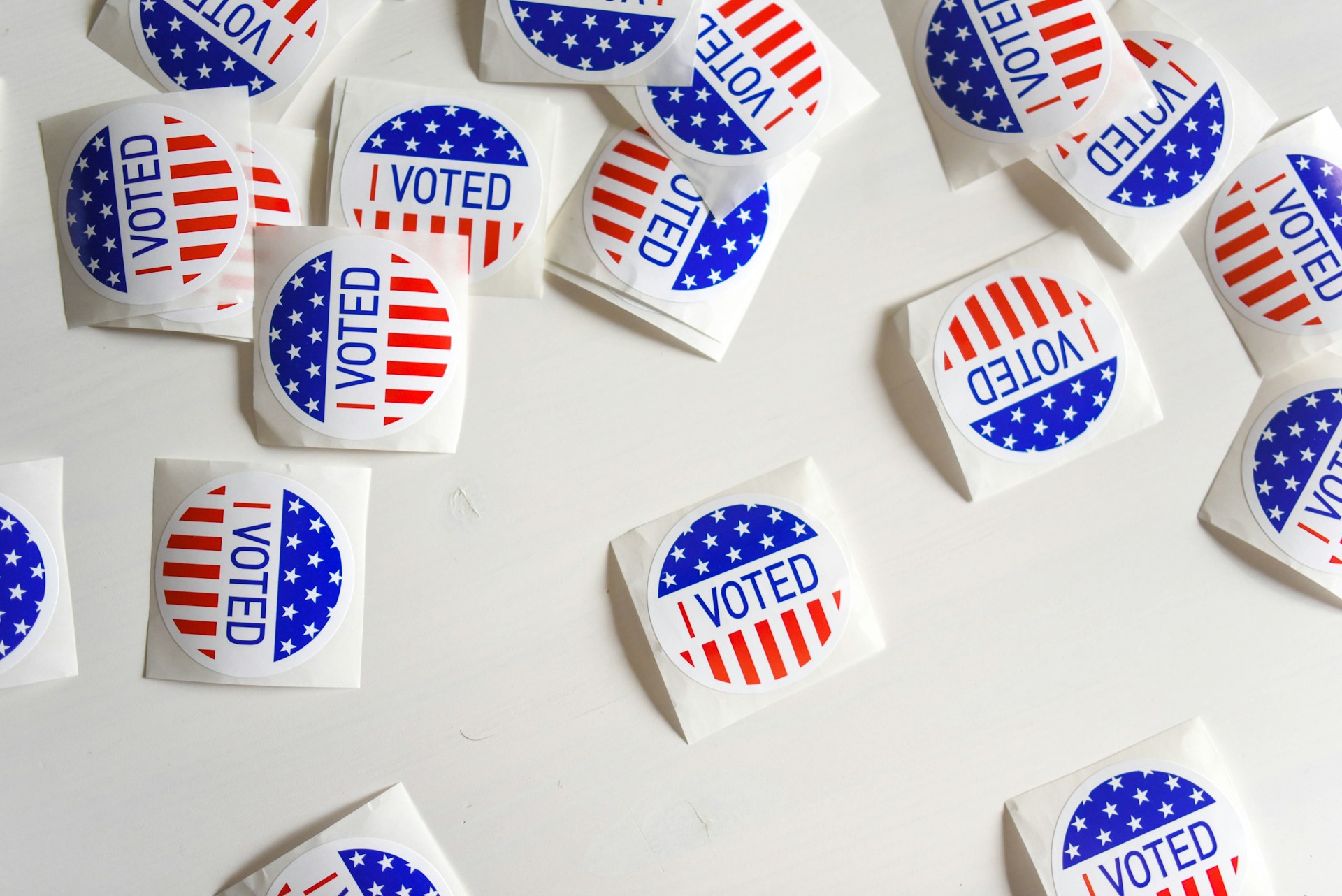
“I am going to lead a movement to get rid of MAIL-IN BALLOTS,” President Trump declared Monday in a Truth Social post.
Trump declares war on mail-in ballots
Later that day, he promised an executive order
to end mail-in ballots because they are corrupt. You know we are the only country in the world, I believe, I may be wrong, just about, the only country in the world that uses them because of what happened, massive fraud all over the place.
Trump has remained consistent; even before the 2020 election, he warned: “There is a lot of dishonesty going on with mail-in voting.”
Trump doesn’t need to hedge about voting rules abroad. Poland was the one other country that considered conducting its 2020 presidential election by mail during the pandemic, but even it abandoned the attempt. Countries don’t use the kind of mass mail-in voting now used in eight states – where states automatically send ballots to all registered voters, who then mail them back. That system differs from absentee ballots, which require a request and traditionally demanded a reason, such as being out of town on Election Day.
The United States stands out not only for mail-in ballots but also for its unusually broad use of absentee ballots. Of the 47 European countries, 35 – including France, Italy, the Netherlands, Norway, and Sweden – ban absentee voting for citizens living inside the country. Ten others – including England, Ireland, Denmark, Portugal, and Spain – allow it only if voters pick up their ballots in person and present photo ID. Six of those restrict absentee ballots to the military or hospitalized voters, and they require verification from the military or hospital itself. The U.S., by contrast, lets anyone claim they will be out of town and receive a ballot by mail.
England and France abandoned mail-in ballots
England once followed rules similar to America’s. But in 2004, officials uncovered a massive fraud in Birmingham city council races. Six winning Labour candidates had acquired about 40,000 fraudulent absentee votes, mainly from Muslim neighborhoods. England responded by ending the mailing of absentee ballots and requiring in-person pickup with photo ID.
France once had similarly loose rules. But in 1975, authorities exposed large-scale fraud on the island of Corsica, where dead people “voted” in the hundreds of thousands and widespread vote-buying flourished. France responded by banning absentee voting altogether.1
Concerns over absentee ballots used to unite both Democrats and Republicans. “Absentee ballots are the largest source of potential voter fraud.” That warning doesn’t come from Trump, but from the bipartisan 2005 Commission on Federal Election Reform, led by Democratic President Jimmy Carter and Republican Secretary of State James Baker III.
Voters across the spectrum still share those worries. A Rasmussen poll at the end of last year found 59% of likely voters believe mail-in voting makes cheating easier. Majorities of black, Hispanic, and white voters agreed, along with both young and old. Only Democrats, liberals, graduate-school alumni, and those earning more than $200,000 disagreed. Earlier surveys reached similar results.
Even the New York Times once raised alarms. In 2012, the paper warned that the increased use of absentee ballots “will probably result in more uncounted votes, and it increases the potential for fraud.” But these days, that same newspaper insists voter-fraud claims for absentee ballots are “baseless” and “without evidence.”
The instructive history of voting in America
American history reinforces these concerns. Between 1888 and 1950, widespread vote-buying led states to adopt the secret ballot. Once voters could no longer prove to buyers how they had voted, the payments stopped. As one state after another started using secret ballots, turnout immediately fell by 8% to 12%, according to my research with the late Larry Kenny at the University of Florida – evidence of just how rampant the practice had been.
The Carter-Baker commission also highlighted how absentee voting enables coercion: “Citizens who vote at home, at nursing homes, at the workplace, or in church are more susceptible to pressure, overt and subtle, or to intimidation. Vote-buying schemes are far more difficult to detect when citizens vote by mail.” The problem is that both the buyer and seller have an incentive to hide the purchase.
But recent cases confirm the risks. Earlier this year, prosecutors indicted six Texans for harvesting ballots and buying votes by collecting absentee ballots. Absentee voting lets sellers prove how they voted, and ballot harvesting lets buyers ensure the votes count – guaranteeing they get what they paid for. Just this month, investigators in Hamtramck, Michigan, opened a fraud case after surveillance video showed a city council candidate’s aide stuffing three stacks of ballots into a drop box. The candidate had won by only a few dozen votes.
No country today is as lax as America is about voting
Mail-in voting reopens the door to the fraud and vote-buying America worked so hard to eliminate a century ago. That’s why countries such as Norway and Mexico prohibit absentee ballots for citizens voting domestically. Americans deserve the same safeguard – a voting system they can trust.
Photo by Element5 Digital on Unsplash
This article was originally published by RealClearPolitics and made available via RealClearWire.
Editor’s Note
1 Technically, the French still permit absentee voting – by proxy. They also require voter and proxy to pre-register with the local police or the clerk of the court. The clerk will even send an officer to a bedridden voter’s bedside to collect the required affidavits.

Dr. John R. Lott, Jr. is an economist and a world-recognized expert on guns and crime. During the Trump administration, he served as the Senior Advisor for Research and Statistics in the Office of Justice Programs and then the Office of Legal Policy in the U.S. Department of Justice. Lott has held research or teaching positions at various academic institutions including the University of Chicago, Yale University, the Wharton School of the University of Pennsylvania, Stanford University, UCLA, and Rice University, and was the chief economist at the United States Sentencing Commission during 1988-1989. He holds a Ph.D. in economics from UCLA.
Nobel laureate Milton Friedman noted: “John Lott has few equals as a perceptive analyst of controversial public policy issues.”
Lott is a prolific author for both academic and popular publications. He has published over 100 articles in peer-reviewed academic journals and written ten books, including “More Guns, Less Crime,” “The Bias Against Guns,” and “Freedomnomics.” His most recent books are “Dumbing Down the Courts: How politics keeps the smartest judges off the bench” and “Gun Control Myths.”
He has been one of the most productive and cited economists in the world (from 1969 to 2000 he ranked 26th worldwide in terms of quality-adjusted total academic journal output, 4th in terms of total research output, and 86th in terms of citations). Among economics, business, and law professors his research is currently the 15th most downloaded in the world. He is also a frequent writer of op-eds.







-

 Civilization5 days ago
How Prepared Is the Defense Industrial Base for Iranian Cyber Attacks?
-

 Civilization3 days ago
Stealth, Sensors, and Staying Power: What the F-35 Just Proved—and What Comes Next
-

 Executive3 days ago
Citizen Sleuths Spotlight Red Flags Galore in Government Spending
-

 Civilization5 days ago
No Retreat, No Surrender: Why America Must Prevail in Iran
-

 Guest Columns4 days ago
Oklahoma’s Digital Future Will Be Built on Affordable, Reliable, Clean Energy Security
-

 Executive4 days ago
Waste of the Day: Throwback Thursday – Helping Beverly Hills’ Low-Income Community
-

 Civilization2 days ago
Dems Scramble After California Governor’s Debate Implodes
-
 Executive3 days ago
A Consent Decree for Freedom of Speech