
Executive
Waste of the Day: Throwback Thursday: Pakistan’s Pump Failure
In 2011, USAID spent millions of dollars buying energy-efficient irrigation pumps for farmers in Pakistan, farmers who didn’t even want them.



Topline: In 2011, the U.S. Agency for International Development completed a wasteful project by spending $12 million on energy-efficient irrigation pumps in Pakistan. The program bought far fewer pumps than planned without a reduction in the total cost, and the farmers receiving the new technology didn’t even want it.
Pakistan farmers got pumps they didn’t want
That’s according to the “Wastebook” reporting published by the late U.S. Senator Dr. Tom Coburn. For years, these reports shined a white-hot spotlight on federal frauds and taxpayer abuses.
Coburn, the legendary U.S. Senator from Oklahoma, earned the nickname “Dr. No” by stopping thousands of pork-barrel projects using the Senate rules. Projects that he couldn’t stop, Coburn included in his oversight reports.
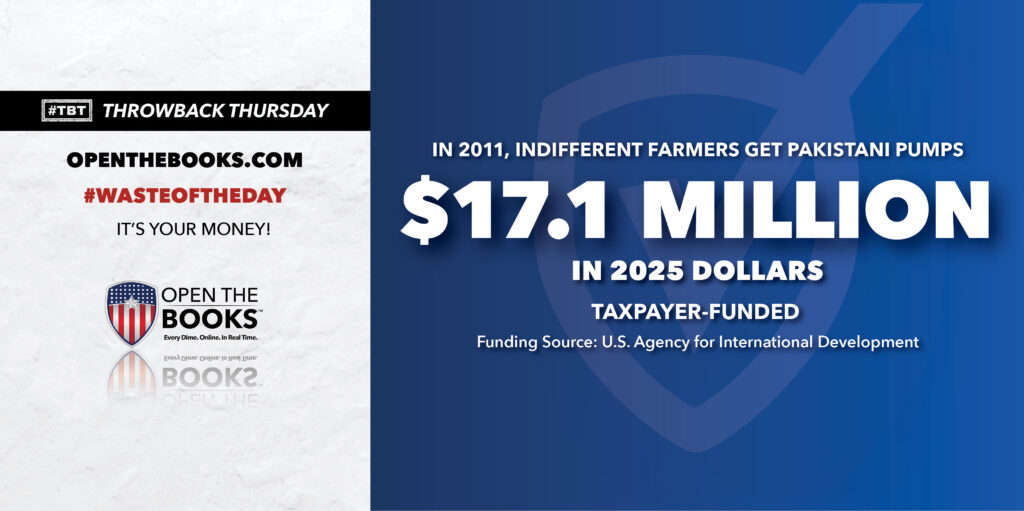
Coburn’s Wastebook 2011 included 100 examples of outrageous spending worth nearly $7 billion, including Pakistan’s not-so-efficient energy upgrades — which would be worth $17.1 million today.
Key facts: USAID first took on the issue of Pakistani power outages in 2009 after the country experienced daily outages ranging from four to 16 hours. The original plan was to help industries develop plans on how to use less energy, but by 2010 the agency had spent $2 million and made only “modest progress,” according to an inspector general report from the time.
To speed up the process, USAID agreed to subsidize half the cost for Pakistani farmers to buy 11,000 modern, energy-efficient irrigation pumps. U.S. taxpayers were expected to spend $1,400 per pump.
Questionable electricity savings, higher costs
Severe flooding and unexpected electrical costs meant USAID was only able to replace 1,500 pumps at a price of $8,500 per pump. USAID also experienced a “difference of opinion” with the farmers. Many of them thought their old pumps worked just fine, and if they were going to be replaced, they would have rather bought Chinese pumps that were available at a lower price.
The program only reduced Pakistan’s overall energy consumption by seven megawatts, not the original goal of 45 megawatts.
Search all federal, state and local salaries and vendor spending with the world’s largest government spending database at OpenTheBooks.com.
Summary: Not every foreign aid program is wasteful, but USAID should have had more concerns about buying equipment for farmers that didn’t even want it.
The #WasteOfTheDay is brought to you by the forensic auditors at OpenTheBooks.com.
About the image
Photo by Saj Shafique on Unsplash
This article was originally published by RealClearInvestigations and made available via RealClearWire.

Jeremy Portnoy, former reporting intern at Open the Books, is now a full-fledged investigative journalist at that organization. With the death of founder Adam Andrzejewki, he has taken over the Waste of the Day column.






-

 Civilization3 days ago
Stealth, Sensors, and Staying Power: What the F-35 Just Proved—and What Comes Next
-

 Executive3 days ago
Citizen Sleuths Spotlight Red Flags Galore in Government Spending
-

 Guest Columns4 days ago
Oklahoma’s Digital Future Will Be Built on Affordable, Reliable, Clean Energy Security
-

 Civilization2 days ago
Dems Scramble After California Governor’s Debate Implodes
-

 Executive5 days ago
Waste of the Day: Throwback Thursday – Helping Beverly Hills’ Low-Income Community
-

 Civilization4 days ago
Waste of the Day: Cybersecurity Programmers Have Foreign Ties
-

 Executive4 days ago
A Consent Decree for Freedom of Speech
-

 Executive2 days ago
America’s $130 Trillion Blind Spot