
Civilization
What the National Academies Report Left Out About Greenhouse Gases
The joint report of the National Academies of Science, Engineering and Medicine betrays a bias toward climate alarmism.

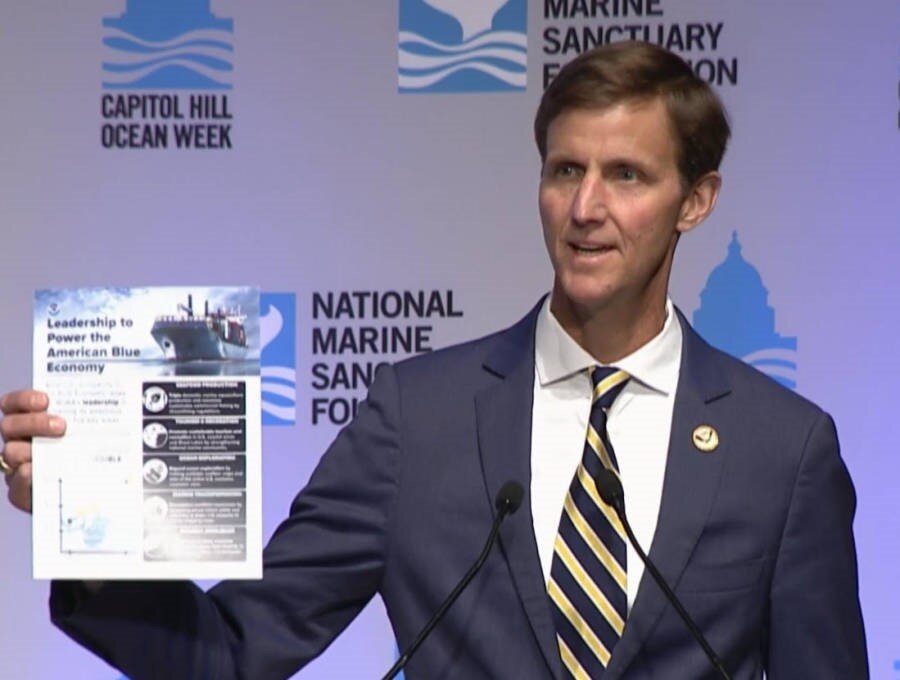

Prior to last week’s release of the report on the effects of greenhouse gases (GHGs) on U.S. climate, health, and welfare by the National Academies of Sciences, Engineering and Medicine, I was asked to review it. I gladly agreed, as I have frequently called for objectivity in research related to climate change, especially regarding its impact on national security.
Some of my comments were incorporated, and others were not. But because the product only put in the front matter the brief disclaimer that reviewers like me were not asked to endorse the document, some media reports are implying that we did. So, I offer the following to set the record straight.
The National Academies come a cropper
Overall, I was disappointed. As a national authority on science, the National Academies was in a perfect position to demonstrate the Trump administration’s new gold standard science tenet of transparency. However, after combing through the report many times, it is impossible for me not to discern a consistent bias towards climate alarmism throughout the document – not only in what it emphasizes, but also in what it left out.
One example is its treatment of wildfires, which are mentioned nearly 70 times. Wildfires are introduced with a statement about their increasing occurrence in the Western U.S., but the report is careful to avoid stating that their frequency across the country has not increased in over four decades. That is important information to paint a more complete picture of the effects of GHG-induced climate change.
Then there is the section on observations of severe storms. While acknowledging that no trends exist for the frequency of landfalling hurricanes and the average number of tornadoes each year, the report proceeds to identify aspects of those events that could indicate future increasing threats, such as more tornado outbreaks in the Fall, or an increase in storms to stall along the North American coast, bringing more heavy rainfall. Here and in every section of the report, the content is clearly skewed to send the message that the impact of GHGs is unilaterally harmful.
Unwarranted apocalyptic alarmism
Take the section on future GHG emissions leading to abrupt climate tipping points, where an example is given of the collapse of the Atlantic Meridianal Overturning Circulation (AMOC). First off, only the most extreme emission scenarios project such a shutdown to occur, and it is all but certain that these GHG levels will not be reached by the end of the century, if ever. Secondly, evidence for the contrary from NOAA’s Atlantic Oceanographic and Meteorological Laboratory should have been cited to provide a greater understanding of the low confidence level of such an assessment.
The chapter on human health does the same by citing numerous potential health risks resulting from future GHG-induced warming, but it’s difficult to square that against the most recent IPCC report, which stated, “Heat-attributable mortality fractions have declined over time in most countries owing to general improvements in health care systems, increasing prevalence of residential air conditioning, and behavioral changes. These factors, which determine the susceptibility of the population to heat, have predominated over the influence of temperature change.”
Even the IPCC does not sound some of these alarms
Similarly, the section on economic impacts cites “a growing body of more robust literature on economic harms” resulting from climate change. It would be helpful, however, if the authors explained the apparent disconnect with the IPCC report which stated that “For most economic sectors, the impact of climate change will be small relative to the impacts of other drivers. Changes in population, age, income, technology, relative prices, lifestyle, regulation, governance, and many other aspects of socioeconomic development will have an impact on the supply and demand of economic goods and services that is large relative to the impact of climate change.”
The most glaring gap in the report is the elephant in the room – namely, how much are the impacts of GHGs on climate outweighed by the benefits of abundant and affordable energy made possible by fossil fuels in areas such as agriculture, artificial intelligence, transportation, trade, space, healthcare, and national security?
In other words, the report excluded the fact that the private benefits of GHGs like CO2 far exceed the social costs. But when we consider that the stated purpose of the National Academies’ report was to respond to the Trump Administration’s intent to rescind the Obama Administration’s 2009 finding that GHGs increase the risk of harms to human health and welfare from changes to the climate, one can only conclude that the report’s authors drafted the document with a predetermined position in mind, and they only included those references which supported their position.
The National Academies betray their core values
This, in my opinion, runs counter to the National Academies’ core values of objectivity and rigor.
I am not disputing that GHG warming has resulted in significant consequences. Sea ice decline in the Arctic and glacial mass loss in the Northern Hemisphere, for example, are well covered in the report. But I believe the National Academies do a disservice by not presenting a more balanced and holistic assessment of GHGs and climate change, which unfortunately will only reinforce the divisions that exist today in discussions and debates on the topic.
This article was originally published by RealClearScience and made available via RealClearWire.
Rear Admiral Tim Gallaudet, U.S. Navy ret., is the CEO of Ocean STL Consulting, LLC, former acting and deputy administrator at the National Oceanic and Atmospheric Administration (NOAA), as well as former acting undersecretary and assistant secretary of Commerce. Prior to NOAA, he served as an oceanographer in the U.S. Navy, completing his career as the commander of the Navy Meteorology and Oceanography Command and founding director of the Navy’s Task Force Ocean.












-

 Civilization3 days ago
Stealth, Sensors, and Staying Power: What the F-35 Just Proved—and What Comes Next
-

 Executive3 days ago
Citizen Sleuths Spotlight Red Flags Galore in Government Spending
-

 Guest Columns4 days ago
Oklahoma’s Digital Future Will Be Built on Affordable, Reliable, Clean Energy Security
-

 Executive5 days ago
Waste of the Day: Throwback Thursday – Helping Beverly Hills’ Low-Income Community
-

 Civilization2 days ago
Dems Scramble After California Governor’s Debate Implodes
-

 Civilization3 days ago
Waste of the Day: Cybersecurity Programmers Have Foreign Ties
-

 Executive3 days ago
A Consent Decree for Freedom of Speech
-

 Executive2 days ago
America’s $130 Trillion Blind Spot