
Education
William Inboden Charts Path to Reforming Higher Education
Colleges and universities badly need reform, and that reform will require outsiders. William Inboden, new provost at UT Austin, is one such.

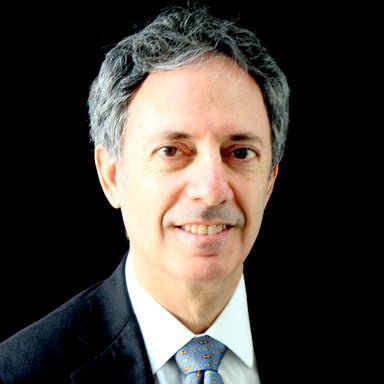

American colleges and universities desperately need reform. However, their task, organizational structure, and funding impede decisive and salutary action. Reform depends on responsible administrators and professors who understand the aim, content, and spirit of liberal education. But such administrators and professors are hard to find, difficult to install, and tough to retain.
Why do colleges and universities get away with rewarding failure?
If a corporation goes bankrupt, the board fires the C-suite denizens and hires new executives. If a baseball team finishes last, the owner replaces the general manager, the manager, players, or all three. If a politician disappoints or angers voters, they elect a replacement.
Matters, though, are less straightforward for colleges and universities, many of which have gravely mismanaged their institutions for decades.
The administrators and professors who have long overseen our colleges and universities have much to answer for. They have politicized scholarship and teaching. They have fostered an intellectual environment in which students – and the few heterodox faculty members – fear to challenge progressive orthodoxy. They have corrupted the curriculum to reflect professors’ narrow range of political beliefs and arcane academic preoccupations rather than to serve students by providing basic courses in America, Western civilization, and non-Western civilizations, and by promoting many-sided inquiry and debate. And they have promulgated illiberal rules – governing speech, sexual misconduct and the process due those accused of it, and protest – which they enforce or flout to suit the requirements of campus orthodoxy.
Notwithstanding these grave derelictions of duty, holding university administrators and professors accountable is harder than for those in other familiar enterprises.
The tenure system and lack of accountability
It is one thing to count, measure, and weigh corporate profits, ball games won and lost, and legislation and executive actions. It is quite another to evaluate advances in scholarship, and to assess students’ knowledge and ability to think independently.
The structure of college and university governance further shields administrators and faculty from accountability. Tenure aims to protect academic freedom, enabling scholars to follow evidence and arguments where they lead, and criticize, refine, and expound ideas without fear of retribution. In practice, life-time appointments settle professors into intellectual ruts. They incentivize professors to conform to the reigning beliefs of the community in which they will dwell for decades. And – by including the power to select graduate students, hire junior faculty, and award or withhold tenure – life-time appointments enable professors to populate scholarly ranks with those who share their opinions, defer to their judgments, and advance their research programs.
As for top administrators, most college and university presidents, provosts, and academic deans come from the professoriate and see matters as do most professors. And governing-board members, who typically enjoy the power to hire and fire presidents, often lack expertise in academic affairs while viewing their job as maintaining the status quo, which favors the institutionalization of progressive fashions.
Market forces don’t act on faculty and administration members at most colleges and universities
Another factor that weakens college and university accountability is the disconnect between administrators’ and professors’ jobs and the funds that sustain them. Private colleges and universities generate revenues through student tuition, and room and board. They receive payouts from alumni-funded endowments. And they benefit from substantial government subsidies – tax breaks, student loans, and research grants. Public colleges and universities also rely heavily on state-taxpayer dollars. In both cases, the long and winding paths from revenues to administrators’ and professors’ salaries insulate colleges and universities from the discipline provided by typical market forces.
These sobering obstacles to finding, installing, and retaining administrators and professors capable of reforming American colleges and universities make all-the-more noteworthy the University of Texas at Austin’s recent appointment of William Inboden as executive vice president and provost. With Inboden’s extensive responsibilities including curricular matters as well as faculty recruitment, development, and advancement, Texas’ flagship state university has equipped itself to realign the school’s scholarly undertakings and educational mission with the public interest.
Enter William Imboden at University of Texas at Austin
Inboden, who assumed his new positions on Aug. 1, 2025, is a distinguished scholar of international relations and an admired teacher. He is an institution builder: He established the Clements Center for National Security at UT Austin and served as its executive director from 2013 until 2023, and he led the University of Florida’s Hamilton School for Classical and Civic Education (I am a member of the academic advisory board) from 2023 to 2025. And in his measured yet forthright essay, “Restoring the Academic Social Contract,” published last week by National Affairs, Inboden establishes himself as a leading authority on the disorders of higher education, and on the priorities colleges and universities must adopt and the steps they must take to correct course.
American universities are, he states,
enduring their worst crisis in over a century. The crisis itself has multiple dimensions, including the financial challenges of escalating tuition and student debt burdens, the ideological imbalance among faculty and administrators, the institutional embrace of radical dogmas and speech restrictions, the resurgence of anti-Semitism, the deep ties many universities have forged with foreign nations whose interests are often inimical to the United States, and the new punitive measures that the Trump administration and Congress are wielding.
The problem of ideological balance, a major contributory factor to several of the other problems, runs deep in higher education.
Suffice to say there are many humanities and social-science departments that do not have a single Republican on their faculties, and among social-science professors nationwide, there are more Marxists than conservatives. The only thing more remarkable than that ideological imbalance is how unremarkable most universities have regarded it – at least if judged by how little most university leaders (including deans, provosts, presidents, and governing boards) have done to address it over that time span.
The severity of the crisis of higher education has caused “the rupturing of its social contract with American society.” The deal was good for both parties, observes Inboden.
Americans would extend to universities several benefits as part of this contract, including substantial federal funding for research and tuition; tax exemptions for philanthropic donations and endowment growth; the legal and cultural protections of tenure and academic freedom for professors; and the reputational capital and professional prestige of a university degree.
For their part,
universities were to provide several goods that can be captured in two broad categories: research that produced original discoveries of quality, meaning, insight, and usefulness; and an education that helped form students into honorable, productive citizens equipped to carry out the duties of self-government in our constitutional republic.
Colleges and universities in breach of their social contract
By betraying both sets of obligations – those concerning beneficial research and those concerning education for responsible citizenship – colleges and universities unraveled the academic social contract. Inboden stresses, for example, that universities have ignored, and even blocked the U.S. government from investigating, the Chinese Communist Party’s exploitation of “partnerships with American universities” that operate “in significant part to enhance China’s power, especially its military and intelligence services.”
In addition, higher education produces plentiful humanities and social sciences scholarship that is arcane, trivial, or turgid. Some of this scholarship combines “partisan activism” with the exercise of “intolerant hegemony” over entire fields and disciplines to strictly enforce the party line. Meanwhile, colleges and universities have demoted if not expunged from the curriculum “important subfields such as military and intellectual history; Renaissance and early modern literature; public law, political theory, qualitative international relations; and so forth.”
Largely at fault for undermining the academic social contract, colleges and universities shoulder the lion’s share of responsibility for repairing it. It is incumbent on them to
take the first steps by renewing their commitments to the American people, our constitutional order, Western civilization, and the classical liberal arts.
To renew these commitments, colleges and universities must form not a “partisan balance” but rather “a balance of perspectives.” Otherwise, they impair their scholarly and educational missions:
When faculties hold nearly monolithic convictions on topics such as sexual ethics, race, gender, the family, economic policy, immigration, abortion, guns, criminal justice, war and peace, and other critical issues that divide the country – and on which people of good will can disagree in good faith – important perspectives are lost in both research and teaching.
Can Inboden turn things around at UT Austin?
With William Inboden serving as executive vice president and provost, UT Austin stands an excellent chance of furnishing the nation a model of higher-education reform. But throughout the nation formidable obstacles remain to finding, installing, and supporting administrators and professors similarly committed to scholarship and teaching grounded in the best traditions of liberal education.
Accordingly, reformers must simultaneously proceed along several additional tracks to build havens for liberal education in America. These include expanding summer programs hosted by think tanks, research centers, and philanthropic foundations; undertaking more experiments in founding institutions such as Ralston College and the University of Austin; and adding programs and centers within established colleges and universities that foster free speech and free inquiry, and engage in rigorous study of America, the West, and other civilizations.
The multi-front effort to reform higher education in America is anything but a niche undertaking. Such reform is a precondition for forming a citizenry capable of respecting, maintaining, and improving freedom and democracy in America.
This article was originally published by RealClearPolitics and made available via RealClearWire.

Peter Berkowitz is the Tad and Dianne Taube senior fellow at the Hoover Institution, Stanford University. From 2019 to 2021, he served as director of the Policy Planning Staff at the U.S. State Department.












-

 Civilization4 days ago
Stealth, Sensors, and Staying Power: What the F-35 Just Proved—and What Comes Next
-

 Executive4 days ago
Citizen Sleuths Spotlight Red Flags Galore in Government Spending
-

 Guest Columns5 days ago
Oklahoma’s Digital Future Will Be Built on Affordable, Reliable, Clean Energy Security
-

 Civilization3 days ago
Dems Scramble After California Governor’s Debate Implodes
-
 Executive4 days ago
A Consent Decree for Freedom of Speech
-

 Civilization4 days ago
Waste of the Day: Cybersecurity Programmers Have Foreign Ties
-
 Executive3 days ago
America’s $130 Trillion Blind Spot
-
 Civilization2 days ago
Iran Could Reshape the Middle East and the Global Balance of Power