
Civilization
New Trump Doctrine: Nations Harboring Drug Cartels ‘Subject to Attack’
Donald Trump now has declared that any country harboring or otherwise supporting drug cartels is subject to attack.

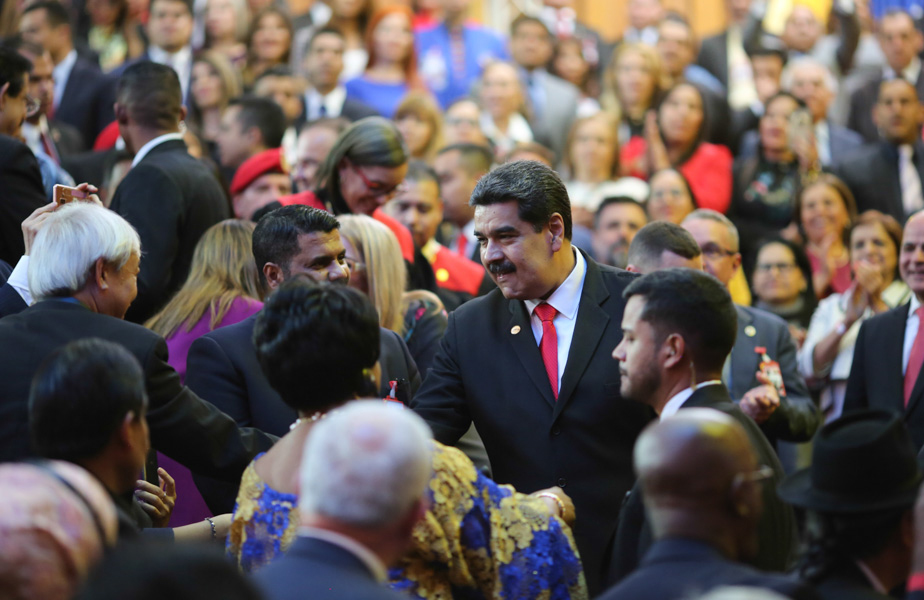
As the last Cabinet meeting of the year wound down, President Trump dramatically expanded his doctrine for the Western Hemisphere: Any nation producing drugs, and shipping them to American streets, “is subject to attack.”
Subject to attack, says Trump
The president was rather offhanded in his dramatic declaration of military force. He even seemed to be working through the implications of his threat in the moment, beginning with Venezuela before shifting his attention to Columbia and then finally making his ultimatum universal.
“I want those boats taken out, and if we have to, we will attack on land also, just like we attack on sea,” Trump said of the ongoing strikes against alleged drug boats off the coast of Venezuela.
“If they come in through a certain country, or any country, or if we think they’re building mills for whether it’s fentanyl or cocaine – I hear Colombia, the country of Colombia, is making cocaine. They have cocaine manufacturing plants, okay? And they sell us their cocaine. We appreciate that very much,” Trump said sarcastically of the nation most responsible for the export of that drug.
“Anybody that’s doing that, and selling it into our country, is subject to attack,” he concluded.
Though delivered casually in conversation, the threat is a serious one. Trump was the first candidate during the previous election to float the idea of using the military to destroy the cartels. As commander in chief, he delivered on that promise by dispatching the Gerald R. Ford Carrier Strike Group to the Caribbean. Previous administrations have dealt with drugs as a police issue; Trump has ordered direct military strikes, sinking as many as 22 vessels and killing at least 83 alleged drug runners.
Don’t try to call Trump’s bluff – because he doesn’t bluff
A White House spokeswoman told RealClearPolitics that recent history demonstrates how foolhardy it is for any foreign leader to try calling Trump’s bluff. He promised during the campaign to take on the cartels, said Trump spokeswoman Anna Kelly, and now he is attacking the “scourge of narcoterrorism that has resulted in the needless deaths of innocent Americans.”
“All of these decisive strikes have been against designated narco-terrorists bringing deadly poison to our shores,” she continued, “and the president will continue to use every element of American power to stop drugs from flooding into our country.”
The drug trade in Central and South America is as widespread as Trump’s threat is broad. According to the International Narcotics Control Strategy Report by the State Department, more than a dozen countries – from little Belize to much larger Mexico – are involved.
How many of those countries are now subject to attack?
There is a distinction, a Trump administration told RCP, before pointing to November remarks made by Secretary of State Marco Rubio. While numerous countries have drug operations in their interior, Rubio explained, citing Mexico, El Salvador, and Ecuador as examples, the U.S. has “strong cooperation” with those nations in stemming the northern flow of drugs.
That’s the difference between them and the drug boats – with the drug boats, we have no cooperation. On the contrary, the Venezuelan regime has long facilitated the use of Venezuelan territory as a transshipment point for drugs.
The amended Trump doctrine: Cooperate or risk a U.S. military strike.
Not the first time
By making such a sweeping proclamation, the president is creating a new axiom. Of late, Republicans like Missouri Sen. Eric Schmitt have called for emphasizing “the homeland and our hemisphere” rather than policing the entire globe. The idea is popular throughout the West Wing. Vice President JD Vance has long been skeptical of foreign intervention, while Deputy Chief of Staff Stephen Miller is said to be the most ardent advocate for returning U.S. focus to the Americas.
Trump is not the first to talk this way. Alexander Gray, who previously served as chief of staff on the Trump White House National Security Council, told RCP that Trump is one of the first to lash the two together in the 21st century. “We have a direct tie at home to the security of the hemisphere writ large,” Gray said, “and that’s where he’s expanding this conversation to include places like Colombia and elsewhere.”
The foreign policy flex has alarmed some on the right who thought supporting a second Trump term meant signing up for fewer, not more foreign interventions, let alone potential regime change south of the U.S. border.
Subject to attack – but not by act of Congress
And while the administration has openly talked about this as a war for months, the White House has refused to go to Congress to request that authority. Controversy expanded after the U.S. reportedly launched a follow-up strike to kill the surviving crew of one alleged drug boat. Secretary of War Pete Hegseth told reporters he authorized and watched the first strike but clarified that he “did not personally see survivors.”
“This is called the fog of war,” Hegseth said while seated next to Trump. He added that the admiral in command of the operation “made the right call” by ordering a second strike.
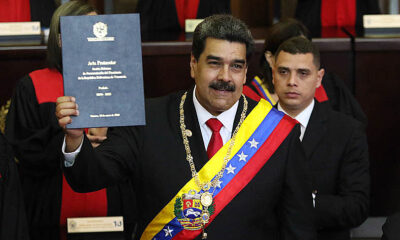
Trump has entered a geopolitical game of chicken with President Nicolás Maduro, the Venezuelan dictator whom the Department of Justice has labeled a narco-terrorist and accuses of leading a criminal syndicate called the Cartel de los Soles. A client of both China and Russia, the Marxist regime has long been a thorn in the American side. The White House considers his regime illegitimate, and while Trump and Maduro spoke over the phone last week, neither has shown any willingness to back down.
Boats keep launching off the coast of Venezuela. And the U.S. military keeps sinking them. But while Republicans are broadly supportive, putting the whole of Central and South America on blast would likely make even the most aggressive war hawks sheepish.
Since Reagan
The cartels have bedeviled presidential administrations since at least the days when Ronald and Nancy Reagan encouraged American youth to “Just say no.” Anti-drug efforts stateside and direct military intervention have not worked in the decades since. American intelligence likely knows the well-worn paths those drugs take into the United States. Rebeccah Heinrichs, director of the Keystone Defense Initiative at the Hudson Institute, said it wouldn’t be difficult for the Trump administration to mop up that operation with air strikes.
“The president putting the regime leaders who are complicit in the drug trade on notice is significant. It signals that the United States’ tolerance for this stuff is just totally gone,” Heinrichs said.
“Congress wants to be supportive right now,” she added. “But it’s still largely in the dark. It should assert itself and insist on more information, on the strategy, and the objective.”
Trump has long fancied himself “a peace president.” His political rise was facilitated, in large part, by criticism of the more muscular use of the military by past Republicans in the faraway deserts of Afghanistan and Iraq. Before his boss seemingly declared dozens of new countries “subject to attack,” Secretary Rubio praised Trump for his devotion to peace. “He hates war and he thinks wars are a waste of money and lives,” the diplomat said of the president.
Even peace-loving men…
But love of peace does not always imply an aversion to conflict. If Trump is a non-interventionist, as some of his critics once charged, he is a poor one. The commander in chief has repeatedly authorized the use of deadly force.
“America First is not isolationism; America First is Jacksonianism,” Gray said, likening the Trump foreign policy to the ideology of President Andrew Jackson, who was at once extremely skeptical of overseas adventures and fiercely defensive of American interests. “What that means in this context is that it’s about prioritization.”
“Trump is not averse to using force if it’s overwhelming, targeted, and has defined objectives in support of core U.S. national interests,” he added. Venezuela is the object of that force for now. Destroying the cartels to stop the flow of drugs, the core national interest.
The administration openly calls the effort “a war.” And the president has often teased that the military campaign will expand beyond the water and onto “the land.”
This article was originally published by RealClearPolitics and made available via RealClearWire.
Philip Wegmann is White House Correspondent for Real Clear Politics. He previously wrote for The Washington Examiner and has done investigative reporting on congressional corruption and institutional malfeasance.








-
 Civilization3 days ago
Stealth, Sensors, and Staying Power: What the F-35 Just Proved—and What Comes Next
-
 Executive3 days ago
Citizen Sleuths Spotlight Red Flags Galore in Government Spending
-

 Guest Columns4 days ago
Oklahoma’s Digital Future Will Be Built on Affordable, Reliable, Clean Energy Security
-

 Civilization2 days ago
Dems Scramble After California Governor’s Debate Implodes
-

 Executive5 days ago
Waste of the Day: Throwback Thursday – Helping Beverly Hills’ Low-Income Community
-

 Civilization4 days ago
Waste of the Day: Cybersecurity Programmers Have Foreign Ties
-
 Executive4 days ago
A Consent Decree for Freedom of Speech
-
 Executive2 days ago
America’s $130 Trillion Blind Spot