
Executive
Judge Green-Lights Secret Service Agent’s Retaliation Case
A judge ruled that Secret Service Agent Rashid Ellis has an actionable case against his former employer, for damning leadership failurers.


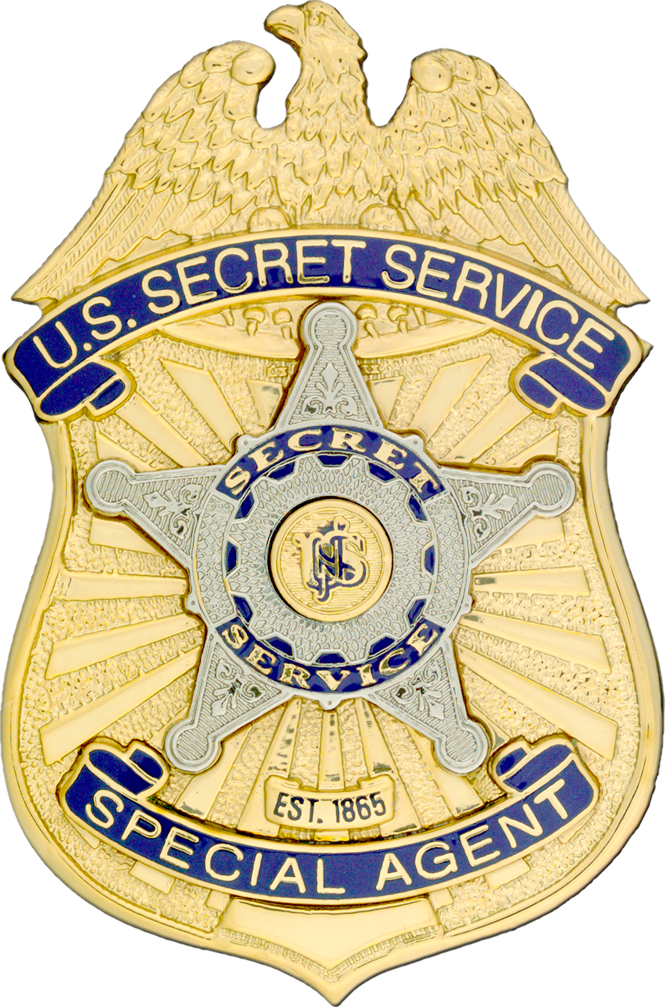
A federal judge has allowed most claims in a senior Secret Service agent’s lawsuit alleging a hostile workplace, retaliation, and discrimination to move forward despite Department of Homeland Security opposition, according to court documents.
The Secret Service agent on the outs
Rashid Ellis, a 14-year veteran of the agency with expertise in drone systems, sued DHS, which oversees the Secret Service, three months before the July 13, 2024, assassination attempt against Donald Trump in Butler, Pennsylvania.
Ellis’ lawsuit accuses agency leaders of dismissing complaints, elevating problematic colleagues to oversight positions, and punishing him for advocating for advancements in drone technology and racial unity within the agency.
The claims of retaliation, discrimination, and hostile work environment took place when Alejandro Mayorkas was DHS secretary and Kimberly Cheatle ran the Secret Service. Cheatle was forced to resign after severe criticism of her testimony to Congress about the Butler failures.
Even though Ellis’ former agency is now led by Trump-appointed Secretary Kristi Noem and Secret Service Director Sean Curran, so far there has been no effort to settle the case out of court.
Ruling Preserves Ellis’ Core Allegations
U.S. District Judge Emmit Sullivan ruled in late September that most of the claims in Ellis’ lawsuit could proceed. The decision, which RealClearPolitics is first to report, rejects the government’s motion to dismiss the case, clearing the path for legal discovery into allegations of systemic leadership failings, which Ellis argues enabled bias, stifled innovation, and endangered the agency’s mission.
A graduate of The Citadel who was consistently awarded “exceeds expectations” ratings in his performance reviews, Ellis served on former President Joe Biden’s protective detail, the elite Counter Assault Team, and as an instructor at the Secret Service’s James J. Rowley Training Center on counter-surveillance and the use of drones. His role as the Secret Service point person for the Federal Law Enforcement Officers’ Association, a lobbying entity that offers legal services, retirement benefits, and other support, amplified his advocacy for racial equality. Ellis argues it also made him a target for Secret Service leadership.
Multiple Secret Service shortcomings were evident in Butler on the day Trump was nearly killed, including the failure to detect the shooter’s drone in the air over the rally site. On the one-year anniversary of the Butler assassination attempt, the Secret Service announced reforms, including the creation of an Aviation and Airspace Security division “dedicated to maintaining the agency’s critical aerial monitoring capabilities.”
Cheatle’s Secret Service was infamous for pettiness and retaliation
Ellis’ lawsuit detailing his experiences with Cheatle at the helm, which RCP reported on last year, reads like a case study of the agency leaders’ long-running tendency to engage in petty squabbles, favoritism, and retaliation instead of keeping its focus on the big picture – its mission of protecting presidents, vice presidents, Cabinet members, and former presidents.
In a detailed 63-page opinion, Sullivan determined that Ellis had sufficiently alleged civil rights violations.
The judge was unpersuaded by DHS attorneys’ arguments, including that Ellis didn’t truly suffer any adverse action because he never lost his salary and that he didn’t exhaust administrative remedies on his charges before filing suit.
DHS attorneys also argued that federal employees are held to a higher standard than those in the private sector when it comes to experiencing adverse actions. Sullivan dismissed this last argument as one that has repeatedly failed in previous court decisions.
“As discussed below,” the judge wrote, “this theory has been rejected by every judge on this court to have considered it.”
Ellis’ attorney, David Blum of Alan Lescht & Associates, P.C., told RCP: “We look forward to litigating the merits of this case.”
No comment – of course
The Secret Service has declined comment on Ellis’ case and ignored several separate questions about the agency’s history of resisting efforts to implement an extensive aerial drone program and the readiness level of that program. Prior to the assassination attempts, the Secret Service had an aerial drone program, but it was limited in scope, sources told RCP.
“As a matter of longstanding policy, the U.S. Secret Service does not comment on pending or proposed litigation,” a spokesperson told RCP last year. The agency did not respond to a request for comment on Sullivan’s ruling.
The lawsuit depicts a corrosive Secret Service culture in which leaders engage in intimidation, and supervisors ignore harassment reports, neglect investigations, and retaliate if personnel complain of mistreatment.
Ellis argues that Cheatle, then serving as the head of the Secret Service’s Office of Protective Operations, backed by human resource managers and other bureaucrats, blocked and retaliated against him for trying to transfer jobs to work full-time on a special drone project he was developing, according to three sources in the Secret Service community.
Some of these agency officials, Ellis asserts, also retaliated against him for lodging complaints about personal and inaccurate attacks based on his perceived religion.
Where did Kim Cheatle want to send Rashid Ellis?
Cheatle and a group of senior Secret Service officials went to great lengths to prevent Ellis from serving in a key role in the Airspace Security Branch of the Secret Service’s Special Operations Division, which oversees the drone program, according to court records Ellis filed last year.
Instead, the agency wanted to send him to the vice presidential detail to help provide security for Kamala Harris, her husband, and their extended family, and wouldn’t budge when he appealed the decision – even though the agency had formally listed the airspace position as “hard-to-staff.”
Ellis, who is black but eschews racial divisions, referring to himself as “American,” filed suit against DHS in April 2024 and amended the complaint in late July to outline a pattern of harassment. The lawsuit accuses agency officials of orchestrating an elaborate scheme, beginning in 2021, to undermine his career in retaliation for his efforts to transfer to an Airspace position. Ellis wanted the position so he could play a direct role in establishing and implementing “a special project involving drones,” according to the lawsuit.
Ellis’ lawsuit alleges that those who conspired against him include Cheatle; then-human resources head Susan Yarwood; Elizabeth Lewis, Yarwood’s then-deputy; then-Technical Services Division Assistant Director Darren Giacolleto; then-Human Resources supervisors Danielle Watson and Thomas Hamman; and others.
Specific Leadership Failures
Incidents of harassment Ellis endured include:
- A fellow agent, whom the lawsuit identifies as Michael Hackney, allegedly used a training exercise to physically attack him and pulled a live weapon on him as a joke while he was working a protection detail. Ellis reported the incident to his superior, who took no action, telling him, “The juice isn’t worth the squeeze,” according to the lawsuit. Two years later, Hackney allegedly aggressively drove his SUV toward Ellis and his pregnant wife and one-year-old son as though he was going to run them over.
- Another agent, who Ellis says witnessed the aggressive driving threat, warned him not to report Hackney because “that’s how some people joke.”
- Ellis, a Christian, believes his complaints about Hackney, whom he said also misidentified him as Muslim and called him a “terrorist” based on his Islamic-sounding first name, contributed to his failure to land bids for two hard-to-staff positions in the agency’s Airspace branch, even though he argues he was eligible for both positions.
Details of Ellis’ grievance
The lawsuit further alleges:
- A senior official acknowledged agency-wide racism and backed Ellis’ 2021 drone position bid, calling him the “number one selection,” but failed to counter Human Resources’ disqualification. Lewis and Yarwood deemed him ineligible despite his qualifications and the endorsement.
- After Ellis appealed that decision, Danielle Watson twisted his frustrated comment about the process “driving him to drink” into cynical claims that he admitted to abusing alcohol. Yarwood, after consulting Lewis, directed Watson to draft a memorandum falsely alleging Ellis admitted to drinking, family disputes, and related issues – proven false by video evidence. The agency then placed Ellis on administrative leave and forced him to surrender his gear while recommending a nine-month sobriety program. Those decisions were overturned shortly afterward, but nonetheless damaged Ellis’ reputation.
- Cheatle supported the phony alcoholism narrative, recommending administrative leave and the sobriety program, and allegedly provided misleading statements in an affidavit about the sources of information that informed her decisions.
- Giacoletto denied Ellis’ appeal the day the agency imposed the administrative leave and was involved in the initial disqualification.
A supervisor warned Ellis of “a lot of trouble” for pursuing grievances, while others told him that the real source of his troubles with the agency was his pro-drone advocacy.
These incidents, Ellis claims, reflect a Secret Service pattern of weaponizing human resources processes against those who complain of mistreatment, a similar refrain among numerous former agents and the lawyers who have represented them.
Connections to Broader Secret Service Challenges
Despite new leadership, the Secret Service has experienced a string of continued lapses and embarrassing incidents. As RCP first reported, two female officers were involved in a physical fight outside former President Obama’s D.C. residence; Secret Service officers also missed a Glock while screening bags at Trump’s Virginia golf course; a Uniformed Division officer fell asleep on the job and left his fully automatic rifle unattended while protecting the United Nations General Assembly in New York; and an agent openly celebrated Charlie Kirk’s assassination in a Facebook post. Trump’s detail also allowed protesters at a D.C. restaurant to get close to Trump and several of his top Cabinet members and taunt them.
Ellis’ lawsuit alleges that his blocked transfer to a leadership position in the drone program quite possibly hindered advancements that might have prevented the 2024 Trump assassination attempts. A Senate report on the Butler failures faulted Secret Service leaders for denying counter-drone requests and technical failures. Then-Acting Director Ronald Rowe admitted to lapses during congressional testimony last year.
Ellis blames DEI
Ellis himself ties the Butler failures to Cheatle and prior leaders’ DEI priorities, arguing they favored quotas over merit, eroding standards and morale and agent retention. As the discovery process proceeds, the case may force DHS to address these leadership decisions.
“The relentless push by Secret Service leadership to meet diversity quotas has compromised our ability to meet our protectees’ needs,” Ellis said in a video posted on the Independent Women’s Forum website. IWF is a nonprofit conservative advocacy organization.
Despite efforts to dismantle DEI under the current administration, Ellis cautions that it will take years for the agency to recover.
“If we do not clean out the rot, our people – and our protectees – will pay the price,” he warned.
This article was originally published by RealClearPolitics and made available via RealClearWire.

Susan Crabtree is a political correspondent for RealClearPolitics. She previously served as a senior writer for theWashingtonFree Beacon, and spent five years asa White House Correspondent for theWashington Examiner.









-

 Education5 days ago
Everything’s Bigger in Texas, Including School Debt
-

 Education5 days ago
Restoring Duty to God and Country
-
 First Amendment4 days ago
Oregon’s Union Crackdown Spreads
-

 Executive3 days ago
The Straits of Hormuz Should Not Be a U.S. Problem
-

 Guest Columns4 days ago
Living in the Empty Tomb Era
-

 Executive3 days ago
Waste of the Day: Maryland Ignored Audit Warning, Increased Overtime
-

 Civilization3 days ago
How China Dominates the World’s Critical Minerals Production
-

 Executive2 days ago
Waste of the Day: Fiscal Doomsday Reached With $193.6T Gap