
Civilization
Trump Continues To Back Secret Service Chief Despite ‘Concern at Times’
Donald Trump continues to support Secret Service Chief Sean Curran, despite one scandal after another on his watch.


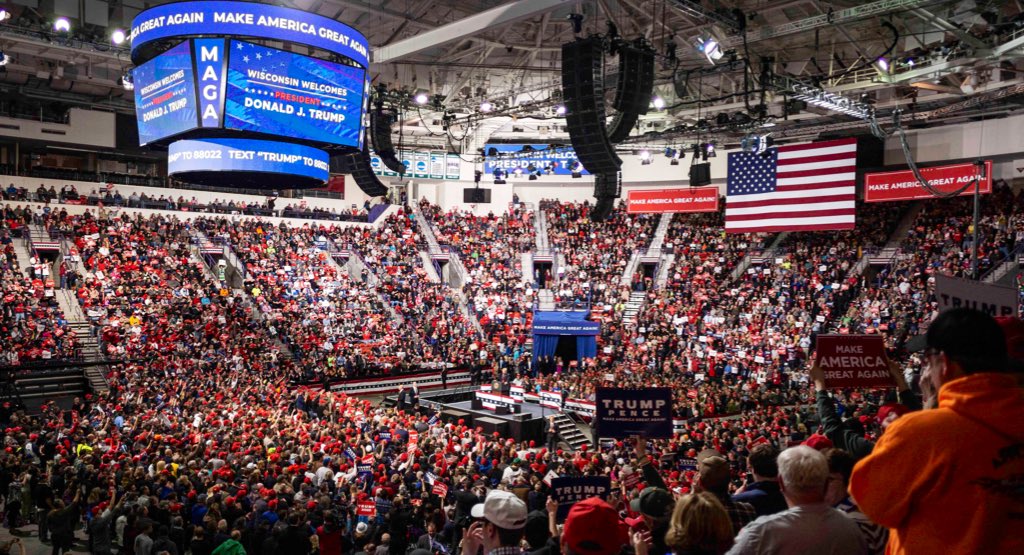
The embarrassing James O’Keefe sting operation of a Secret Service agent disclosing highly sensitive information about Vice President JD Vance’s movements to a woman he was dating is just the latest example in a series of Secret Service security breaches and incidents of unprofessional behavior.
The Secret Service has several scandals
Over the last month alone, as RealClearPolitics has first reported, the FBI has raided a Secret Service agent’s home in a joint tax fraud investigation with the IRS, a crazed trans attacker allegedly broke the front windows at Vance’s Ohio home, and a new Secret Service recruit killed his brother on New Year’s Eve. The recruit claimed self defense, which detectives are still investigating, but the incident has renewed questions about the agency’s history of lowering hiring and vetting standards in an effort to address a severe manpower crisis.
After two assassination attempts against President Donald Trump in 2024, Trump tapped Sean Curran to lead the agency. But Curran is somewhat of a paradox, having served both as the leader of the team who failed to keep him safe at the July 13, 2024, rally in Butler, Pennsylvania, and the man who was part of the inner circle of agents who leaped to Trump’s rescue after he was nearly killed when a bullet grazed his ear that day. Curran’s depiction as a hero was captured in the iconic photo of Trump pumping his fist in the air with blood flowing across his face, but Curran’s leadership both before, on and after that day is far more complicated.
The new chief isn’t firing anybody
Many expected Curran to usher in a new era of agency reform and discipline, jettisoning the DEI priorities of the Biden-era agency Secret Service leader Kimberly Cheatle and Homeland Security Secretary Alejandro Mayorkas. Instead, Curran determined that no agent needed to be fired over the assassination failures, that the entire agency had failed, not just the individuals involved in planning and providing security at the Butler rally, so firings wouldn’t solve the problem.
Matt Quinn, the agency’s deputy director who this week lamented the agent’s manipulation by O’Keefe’s undercover sting operation, told CBS News in July that they “weren’t going to fire [their] way out of this,” stressing instead they would be “laser-focused on fixing the root cause of the problem.”
Several Secret Service scandals on Curran’s watch
While no known additional assassination attempts have occurred on Curran’s watch, he has presided over an agency plagued by embarrassing incidents over the last year, similar to some of the unprofessional behavior and lack of experience, supervision and strict standards at the heart of the Butler failures. Those incidents, also first reported by RCP, include: a physical fight involving two women Uniformed Division officers outside former President Obama’s home, an agent celebrating Charlie Kirk’s assassination on Facebook, and his hand-selected chief counsel being forced to resign after a road-rage incident in a government vehicle in New Jersey. Curran also greenlit the agency’s renewal of Cheatle’s security clearance but GOP Sens. Ron Johnson and Marsha Blackburn objected and kept former Acting Secret Service Director Ron Rowe on the agency payroll until he reached a key retirement date, after Rowe gave himself a bonus before Trump was inaugurated.
So why hasn’t Trump replaced his Secret Service director?
A senior White House official this week told RCP that the Trump maintains a “great level of personal trust” in Sean Curran but added some context.
That doesn’t mean that the White House has not raised hackles at certain times with what we’ve seen with respect to the president’s security. But overall, the president continues to have confidence in Sean.
Susie Wiles never liked Curran and recently hit hard
One incident that raised White House concerns but went unreported until now involved a top Secret Service leader last summer and drew the ire of White House Chief of Staff Susie Wiles, prompting unprecedented repercussions for more than a dozen Secret Service leaders, according to several knowledgeable sources.
Wiles was never a fan of Trump choosing Curran for the director post because she was aware of a number of formal complaints filed against the Trump campaign detail, which Curran headed, according to several Secret Service sources. Those complaints included reports of a hostile workplace and fraternization within the Florida Trump protective Secret Service detail, which spent most of its time at Mar-a-Lago before the 2024 campaign kicked into gear, multiple sources tell RCP.
Curran and his deputy Matthew Piant, who recently received a promotion to come to Washington from West Palm Beach, were cleared of any wrongdoing by the Secret Service’s Office of Professional Responsibility. But some agents question how thoroughly the 2024 complaints were investigated and point out that neither Curran nor Piant were forced to turn over their personal or work phones for inspection. Neither were forced to take a polygraph test to help prove the truthfulness of their responses.
Lie detectors to plug leaks?
For context, Curran has now required several senior-level Secret Service leaders to undergo polygraph tests to ensure they’re not leaking to the media. He has also forced all Secret Service personnel to sign non-disclosure agreements that include threats of criminal reprisals after RCP published a story about ongoing DEI hiring and promotion concerns under Curran’s leadership.
Trump trusted Curran as the agent who had shadowed him on a day-to-day basis for several years, and Donald Trump Jr. and Eric Trump rallied around him for this reason, several knowledgeable sources tell RCP. Eric Trump, however, at times over the last year (including in interviews promoting his book “Under Siege”) has been critical of the FBI’s investigation into Thomas Crooks, the man who tried to assassinate Trump in Butler.
Even after his selection, Wiles remained skeptical, telling Trump that if things go south with Curran, “It’s on the boys,” according to several sources familiar with the conversations.
The CitiGroup affair
Last summer, Wiles was incensed when Curran’s hand-selected top lieutenant demonstrated poor judgment at the White House, according to White House and Secret Service sources.
In July, Curran’s hand-picked chief of staff, Tyler McQuiston, intervened at a White House entry point to escort a former colleague and employee at CitiGroup, where McQuiston had previously worked after serving for years in the Secret Service, into the White House West Wing lobby area for a meeting the employee claimed she was invited to. However, there was a mix-up, and White House aides had not included this woman in a new meeting schedule.
McQuiston, these sources say, thought he knew better and entered the woman into the White House WAVES clearance system and escorted her into the West Wing lobby, leaving her on a couch unattended until White House aides found the unauthorized person and escorted her out of the complex. McQuiston’s move placed the presidential detail at the White House in the extremely awkward position of being forced to take sides between concerned presidential aides, with whom they have to work every day, and their own boss, who was allowing an unauthorized person to access the West Wing.
Message to Secret Service leaders: don’t let this happen again
Wiles was so angry that she told Secret Service leaders to do something to ensure such a violation of White House security procedures never happens again. Responding to Wiles’ anger, Secret Service leaders then decided to cut off unrestricted White House access to more than a dozen top-level Secret Service leaders, including McQuiston, and several assistant directors. The restrictions on White House access excluded Curran and Deputy Director Matt Quinn, sources familiar with the details tell RCP.
The leader of the presidential protective division went to the 8th floor of Secret Service headquarters to collect the White House passes of several Secret Service leaders and supervisors in order to restrict White House complex access, an unprecedented and embarrassing move impacting senior agency leaders accustomed to showing up at the White House at any time.
When RCP reached out to the Secret Service, the agency referred our questions to the White House. A White House aide confirmed that Wiles was upset over McQuiston’s decision to supersede White House entry protocols.
“Following this miscommunication, and out of an abundance of caution, United States Secret Service pulled badges from personnel deemed unnecessary to have access to the West Wing of the White House,” a White House official told RCP. “The directive to pull [the badges] did not come from Susie. It was a decision by the presidential detail leaders. It’s a decision she supports.”
A tax fraud investigation
In December, Curran responded to the FBI raid of a Secret Service agent’s home in a tax fraud investigation prompted by the agent’s moonlighting as a tax preparer, by having the agency suspend all agents’ outside employment until they can get a handle on how many agents were potentially involved in tax fraud and whether other employee side hustles are above board or creating conflicts of interest.
One well-placed Secret Service source said so many agents used the agent’s tax services that it could explode into a media storm bigger than the 2012 Columbia prostitution scandal, in which more than a dozen agents were found to have hired legal prostitutes in Cartagena during an advance trip for President Obama.
Lingering resentment over Curran’s decision not to fire anyone over the Butler failures continues to simmer within the agency and in Congress. Several members of Congress have expressed deep concerns about the light punishments Secret Service agents involved in the security planning and execution for the Butler rally received last year. Many of those agents are back on the job helping to protect Trump and other key administration officials, including Miyo Perez, the agent in charge of developing the Butler security plan.
Light if any punishment for those who fouled up under Biden
Curran delivered slaps on the wrist for those responsible for the Butler failures – 10 to 42 days of paid suspension – and yet failed to usher in robust DEI and other reforms like those Secretary of War Pete Hegseth has aggressively implemented, resulting in a recruiting bonanza for the military.
Curran actually promoted two supervisors who signed off on the Butler security plan that didn’t place anyone on the AGR building roof where shooter Thomas Crooks fired off his shots at Trump and the crowd, killing Corey Comperatore, a retired firefighter who attended the rally, and severely injuring two others.
Curran’s record on ridding the agency of DEI also gets mixed reviews.
Curran promoted one of those supervisors, Nick Olszewski, to become head chief of the Inspection Division, which falls under the Office of Professional Responsibility and is responsible for ensuring the accountability and integrity of the agency’s personnel and operations. Olszewski received this promotion even though he failed to detect a major flaw in the Butler plan while overseeing the final walk-through of the rally security plan the day before the assassination attempt.
Is Curran covering himself?
Some in the agency believe Curran tapped Olszewski for the post to help insulate him from any formal complaints and investigations into his leadership of both the Trump campaign detail and now of the entire agency. Another supervisor on the final Butler walk-through was Nick Menster, who also avoided any discipline for Butler. Curran promoted Menster to become the second agent in charge of the Lara and Eric Trump protective detail.
Many in the Secret Service community, both active agents and officers and those who have retired, are still upset over the unequal discipline for inexperienced agents positioned for failure at the Butler rally and their supervisors who appear to have skated or received promotions despite their supervisory failures.
On the one-year anniversary of the Butler assassination attempt last year, the Secret Service noted several operation, policy, and organization reforms it has taken. The agency highlighted changes to its protective operations aimed at ensuring “clear lines of accountability and improved information sharing with local law enforcement partners,” as well as the creation of an Aviation and Airspace division dedicated to upgrading its drone and drone mitigation and monitoring capabilities. Officials also said that Curran is leading an effort to change its resourcing process to ensure that assets are “better accounted for and appropriately applied.”
Not following recommended reforms
While the agency claimed to be implementing all 46 recommendations from Congress, it is notably disregarding another by the bipartisan Independent Review Board. The board called on the Secret Service to narrow its mission to protecting the president, the vice president, their families, and certain Cabinet members, while eliminating investigations into financial crimes and child trafficking.
Last week, the Secret Service announced plans to hire 4,000 employees over the next two years and cut its hiring timelines in half. But long-time observers warn that speeding up the hiring process would undoubtedly result in less training and the hiring of less qualified individuals.
Former agents and other sources in the Secret Service community have recently criticized the agency for lowering standards in recruiting, arguing that misplaced DEI initiatives were given priority during the Obama and Biden administrations, and former law enforcement experience was not valued as much as in previous years, when the agency had a better reputation and protection record.
Some have also argued that Curran isn’t doing enough to rid the agency of DEI hires and woke culture, which one agent has publicly blamed for the near-killing of Trump in Pennsylvania.
Why won’t the Secret Service require psychological exams, as most police departments do?
Other agents have raised concerns over the Secret Service’s decades-long policy of not requiring psychological exams as part of the hiring process – unlike most police departments across the country. Doing so would prevent any type of insider threats to the president or other protectees, these sources argue.
Many of these complaints have circulated for more than a decade. Former GOP Rep. Jason Chaffetz, who served as the chairman of the House Oversight Committee, held numerous hard-hitting hearings on the failures of the Secret Service after the 2012 Colombia prostitution scandal involving several agents who were caught with prostitutes during the Obama administration. Chaffetz was also highly critical of several White House fence-jumping incidents – so much so that the fence surrounding the complex was raised.
In 2015, Chaffetz and committee staff also produced a detailed, bipartisan report on “The Secret Service in Crisis,” which recommended numerous reforms, many of which the agency has yet to implement.
Three months before the assassination attempt against Trump in Butler, RCP reported on a female agent’s mental health meltdown and physical attack on her supervisor, which took place at Joint Base Andrews before a planned trip protecting then-Vice President Kamala Harris.
A recruitment crisis
Last year, the agency spent $2 million on a Super Bowl recruitment video by Hollywood producer Michael Bay in which Curran is prominently featured. The expenditure came after hundreds of agents applied for lateral transfer to the Drug Enforcement Agency.
The agents are working harder than ever at what many argue is an unsustainable pace after the previous acting director, Ron Rowe, promised “a paradigm shift” post-Butler – that they would not have to continue “doing more with less,” a common refrain in the Secret Service over the last decade.
The vice-presidential detail is especially taxed because JD Vance travels much more than his predecessor, Kamala Harris, but the agency has kept the number of agents assigned to it at similar levels. One source tells RCP that vice presidential agents work five to six days a week, while Trump’s detail works two to three days.
This article was originally published by RealClearPolitics and made available via RealClearWire.

Susan Crabtree is a political correspondent for RealClearPolitics. She previously served as a senior writer for theWashingtonFree Beacon, and spent five years asa White House Correspondent for theWashington Examiner.

-
 Civilization5 days ago
Election Reform Republicans Can Actually Pass
-

 Civilization5 days ago
Redefining Strategy in the High North: Wargaming a Contested Arctic
-
 Civilization4 days ago
The GOP’s Latino Reset Can Happen Now
-

 Executive4 days ago
Waste of the Day: Feds Bought Golf Carts For $8.4 Million
-

 Executive3 days ago
Waste of the Day: NYC’s $3.5 Million Toilets Are “In Purgatory”
-

 Civilization4 days ago
The Kremlin Is Killing the Tool That Sold Its War
-

 Civilization3 days ago
Does the Donroe Doctrine Now Extend to Outer Space?
-

 Civilization3 days ago
Imminent Threat? Iran Was Existential Threat