
Executive
Waste of the Day: Throwback Thursday – Rats Ate Afghani Aid
In a typical USAID failure, a program to aid Afghani families of civilians killed in the war lost most of its money to waste.


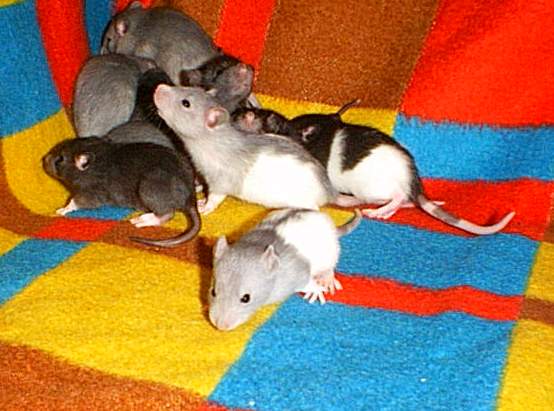
In a typical USAID failure, a program to aid Afghani families of civilians killed in the war lost most of its money to waste.
Topline: The U.S. Agency for International Development had noble intentions when it created the Afghan Civilian Assistance Program. It spent $52 million from 2007 to March 2011 to try and send food, clothing and more to the grieving families of civilians killed by the war in Afghanistan.
Afghani aid lost to rats!
Tragically, inspector general reports from 2009 and 2011 found that huge portions of the money were lost to waste, fraud and abuse. It would be worth over $76 million today.
That’s according to the “Wastebook” reporting published by the late U.S. Senator Dr. Tom Coburn. For years, these reports shined a white-hot spotlight on federal frauds and taxpayer abuses.
Coburn, the legendary U.S. Senator from Oklahoma, earned the nickname “Dr. No” by stopping thousands of pork-barrel projects using the Senate rules. Projects that he couldn’t stop, Coburn included in his oversight reports.
Coburn’s Wastebook 2011 included 100 examples of outrageous spending worth nearly $7 billion, including the money spent on the Afghani aid program.
Key facts: The USAID inspector general first reported in 2009 that aid was only reaching 13% of the 6,000 families eligible for assistance, due to understaffing and security concerns.
The follow-up report in 2011 was even worse. The inspector general wrote that in one warehouse storing food for Afghani families,
there was evidence of extensive rodent infestation. Rats had gnawed open dozens of food bags and boxes, and we found rat feces inside bags of food. There was an overpowering smell of rodents throughout the warehouse.
Food and nonfood items stored together
Other food was contaminated because it was stored together with nonfood items, such as soap and powdered milk in the same metal crate. There was also up to $2.7 million worth of expired food, including some that expired in 2004 — three years before the program began.
Since most of the aid was not reaching Afghani families, warehouse inventories were overflowing. At one point, USAID officials had bought 4,800 more assistance kits than they had room for in their warehouses. They responded by purchasing another 3,000 kits for $740,000 anyway.
With no room in the warehouse, the kits were left outside in the pouring rain, causing blankets and other supplies to be soaked through or torn apart by rodents. Wheelbarrows purchased for Afghani families were stored outdoors in gigantic heaps, leaving the metal twisted and mostly destroyed.
Fraud and abuse
One USAID field program officer reportedly stole $180,000 and then forged records claiming the money was used to buy livestock for Afghani families, according to the audit. When a local village leader found out, USAID reimbursed the village, which distributed the money to families that reportedly had not suffered any losses that made them eligible for assistance.
A USAID contractor also used $3.6 million to buy used motor vehicles for victims. Vehicles were supposed to be banned from the program to prioritize necessities like food and clothing.
The program was replaced in September 2011 by the $77 million Afghan Civilian Assistance Program II. A 2015 inspector general report found some accounting issues with the new program, but nothing as serious as the first iteration.
Search all federal, state and local salaries and vendor spending with the world’s largest government spending database at OpenTheBooks.com.
Summary: Government waste is frustrating in any situation, but especially when it prevents help from reaching vulnerable communities around the world.
The #WasteOfTheDay is brought to you by the forensic auditors at OpenTheBooks.com.
This article was originally published by RealClearInvestigations and made available via RealClearWire.

Jeremy Portnoy, former reporting intern at Open the Books, is now a full-fledged investigative journalist at that organization. With the death of founder Adam Andrzejewki, he has taken over the Waste of the Day column.







-

 Civilization4 days ago
The GOP’s Latino Reset Can Happen Now
-

 Executive5 days ago
Waste of the Day: Feds Bought Golf Carts For $8.4 Million
-

 Executive4 days ago
Waste of the Day: NYC’s $3.5 Million Toilets Are “In Purgatory”
-

 Civilization4 days ago
The Kremlin Is Killing the Tool That Sold Its War
-

 Civilization3 days ago
Does the Donroe Doctrine Now Extend to Outer Space?
-

 Civilization3 days ago
Imminent Threat? Iran Was Existential Threat
-
 Civilization2 days ago
How Prepared Is the Defense Industrial Base for Iranian Cyber Attacks?
-
 Civilization2 days ago
No Retreat, No Surrender: Why America Must Prevail in Iran