
Civilization
The Northwest Passage Will Be Decided by Capability, Not Law
The Northwest Passage has been the subject of (heretofore) meaningless insistences designed to control it.


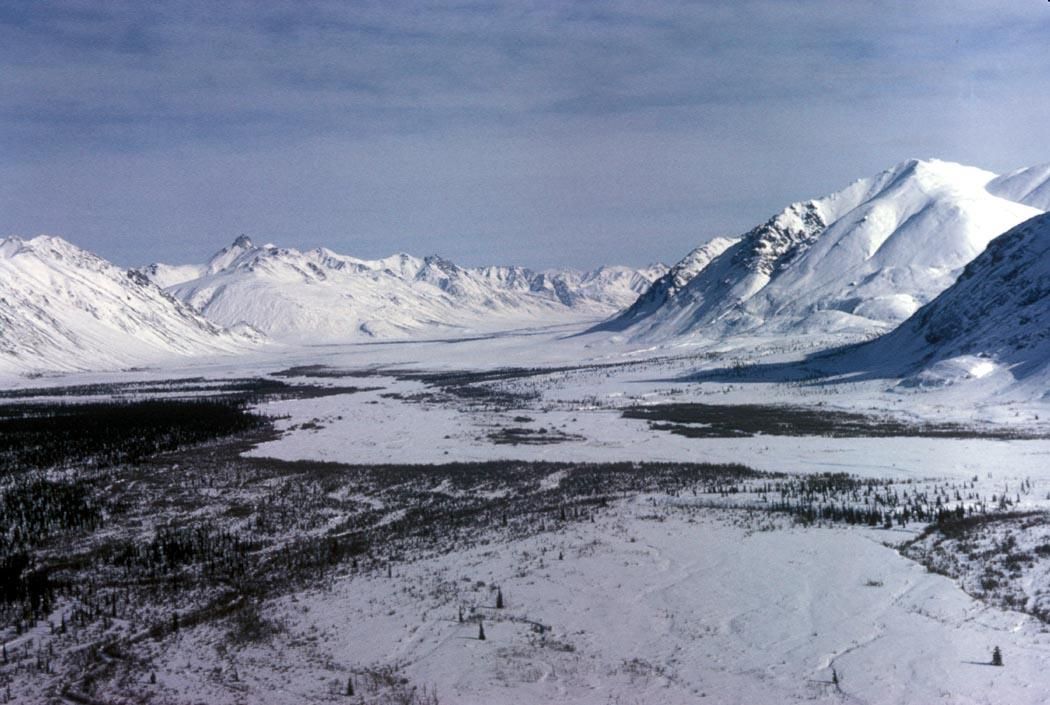
Recent attention has focused on Greenland as a focal point of Arctic strategy, a reminder that geography once treated as peripheral now sits squarely within the logic of continental defense. A similar shift is unfolding elsewhere in the Arctic, though with far less public notice. The Northwest Passage—the network of sea routes threading Canada’s Arctic Archipelago between the Atlantic and Pacific Oceans—has moved from a seasonal curiosity to a corridor of growing strategic consequence. As activity increases, questions long treated as theoretical, including the legal status of those waters, are being pushed toward practical resolution.
The Northwest Passage will be a practical reality
The legal status of the Northwest Passage has never been resolved in court, yet it is increasingly being settled in practice. As polar ice retreats and Arctic traffic grows, Canada’s claim that the waters of its Archipelago constitute internal waters is no longer tested mainly through legal argument or diplomatic restraint. It is increasingly tested by whether Ottawa can exercise sustained authority over a space that now sees routine movement and persistent activity. In this environment, the decisive question is not how the Passage is defined on paper, but whether Canada can govern movement through it under operational pressure and allied scrutiny.
For decades, Canada and the United States have maintained opposing interpretations of the Passage, while explicitly agreeing to disagree. Ottawa has continued to assert that the channels between its Arctic islands constitute internal waters subject to Canadian law. Washington has maintained that the route qualifies as an international strait open to transit passage. At the same time, both governments agreed to a practical accommodation: the United States avoided routine transits that would force a direct challenge to Canada’s claim, and Canada refrained from pressing enforcement actions that would compel Washington to contest its position.
As the ice melts, we will see whether anyone owns the Northwest Passage
That modus vivendi held because it was rarely tested. Ice limited access, traffic remained sparse, and enforcement questions arose only intermittently. As those conditions recede, the tacit agreement that once tempered the dispute may well begin to erode. And if that happens, the degree to which Washington challenges Ottawa’s sovereignty claims over the Passage will likely depend on how effectively Canada can actually govern the Passage – and specifically on how well it can reassure the United States that it can do so in a way that adequately secures continental economic and security interests.
Maritime Traffic and the Test of Surface Authority
The first pressure point appears at sea level. Commercial vessels pursuing shorter polar routes, research ships operating under foreign flags, and ice-capable hulls designed for northern waters are transiting channels that once saw limited use. Each passage through the Archipelago carries implications for governance. Canada must be able to identify vessels, determine the purpose of their transit, and respond when standards are ignored. These obligations exist under Canadian law, yet their significance lies in execution rather than assertion.
Where monitoring is inconsistent, authority thins quickly. Surface governance depends on presence that is regular rather than occasional. Each additional transit turns the Northwest Passage from an abstract dispute into a practical test of control. Over time, patterns of movement matter more than statements of principle.
Aerospace Warning and the Limits of Persistence
Control of the Northwest Passage is tested as much in the air as on the water. Routine maritime movement quickly intersects with aerospace warning requirements tied to continental defense, exposing limits that surface enforcement alone cannot address. The North Warning System no longer provides consistent coverage across key Arctic approaches, which complicates the tracking of aircraft and surface activity near the eastern Archipelago. Constraints on persistent air presence and limited icebreaking capacity further narrow Canada’s ability to sustain awareness when conditions deteriorate. Sparse infrastructure compounds these limits by slowing response and coordination. Together, these factors shape how Canada’s role is assessed within NORAD, regardless of unresolved legal doctrine.
Repairing the Architecture of Continental Defense
Ottawa has begun to address these vulnerabilities, though the effort remains incomplete. Investment in NORAD modernization is intended to replace the North Warning System with polar over-the-horizon radar supported by layered sensors. The planned acquisition of P-8A maritime patrol aircraft is expected to extend surveillance across key approaches to the Archipelago and adjacent seas. Arctic patrol ships are entering service to support inspections and escorts. A new polar icebreaker is under contract to extend Coast Guard reach into harsher conditions, though delivery timelines remain uncertain.
Canada’s intention to procure submarines capable of under-ice operations reflects recognition that some areas cannot be monitored effectively from the surface. Taken together, these initiatives are designed to move Canada toward a more persistent architecture. Their impact will depend on integration and sustained availability rather than announcement.
Infrastructure, Resources, and Strategic Exposure
The stakes extend beyond navigation alone. Arctic development and continental security are becoming more tightly linked. Critical mineral projects in northern regions depend on reliable sea and air routes. Submarine cables crossing the Arctic seabed require protection against interference. Disruption of shipping or communications infrastructure would not remain a local concern. It would draw in allied coordination and expose gaps in governance.
The same capabilities that underpin authority over the Passage support these broader interests. Where oversight is thin, vulnerability grows. Governance failure in the Northwest Passage would carry consequences that extend well beyond legal doctrine.
Governing the Northwest Passage in Practice
Canada retains options to strengthen its position if it chooses to accelerate beyond current commitments. Expanded radar coverage across key channels would improve persistence. Greater investment in northern basing would support more regular aviation operations. Additional patrol vessels and icebreaking capacity would enhance routine enforcement. Submarine capabilities designed for Arctic conditions would extend awareness into areas unreachable by surface assets.
None of these measures would alter American doctrine regarding transit passage. They would allow Canada to govern the space it defines as internal with greater consistency, even as legal disagreement persists.
Capability as the Decisive Measure
What ultimately decides the status of the Northwest Passage is not a legal breakthrough or a diplomatic concession. It is whether Canada can match expanding responsibilities with sufficient capability. Modernization efforts point in that direction, yet progress will be judged by performance during the most demanding conditions. Winter operations provide a revealing benchmark. Authority that fades when ice thickens or daylight disappears will not endure.
In an Arctic that grows busier each year, the label attached to the Passage will follow the state that can govern it without interruption. Law will continue to frame the debate. Capability will decide the outcome.
This article was originally published by RealClearDefense and made available via RealClearWire.

Andrew Latham, Ph.D., a tenured professor at Macalester College in Saint Paul, Minnesota. He is also a Senior Washington Fellow with the Institute for Peace and Diplomacy in Ottawa and a non-resident fellow with DefensePriorities, a think tank in Washington, DC.








-

 Executive4 days ago
Waste of the Day: NYC’s $3.5 Million Toilets Are “In Purgatory”
-

 Civilization4 days ago
Does the Donroe Doctrine Now Extend to Outer Space?
-

 Civilization3 days ago
How Prepared Is the Defense Industrial Base for Iranian Cyber Attacks?
-

 Civilization4 days ago
Imminent Threat? Iran Was Existential Threat
-
 Civilization3 days ago
No Retreat, No Surrender: Why America Must Prevail in Iran
-

 Guest Columns2 days ago
Oklahoma’s Digital Future Will Be Built on Affordable, Reliable, Clean Energy Security
-
 Education4 days ago
Waste of the Day: AZ School Vouchers Used For Hot Tub, Wedding Gifts, More
-

 Executive3 days ago
Waste of the Day: Throwback Thursday – Helping Beverly Hills’ Low-Income Community