
Civilization
A Better U.S. Strategy for Greenland Than Annexation
The U.S. might not need to annex Greenland outright in order to guarantee its security against Russian or Chinese action.


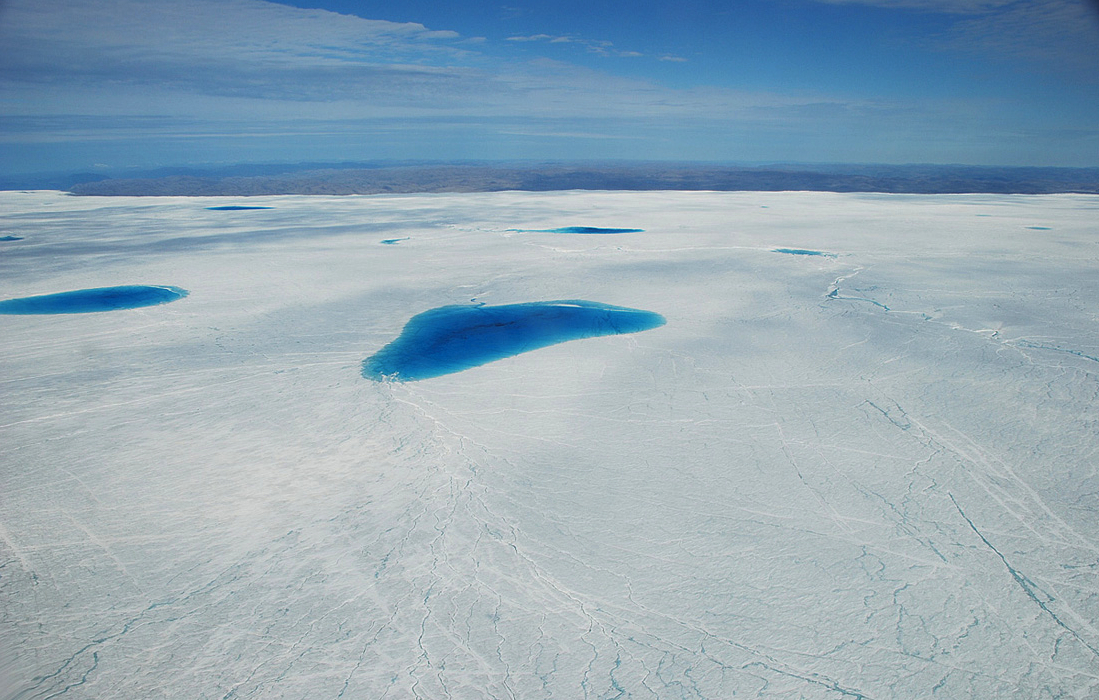
The Arctic is becoming a theater of strategic competition, and Greenland sits at its center. As Russia expands its military footprint in the High North and China declares itself a “near-Arctic state,” the United States faces a practical question: How can it secure durable access to one of the most strategically valuable territories in the world without destabilizing alliances or assuming new governance burdens? The answer is not to annex a place that does not want to become part of the United States, but in a model Washington has successfully used before.
The Trust Territory of the Pacific Islands
After World War II, Washington emerged in control of a vast stretch of Pacific islands seized from Japan. These territories, later grouped into the Trust Territory of the Pacific Islands, were seen as essential to Cold War U.S. military strategy. They sat along key sea lanes and air routes between the United States and Asia and became sites for bases, weapons testing, and early missile-warning infrastructure. Yet most of their inhabitants had little interest in becoming Americans or living indefinitely under direct U.S. rule.
Outright annexation would have created moral and logistical problems. Independence, however, threatened to put U.S. access at risk. Rather than choose one of those extremes, Washington pursued a third option. With United Nations approval, it administered the islands under trusteeship while negotiating long-term arrangements that separated sovereignty from security control.
After decades of negotiations, the result was a set of Compacts of Free Association that still shape U.S. power in the Pacific today. One part of the territory — the Northern Mariana Islands — chose political union with the United States. The rest became three independent states. All three allowed the United States to retain primary responsibility for their defense, exclusive military access rights, and broad strategic authority. In exchange, the associated states received financial support, economic access, and security guarantees. For Washington, this was not a compromise outcome. It was the preferred one.
Greenland, like the Pacific Islands, presents a similar security challenge
That history matters because Greenland presents a strikingly similar challenge. The island occupies a central position in the rapidly militarizing Arctic. It hosts critical U.S. infrastructure at Pituffik Space Base and sits along emerging sea and air corridors shaped by climate change. American planners want assured, long-term access. Greenlanders want political self-determination. Annexation satisfies one side at enormous cost to the other. Free association offers a cleaner, more flexible alternative.
Under such an arrangement, Greenland could become fully independent and then voluntarily enter into a compact with the United States. Washington would secure binding defense rights and strategic access without assuming the burdens of territorial governance. Greenland would retain sovereignty, with the ability to define the scope of cooperation and renegotiate terms over time. Unlike annexation, such an agreement would not require Congress to resolve questions of citizenship, representation, or constitutional status.
Free association is not limited to military matters. In the Pacific, the compacts created deep economic and administrative ties. These states use the U.S. dollar, participate in American federal programs such as aviation regulation and meteorological services, and enjoy privileged access to U.S. labor markets. Greenland could choose a narrower arrangement focused on defense or a deeper integration that included economic and infrastructural cooperation. The flexibility is the point.
The price of a free association treaty might be less than the expense of governance
Such an agreement would come at a price. The United States provides hundreds of millions of dollars annually to its freely associated states. Given Greenland’s size and strategic importance, the cost would likely be higher. But treaty payments are predictable, renegotiable, and ultimately cheaper than governing a new territory outright — or attempting to purchase it from a NATO ally.
What about Denmark? Copenhagen would hardly welcome being sidelined. Yet Denmark has repeatedly affirmed that Greenlanders have the right to determine their own future, including independence. A voluntary compact with the United States would be consistent with that principle, even if politically uncomfortable.
Trump has framed Greenland as something to be bought or taken. American history suggests a different approach. In the 19th century, the United States expanded by annexation. In the 20th, it increasingly pursued security and influence through arrangements that separated control from sovereignty. Free association is not a half-measure or a legal curiosity. It is a tested instrument of American global influence.
Such a deal would not satisfy maximalist ambitions. But it would deliver strategic certainty more quickly, at lower political cost, and with far greater legitimacy than annexation ever could. It would give Greenland security without surrendering self-rule. And it would reinforce a lesson the United States learned long ago: Power is often best exercised through negotiated frameworks rather than conquest.
This article was originally published by RealClearDefense and made available via RealClearWire.

Mark Kawar is the author of America, but Bigger, a history of American territorial expansion. He’s a former newspaper reporter and media executive. His writing focuses on America history and institutions.







-

 Executive4 days ago
Waste of the Day: Alabama Hired Lawyer for Lawsuits He Caused
-

 Civilization4 days ago
The Unholy Alliance: Moscow and Beijing’s Invisible Shield Over Tehran
-

 Executive5 days ago
Waste of the Day: Throwback Thursday – Crash Landing for NASA Video Game
-

 Civilization4 days ago
Reclaiming the Lunar High Ground
-

 Civilization3 days ago
Stimulating Creativity in Human-Machine Teams
-

 Civilization3 days ago
President Should Follow His Instincts, Not the Energy Markets
-

 Education2 days ago
Everything’s Bigger in Texas, Including School Debt
-

 Education2 days ago
Restoring Duty to God and Country