
Civilization
Becca Rothfeld’s Fanciful Demands of Liberalism
Becca Rothfeld has written a new book criticizing classical liberalism as neglecting human well-being. But she misunderstands both.


Give liberalism credit. It takes a lot to bring together high-brow intellectuals of the postliberal right and the postmodern-progressive left. Yet they make common cause, if largely unbeknownst to themselves, criticizing liberalism for systematically debasing American politics and desiccating the nation’s moral life.
What two diametric opposites say is wrong with liberalism
The shared deficiencies of their critique of liberalism bolster the postliberals and postmodern progressives’ peculiar fellowship. Both identify liberalism as the principal source of the agitation and acrimony plaguing America while obscuring liberalism’s defining features. And while a romanticized past enthralls the postliberals and a transcendent future intoxicates the postmodern progressives, both imperiously demand that politics yield the kind of sublime satisfactions and lofty attainments found in the realms of ethics, friendship, love, art, and faith.
The target is classical liberalism – Locke, Jefferson, et al.
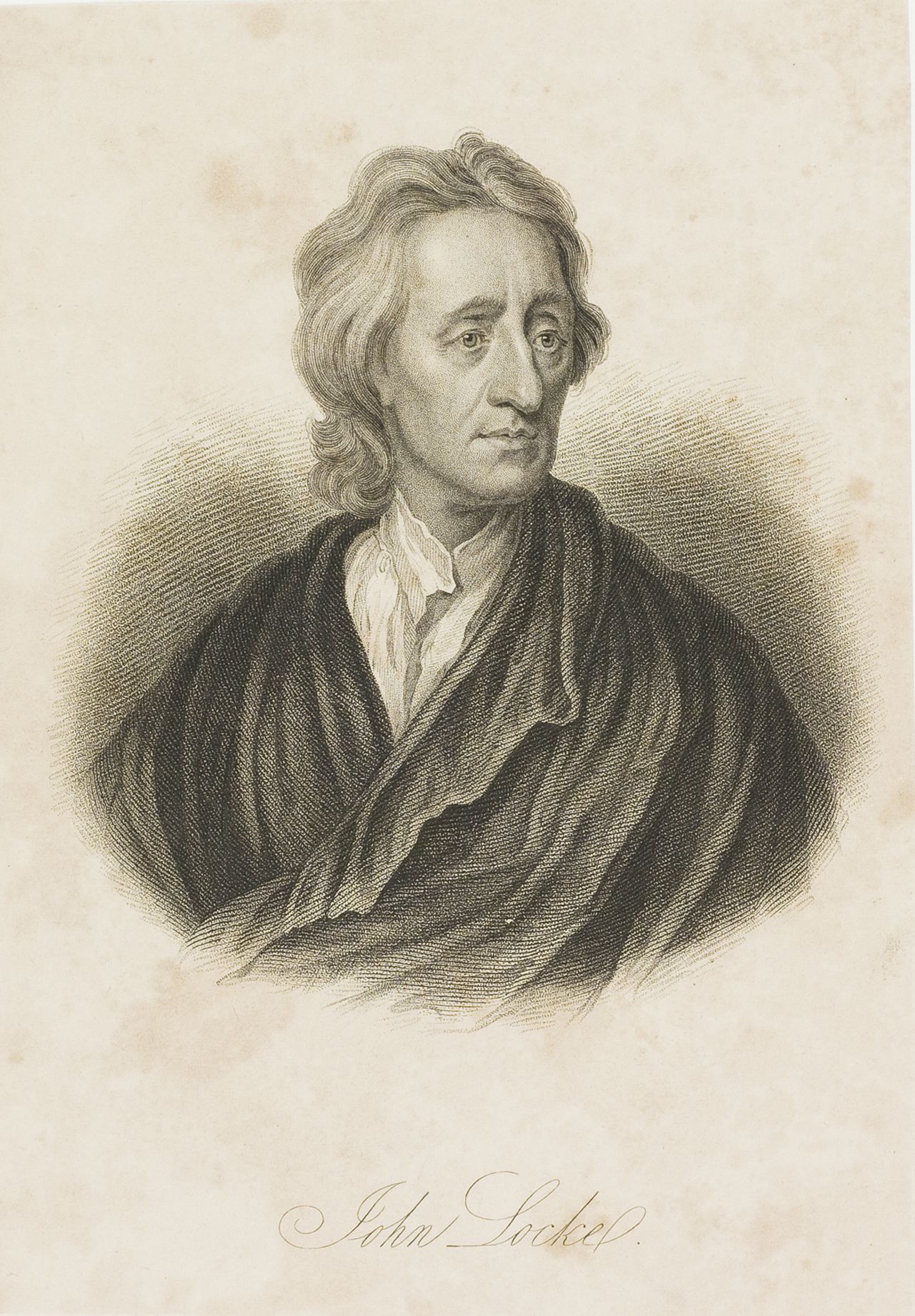
The liberalism that postliberals and postmodern progressives target is classical liberalism, or what might more aptly be called the modern tradition of freedom. The tradition came into its own in the 17th century with the publication of John Locke’s “Letter Concerning Toleration” (1689) and “Two Treatises on Government” (1690), which maintain that human beings are by nature free and equal and that Christianity and human reason alike teach toleration. America’s founders crystallized central elements of the tradition in 1776 in the Declaration of Independence, which holds that human beings are equally endowed with unalienable rights, that government’s primary task is securing those rights, and that government’s just powers derive from the consent of the governed.
The tradition gives rise to conservative and progressive priorities for advancing the public good: The conservative side emphasizes that limited government gives free individuals expansive room to cherish their families, maintain their communities, and serve God as conscience dictates; the progressive side stresses that the state must combat poverty, ignorance, disease, and infirmity to enable all citizens to enjoy freedom and partake of self-government. The tradition’s key ideas and institutions – and the debate between its conservative and progressive branches – continue to underwrite American constitutional government and, to a considerable extent, rights-protecting democracies around the globe.
Surely, though, where there is smoke there must be fire. That liberalism is under siege on both flanks must reflect a fatal flaw in conception or baleful defect in implementation.
Liberalism focuses on freedom to the detriment of well-being?
For postliberals and postmodern progressives, the fatal flaw in conception and the baleful defect in implementation spring from liberalism’s abandonment of the good life. Liberalism’s focus on freedom and toleration, they say, betrays at best a deplorable indifference to citizens’ well-being, spiritual and material. To counter liberalism’s concentration on the formalities of rights, institutions, and laws, postliberals envisage a government that unabashedly molds citizens’ souls. To correct liberalism’s acceptance in the name of liberty of social and economic inequalities, postmodern progressives want the state to aggressively regulate commerce and industry, redistribute wealth, and allocate benefits and burdens based on group membership. Neither postliberals nor postmodern progressives give much attention to the bleak historical record attesting to government’s woeful lack of competence to care for souls and to centrally plan social and economic life.
Postliberals and postmodern progressives wrongly suppose that by its very nature a limited government devoted to securing political and economic freedom must demote moral and intellectual virtue, subvert community, and repudiate faith. The American founders saw matters differently. For them, a government that safeguards individual rights keeps cultivation of the virtues, care of the soul, and religious obligation where they belong – in the hands of individuals, families, houses of worship, and civil society’s myriad voluntary associations.
The economic critique
Postliberals and postmodern progressives also accuse limited government of unleashing an economic free-for-all. America’s founders knew better. Through the protection of private property and the assignment to the federal government of power to regulate commerce, the Constitution maintains a system of voluntary exchange under law that harnesses citizens’ energy, talent, and ambition, enabling individuals to advance national prosperity by pursuing their private interests. At the same time, the Constitution provides the federal government and the states sufficient flexibility and institutional resources to cushion citizens against the market’s vagaries and imperfections.
The new critique of liberalism
In “Listless Liberalism,” Becca Rothfeld, The Washington Post nonfiction book critic, advocates a vibrant liberalism. In effect, though, she sides with the postliberal right and progressive-postmodern left against classical liberalism.
Her essay, appearing last month in The Point where she is also an editor, scolds and mocks two 2025 books that came to liberalism’s defense: “Abundance,” by The New York Times’ Ezra Klein and The Atlantic’s Derek Thompson, and “On Liberalism: In Defense of Freedom,” by Harvard Law School professor Cass Sunstein. Operating at the intersection of art, morality, and politics, Rothfeld faults both volumes for failing to grasp that the crisis of liberalism is in significant measure a crisis of the humanities. But it is Rothfeld who fails to grasp that insofar as the United States suffers from a humanities crisis it is not owing to America’s classical-liberal heritage but rather stems from humanities professors’ disparagement and abandonment of it.
Rothfeld’s criticism can be entertaining, dexterous, and thought-provoking. At other times it is harsh, glib, and plain wrong.
Taking the critique to task
Both “Abundance” and “On Liberalism” exhibit “the liberal tendency to fiddle while Rome goes up in flames,” she writes.
Both books fidget with the mechanics of the liberal machinery – Klein and Thompson with zoning laws and funding structures for scientific research, Sunstein with the minutiae of various arguments in favor of freedom of speech or particular rights – but neither deviates from the bright and conversational tone of a salesman armed with a pitch deck, and neither asks what life under liberalism is actually like.
In the jaded tone of an intellectual compelled to edify the clueless, Rothfeld complains that neither book faces up to “the end of history” which, according to her, “has been sallow, ugly, and deflating” as postliberals proclaim. Yet the material abundance that Klein and Thompson seek to strengthen and the rights, rule of law, and “experiments of living” that Sunstein celebrates are major features of life under liberalism. Rothfeld confuses what bores her with what is unimportant.
Acknowledging that both books “make a number of sensible and convincing points,” she finds that “both are wholly inadequate as attempts to rehabilitate liberalism on the eve of its decimation.” In her view, “neither addresses – or even acknowledges the importance of addressing – the most serious challenge to the liberal enterprise: the question of whether liberalism can support an ample humanism, of whether it can be beautiful and sweet and sustaining.”
Since when, though, is the job of “the liberal enterprise” to “be beautiful and sweet and sustaining”? Doesn’t the most serious challenge to the liberal enterprise in America remain as always securing citizens’ equal rights in a large and multireligious, multiracial, and multiethnic nation?
On aesthetics
That’s not nearly good enough for Rothfeld, who studied philosophy and German as a Dartmouth undergraduate, earned an M.Phil. in history and philosophy of science at the University of Cambridge, and concentrated on aesthetics and the history of philosophy at Harvard as a Ph.D. candidate.
She admonishes liberals who neglect the “beautiful and sweet and sustaining” that they
ignore these aesthetic matters at their own peril, for the aesthetic is no longer content to ignore their wonkery in exchange.
Set aside the pretentious attribution of impatience with “wonkery” to “the aesthetic,” as if “the aesthetic” were an affronted person rather than a manner of experiencing and evaluating. Instead of berating freedom’s defenders, Rothfeld might more rewardingly direct her ire at the literary types who take freedom’s blessings for granted and castigate liberty under law for their own shortcomings, setbacks, and sorrows.
Her critique of liberals and liberalism also suffers from unfamiliarity with ideas that she blithely derides. She asserts that conservatism “does not hesitate to impose a single vision on its adherents” though a major, if not dominant, strand in American conservatism champions limited government. She places Friedrich Hayek among the “laissez-faire fanatics” notwithstanding his subtle and multilayered restatement of classical liberalism in “The Road to Serfdom” and “The Constitution of Liberty.” And she characterizes John Rawls’ liberalism as “radically egalitarian” though he gives priority to liberty and limits redistribution by basic rights. In general, Rothfeld reduces liberalism to the opinions of today’s professors despite their tendency to present snippets that serve their narrow research agendas or offer a tendentious mix of idealizations and caricatures to advance their partisan political projects.
How the humanities failed liberalism
Rothfeld rightly insists that a culture steeped in the humanities provides essential nourishment to the liberal spirit. But the larger liberalism in which the American experiment is anchored did not, as she charges, fail the humanities; rather, the humanities failed that larger liberalism. For decades humanities professors have turned their backs on thoughtful study of, or have railed against, American political ideas and institutions and the great books of the West. Their insularity and self-absorption cheated students of an education that furnishes minds, sharpens intellects, and invigorates imaginations.
Our colleges’ and universities’ educational malpractice has deprived the nation of writers willing and able to enlist the imagination in defending political and economic freedom from the utopian broadsides of the postliberal right and postmodern-progressive left. And it has left the country in short supply of readers capable of appreciating such writers.
This article was originally published by RealClearPolitics and made available via RealClearWire.

Peter Berkowitz is the Tad and Dianne Taube senior fellow at the Hoover Institution, Stanford University. From 2019 to 2021, he served as director of the Policy Planning Staff at the U.S. State Department.










-

 Civilization3 days ago
Stealth, Sensors, and Staying Power: What the F-35 Just Proved—and What Comes Next
-

 Executive3 days ago
Citizen Sleuths Spotlight Red Flags Galore in Government Spending
-

 Guest Columns4 days ago
Oklahoma’s Digital Future Will Be Built on Affordable, Reliable, Clean Energy Security
-

 Executive5 days ago
Waste of the Day: Throwback Thursday – Helping Beverly Hills’ Low-Income Community
-

 Civilization2 days ago
Dems Scramble After California Governor’s Debate Implodes
-

 Civilization3 days ago
Waste of the Day: Cybersecurity Programmers Have Foreign Ties
-

 Executive3 days ago
A Consent Decree for Freedom of Speech
-
 Executive2 days ago
America’s $130 Trillion Blind Spot