
Civilization
Trump, China, and the Strategic Blind Spot in U.S. Policy
Communist China has operated within a blind spot in American strategic thinking, that fails to recognize Chinese intent to rule the world.


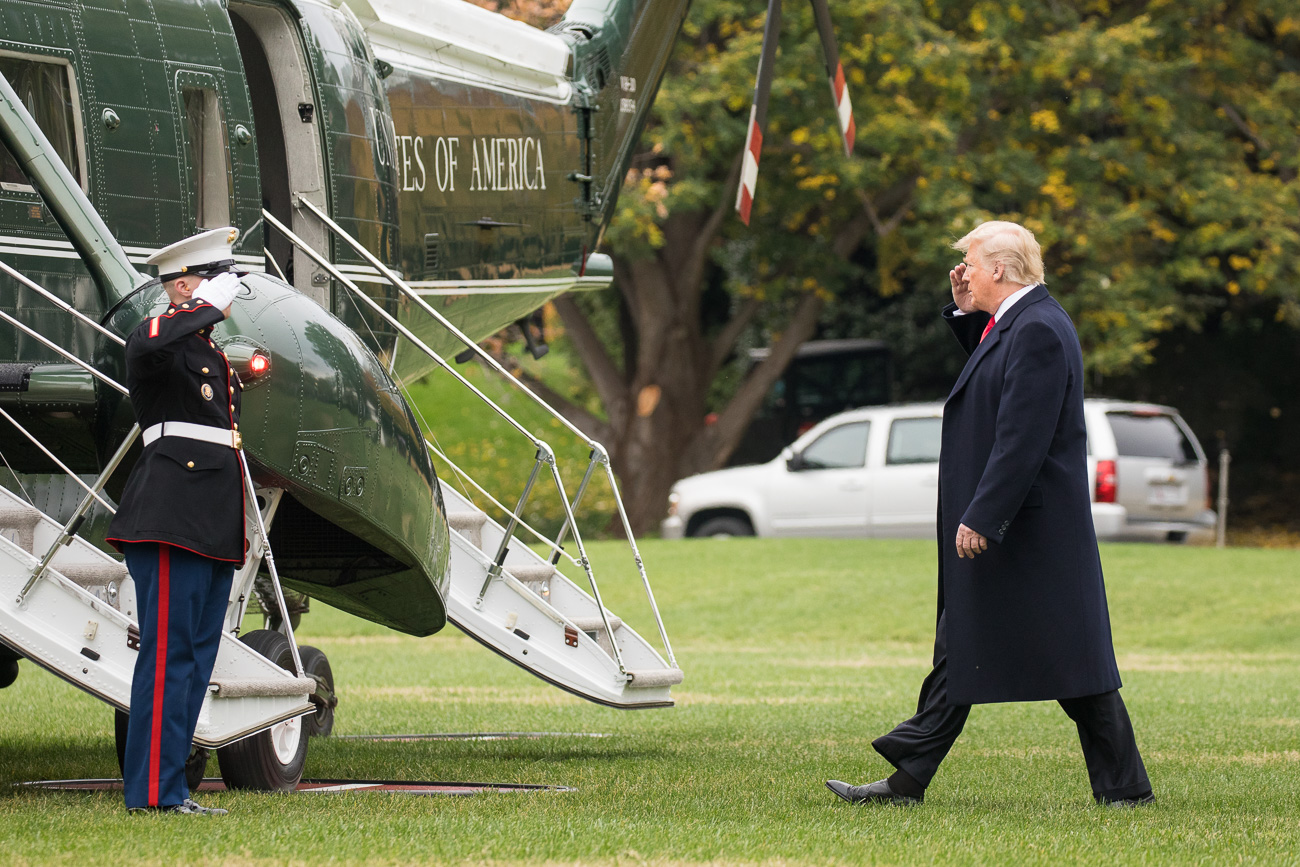
President Donald Trump’s planned visit to China in May comes at a moment of rising tensions that go well beyond trade. This is not about tariffs. It is about power — who builds and controls the technologies that will shape the next decade. It is also about whether the United States is prepared to confront a competitor that increasingly links economic capability with geopolitical intent.
China supplied chip-making technology to the Iranian military
Recently it was reported that Beijing is supplying chipmaking technology to Iran’s military. This only drives the point home. Beijing is not a neutral economic actor. It is a strategic competitor willing to use industry and supply chains to advance geopolitical interests. This convergence between commercial activity and security policy is becoming explicit.
For years, Trump’s hard line on China was dismissed as erratic. That critique has not aged well. Today, there is broad agreement across Washington that China poses a systemic challenge. The problem is the lack of a strategy that matches the diagnosis.
China does not compete on market terms alone. Its firms operate with state backing and within protected domestic markets in alignment with national priorities and interests. When they expand abroad, they do so with the weight of the communist state behind them.
The implications are visible in the Iran case. If Chinese entities are enabling Tehran’s military capabilities, these are not isolated transactions. They reflect a pattern: support for actors that challenge U.S. interests, combined with plausible deniability through commercial channels. That dual-use ambiguity is a feature — not a flaw — of the system.
Yet Washington’s response often remains narrow. Policy debates still revolve around tariffs, incremental export controls, and case-by-case enforcement. While these tools matter, they are not enough.
The real competition is over infrastructure, ranging from 5G networks to AI systems to cloud architecture. Standards, platforms, and ecosystems will define long-term advantage.
How to compete with China
That raises a more difficult question, not just how to constrain China but how to compete with it. And that requires choices that extend beyond defensive measures.
One overlooked front is the strength of U.S. technology firms. Washington has spent years focused on regulating scale. Far less attention has been paid to whether American companies are allowed to achieve it —especially when competing against state-backed rivals. In global markets, fragmentation can be as much a liability as concentration.
Take the proposed merger between two U.S. networking companies, Hewlett Packard Enterprise (HPE) and Juniper Networks. Both operate at the backbone of digital infrastructure, providing the networking, cloud, and data systems that underpin everything from enterprise operations to government and defense communications.
When the HPE-Juniper deal was first announced, the Department of Justice was skeptical, and rightly so. The proposed merger was very large and needed to be assessed for its impact on competition. However, the DOJ was right to ultimately settle and approve the deal.
For one, the merger did not appear to eliminate meaningful head-to-head competition in a way that would harm consumers. However, when it comes to national security, the bigger question is not what the deal means domestically, but what it means strategically and geopolitically.
China is not asking whether its firms are too big. Huawei and others expand globally with state financing, political backing, and diplomatic support. In sectors like networking and AI infrastructure, scale is not a luxury — it is a prerequisite.
Firms scale globally
This dynamic is not unique to networking. Across sectors, U.S. firms are often evaluated in isolation, while Chinese competitors scale globally with coordinated state backing and long-term industrial policy.
The risk is straightforward. A narrow, domestic reading of competition policy can leave U.S. firms smaller, fragmented, and less able to compete internationally, while Chinese rivals scale rapidly with state support. This is not a theoretical concern. It is already happening. Once lost, technological leadership is difficult to regain.
That China is now supplying Iran with its chipmaking technology should be a wake-up call. Competition policy cannot be blind to the global environment in which it operates. It must account for the fact that competitors abroad are not constrained in the same way.
Trump’s approach reflects this asymmetry. His administration is willing to apply pressure— through tariffs, sanctions, and export controls — in ways previous administrations avoided. Critics focus on the costs. But the alternative — passively accommodating a state-driven competitor — carries far greater long-term risks. The costs of inaction are less visible but ultimately higher.
A coherent strategy
What is needed now is a more coherent approach. That includes continued pressure on China where national security is at stake. But it also requires strengthening domestic capacity — by investing in innovation, securing supply chains, and ensuring that U.S. firms can compete at scale. That balance between constraint and capability will determine the outcome of this competition.
This is what makes Trump’s upcoming visit to China so consequential. It is not just a diplomatic exercise but an opportunity to signal that the U.S. understands the nature of the competition it is in.
If the administration approaches the U.S.-China relationship as a series of isolated issues, it is playing the wrong game. China is not compartmentalizing. It is integrating economic power, industrial policy, and geopolitical ambition into a single strategy.
The U.S. must do the same. That means confronting China where necessary but also ensuring that American companies have the scale and support to compete globally. Otherwise, Washington risks talking tough abroad while undercutting its own position at home.
This article was originally published by RealClearDefense and made available via RealClearWire.

Daniel Schatz, PhD, is an international affairs expert and journalist. He was a visiting scholar at Harvard, Stanford, Georgetown University's Walsh School of Foreign Service, Harvard University’s Program on Transatlantic Relations, Stanford University's Freeman Spogli Institute for International Studies, Columbia University’s School of International and Public Affairs, and New York University’s Center for European and Mediterranean Studies. He was appointed as a non-resident Visiting Researcher at New America’s International Security Program, the Europe Forum of the Hebrew University of Jerusalem and at Lund University’s Center for Middle Eastern Studies.



-

 Civilization3 days ago
Iran’s Chemical and Biological Options in a U.S. Ground Invasion
-

 Civilization4 days ago
How Iran Put the World in a Straitjacket
-

 Executive5 days ago
Waste of the Day: Lawyers Rake in Fees From Chicago’s Wrongful Convictions
-

 Civilization4 days ago
Why Military Bases Should Never Have Been Gun-Free Zones
-

 Civilization2 days ago
NATO and the Bar Fight: A Bar Tab Europe Expects America To Pay Forever
-

 Civilization2 days ago
The Ideological Parallels Between ISIS and the IRGC
-

 Civilization2 days ago
NATO: No Action, Talk Only — The Alliance That Forgot How to Fight
-

 Executive4 days ago
Waste of the Day: Throwback Thursday – Smokey Bear Balloon Has High Price Tag