
News
Viagra may decrease risk of Alzheimer’s by up to 69 percent, researchers claim

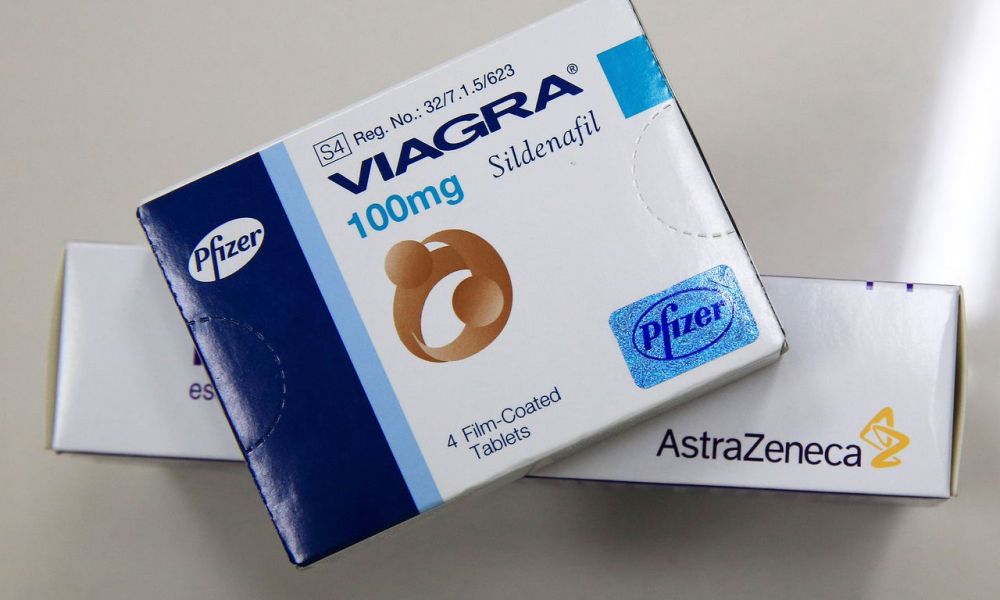
Research has suggested that taking Viagra decreases the risk of developing Alzheimer’s by two-thirds. Experts have claimed that the drug could help boost brain health and cut levels of the toxic proteins known to trigger dementia.
Researchers looked at data on 7.2 million U.S. adults, and they found that regular users had a 69 percent lower chance of being diagnosed with Alzheimer’s within the next six years.
Medics have said in the findings, which were published in the journal Nature Aging, say the little blue pill might soon be prescribed to take on the memory stealing disease. They are currently planning a new study to test the effects of sildenafil, the generic name for Viagra, in patients with early Alzheimer’s.
A group from the Cleveland Clinic were looking to see whether any of 1,600 already approved drugs could possibly be repurposed to tackle the underlying causes of Alzheimer’s.
“Sildenafil, which has been shown to significantly improve cognition and memory in preclinical models, presented as the best drug candidate,” said lead researcher Dr. Feixiong Cheng from Cleveland Clinic’s Genomic Medicine Institute. “Sildenafil may have neuroprotective effects and reduce level of toxic tau proteins.”
About 850,000 Brits are struck with the disease, and the figure is expected to reach 1 million within the next ten years. Two out of three cases of dementia are due to Alzheimer’s.
Lecturer in medical sciences at the University of Tasmania, Dr. Jack Auty said about the possibility of repurposing Viagra, “This is exciting stuff, but we need further research. In the field of Alzheimer’s disease research, we have been excited by many drugs over the years, only to have our hopes dashed in clinical trials.”
Dr. Susan Kohlhaas from Alzheimer’s Research UK was also cautious about the findings. “The researchers conducted lab-based experiments to give an indication as to why the drug may have impact [on] diseases like Alzheimer’s, but these early-stage experiments would need follow-up in more thorough tests,” she said.

Terry A. Hurlbut has been a student of politics, philosophy, and science for more than 35 years. He is a graduate of Yale College and has served as a physician-level laboratory administrator in a 250-bed community hospital. He also is a serious student of the Bible, is conversant in its two primary original languages, and has followed the creation-science movement closely since 1993.
-

 Civilization5 days ago
The Terror Threat Americans Aren’t Supposed To Discuss
-

 Civilization5 days ago
Penetrating the Inner Sanctum
-

 Executive4 days ago
Waste of the Day: Throwback Thursday – NSF Funded “Prom Week” Video Game
-

 Civilization4 days ago
Next Gen Propulsion – the Time Is Now
-

 Civilization3 days ago
FBI Misled Court To Spy on Second Trump Campaign Adviser
-

 Education3 days ago
Waste of the Day: Failing Texas School Paid Supt. $900K
-

 Civilization3 days ago
Secret Service Agent Faulted for Butler Failures Suspended Again
-

 Civilization3 days ago
A New Way to Measure U.S. Energy Security