
Executive
America’s Energy Economy: Why Natural Gas and Nuclear Still Matter
Natural gas and nuclear energy are still necessary parts of sound energy policy, even as America researches the energy of the future.


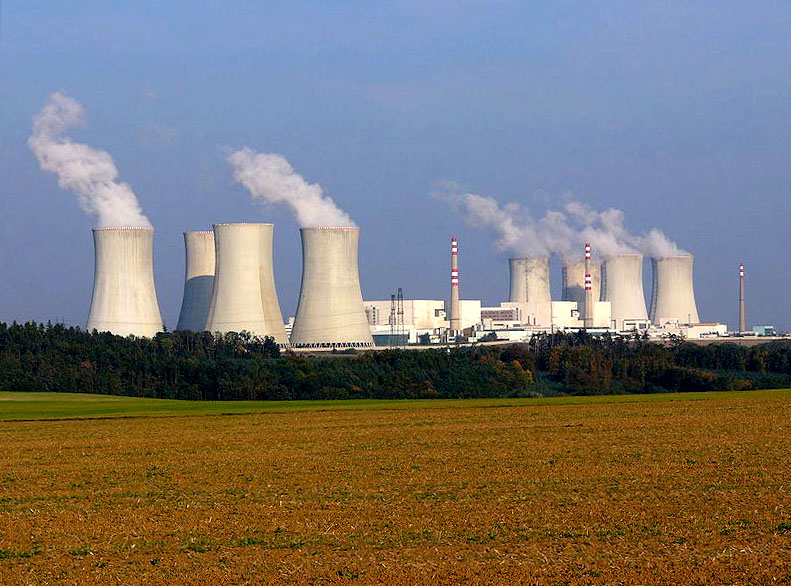
Energy debates in America are often framed as a choice between the future and the past. But when it comes to the U.S. economy, that framing misses a crucial reality: reliable energy is not just an environmental or geopolitical issue, it is an economic one. And today, natural gas and nuclear energy remain a key foundation to American prosperity.
About oil and natural gas
When all impacts are included (both direct and indirect), the oil and natural gas industry contributes between $2.0 trillion and $2.4 trillion to U.S. Gross Domestic Product, representing roughly 7 to 8% of the total economy. Natural gas alone accounts for more than half of that share. These are not speculative numbers; they are derived from multiple methodologies from trusted resources.
That economic scale matters especially for an economy like Michigan’s, where manufacturing, agriculture, chemicals, autos, and logistics depend heavily on affordable and reliable energy inputs.
The Direct Economic Footprint of Gas and Nuclear Energy
At the most basic level, natural gas and nuclear energy are producers of value. Oil and gas extraction, pipeline transportation, refining, and related support activities generate hundreds of billions of dollars in direct economic output each year. According to U.S. Bureau of Economic Analysis (BEA) data, oil and gas extraction alone contributed more than $250 billion in value-added output in 2024, up significantly from 2021.
Nuclear energy’s direct GDP contribution is smaller at approximately $74 billion, but that number understates its importance. Nuclear plants are capital-intensive, operate at high capacity, and provide stable, carbon-free baseload power that supports industrial activity far beyond the electricity sector itself. Like natural gas, nuclear energy has significant potential for growth as demand increases.
The Multiplier Effect: Where the Real Impact Lies
The true economic power of natural gas is not limited to what comes out of the ground. It lies in what natural gas makes possible.
Natural gas is a critical feedstock for thousands of products Americans rely on every day: agricultural fertilizers, plastics used in automobiles, medical devices, and consumer goods, pharmaceuticals, packaging materials, synthetic fabrics, paints, sealants, and adhesives. Even the dashboard of a car or the insulation in a home contains components that trace back to natural gas.
When economists account for this web of interconnections, the multiplier effects become substantial. Using standard RIMS II multipliers, each dollar of natural gas activity can generate $1.38 to $2.50 in total economic output. Without natural gas, many downstream industries would either face dramatically higher costs or cease to be competitive altogether.
In practical terms, that means higher prices for consumers, weaker global competitiveness for U.S. manufacturers, and fewer jobs across the supply chain.
Jobs and Wages That Support Communities
The oil and natural gas industry also supports millions of American jobs, many of them high-wage and highly skilled. A 2021 Price Waterhouse Coopers study found the industry was responsible for 10.8 million jobs, or roughly 5.4% of total U.S. employment.
Labor income tied to the sector exceeded $900 billion, representing more than 6% of total U.S. labor income. These are jobs that support families, strengthen tax bases, and anchor local economies across the country, from energy-producing states to industrial regions like the Midwest.
Nuclear energy jobs, while fewer in number, are similarly high-paying and technically demanding. Nuclear plants often rank among the largest employers in their regions and provide long-term employment stability that is increasingly rare in the modern economy.
Multiple Methods, Same Conclusion
One of the strengths of the underlying analysis is consistency across different approaches.
Using a top-down method based on federal and industry estimates, oil and natural gas account for roughly 8% of U.S. GDP, or about $2.3–$2.4 trillion in a $30 trillion economy. A separate analysis based on earlier PwC studies (adjusted for inflation and production growth) arrives at nearly the same result. Even a conservative extrapolation using limited BEA categories yields a lower-bound estimate of $2.0 trillion.
Different assumptions, different data sets reach the same conclusion: oil and natural gas remain among the most economically significant sectors in the U.S.
What This Means for Policy – Gas and Nuclear Still Important
None of this is an argument against invention and/or innovation, cleaner technologies, or long-term environmental goals. It is an argument for realism.
Energy transitions succeed when they build on existing strengths, not when they attempt to erase them. Natural gas has already played a major role in reducing U.S. carbon emissions by displacing higher-emission fuels. Nuclear energy remains the nation’s largest source of carbon-free electricity. Together, they provide reliability and affordability that allow the broader economy to function.
Policies that unnecessarily restrict domestic energy production risk weakening the very industries they aim to modernize. They also risk exporting jobs, emissions, and economic value to countries with lower standards and fewer environmental protections.
A Strategic Asset
For Michigan and the nation, energy should be viewed as a strategic and economic asset, not a political talking point. Manufacturing competitiveness, food production, health care, transportation, and national security all depend on energy systems that are abundant, reliable, affordable, and in the case of natural gas and nuclear – quite clean.
The data is clear. Natural gas and nuclear energy are not marginal players in the U.S. economy. They are central pillars supporting trillions of dollars in economic activity, millions of jobs, and the everyday products that define modern life.
Ignoring that reality does not move the country forward. Understanding and leveraging it does.
This article was originally published by RealClearEnergy and made available via RealClearWire.

Dr. Timothy G. Nash is director of the McNair Center at Northwood University.

Dr. Adam Okulicz-Kozaryn is associate professor of public policy at Rutgers University, Camden.

Bob Thomas is COO of the Michigan Chamber of Commerce.

Dr. Thomas Rastin is a retired business executive from Ohio.











-

 Civilization4 days ago
Winning in Iran Requires More Than Military Success
-

 Civilization4 days ago
Epic Fury as It Is: A Look Inside
-

 Guest Columns5 days ago
Waste of the Day: $34 Billion In Secretive Military Funding
-

 Executive2 days ago
Waste of the Day: Alabama Hired Lawyer for Lawsuits He Caused
-

 Education3 days ago
Waste of the Day: School Officials Claim Safari Was “Professional Development”
-

 Executive3 days ago
Hell No, We Won’t Go!: A Florida Man’s Response to NY’s Gov. Hochul
-

 Executive3 days ago
Waste of the Day: Throwback Thursday – Crash Landing for NASA Video Game
-

 Civilization2 days ago
The Unholy Alliance: Moscow and Beijing’s Invisible Shield Over Tehran