
Civilization
What the Venezuela Case Means for the Korean Peninsula
The United States operation in Venezuela has strategists in North and South Korea watching – and in China, too.


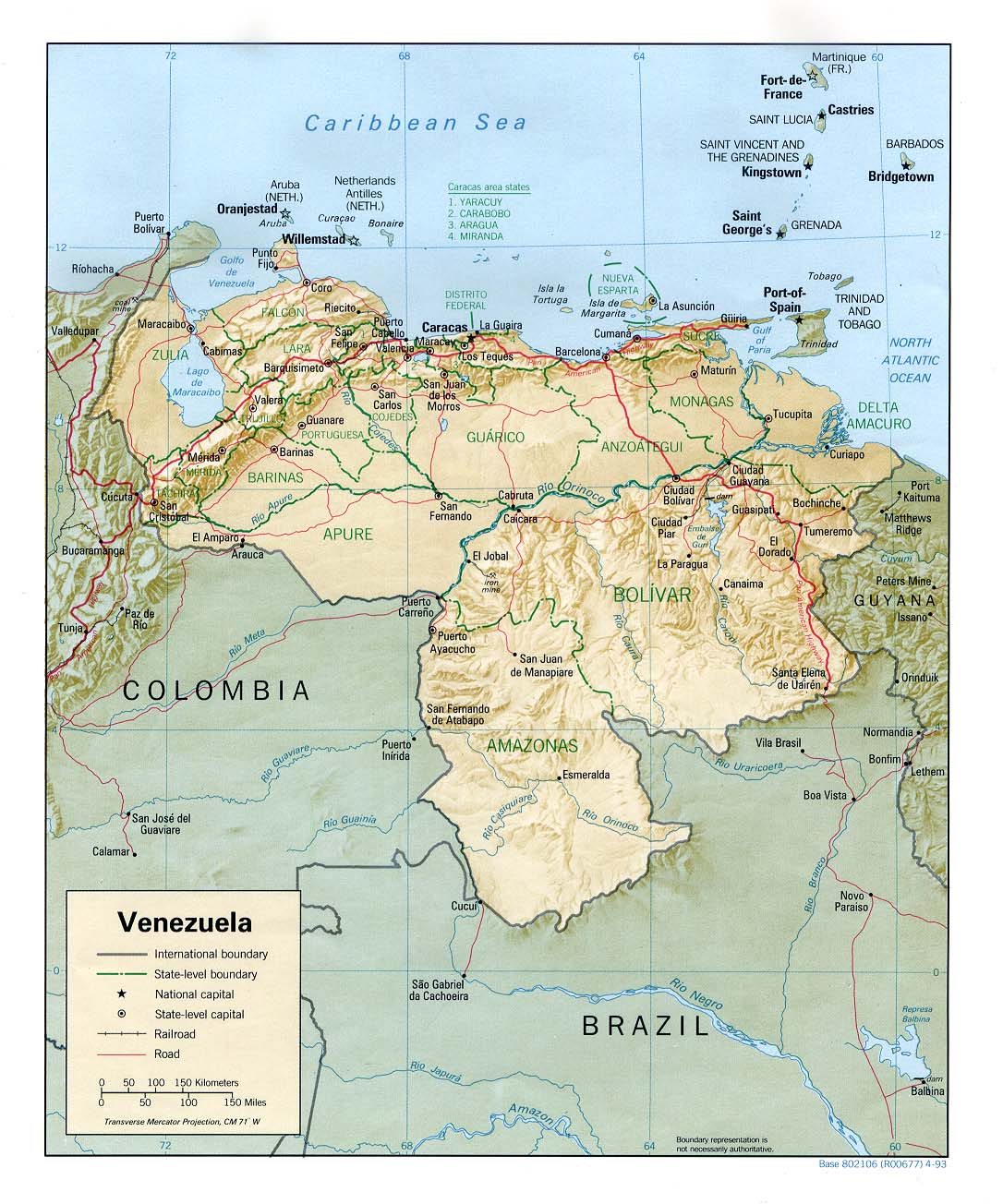
The United States operation in early January 2026, including airstrikes and raids in Venezuela that ended with President Nicolás Maduro being taken into United States custody and President Trump’s statement that the United States would temporarily run Venezuela, matters for the Korean Peninsula not because Venezuela is strategically central to Northeast Asia, but because it reshapes expectations about how major powers use force, justify it, and communicate it.
Venezuela and North and South Korea
For Seoul, the most immediate implication is normative and informational. Pyongyang quickly portrayed the incident as evidence of a United States violation of sovereignty, using unusually strong language through the Korean Central News Agency and foreign ministry statements. This is not mere rhetoric. North Korea has long argued that United States power is inherently oriented toward regime change and that nuclear weapons are the only reliable insurance. When Washington uses military force to seize a sitting leader abroad and frames it publicly as both punitive and transitional, it becomes a convenient example that Pyongyang can use to reinforce domestic legitimacy and strengthen its external narrative.
The signaling effect was amplified by timing. North Korea launched multiple ballistic missiles into the sea just as South Korean President Lee Jae Myung began a state visit to China, a moment widely interpreted as political and strategic signaling intended to raise regional tension and assert relevance. In that sense, the Venezuela incident became part of a broader set of events that Pyongyang can connect into a single story, even if they are geographically unrelated. North Korea is skilled at linking separate developments into a unified message designed to influence perceptions.
Complications for the alliance
The incident can also complicate alliance politics and deterrence messaging. The ROK-U.S. alliance depends not only on military capability but also on a shared narrative of legitimacy and restraint, especially when Seoul seeks broad international support for pressuring North Korea’s weapons programs and improving sanctions enforcement. If partners interpret the Venezuela operation as crossing legal or sovereignty lines, Washington may face greater difficulty building coalitions elsewhere. For the Korean Peninsula, that matters because effective sanctions and interdiction efforts depend on sustained international legitimacy and coordination.
There is also a precedent concern. If the international community accepts a major power’s cross border seizure of a head of state, justified as a blend of law enforcement and national interest, other actors may internalize a more permissive standard for extraterritorial coercion. The risk for Korea is not that the Venezuela scenario will be replicated directly in Northeast Asia, but that the norm that sovereignty is a hard stop will weaken further. That erosion can lower inhibitions in gray zone competition and crisis brinkmanship. North Korea can cite the episode to justify more aggressive defensive actions, while China and Russia can use it to challenge United States criticism of their own coercive behavior.
What the Venezuela operation says about the United States
The operation also intersects with Seoul Beijing diplomacy at a sensitive moment. President Lee’s China visit, focused on economic cooperation and broader stabilization, took place amid North Korea’s missile launches and a global debate triggered by Venezuela. China has incentives to present itself as a stabilizer and to encourage South Korea to hedge against perceived United States unpredictability, especially if Washington is portrayed as willing to use force to shape political transitions. Even if Seoul rejects that framing, it can still change the tone and leverage dynamics of regional diplomacy.
The episode raises a practical question that Korean strategists will recognize. Does United States activism outside the Indo Pacific dilute attention and political bandwidth, or does it demonstrate capacity and resolve. The answer is likely mixed. The operation itself may not meaningfully affect force availability for Korea, but political aftershocks such as legal scrutiny, congressional debate, and allied controversy can absorb senior level attention and complicate crisis management. Deterrence on the Peninsula is sustained partly by perceptions of coherent United States decision making, so visible domestic disputes can matter.
Propaganda value
For policymakers in Seoul, the most actionable implication is to prepare for an intensified messaging contest. North Korea will try to fold Venezuela into its long standing claim that United States alliances are instruments of domination rather than collective security. China will emphasize sovereignty and non interference, while selectively downplaying coercion by its partners. The alliance response should be disciplined. It should separate the Venezuela case from Korean Peninsula contingencies, reinforce that deterrence and crisis stability in Korea are defensive and treaty based, and keep attention on North Korea’s violations of United Nations Security Council resolutions through missile and nuclear activities.
In short, Venezuela is strategically relevant to Korea not because it changes the military balance on the Korean Peninsula overnight, but because it reshapes the legitimacy environment in which deterrence, sanctions, diplomacy, and crisis signaling operate. For Pyongyang, it offers propaganda material and a justification narrative. For Beijing, it offers leverage in sovereignty discourse. For Seoul, it is a reminder that major power actions in one theater can reverberate through alliance politics and regional stability in another.
Jihoon Yu is the director of external cooperation and an associate research fellow at the Korea Institute for Defense Analyses.
This article was originally published by RealClearWorld and made available via RealClearWire.

Jihoon Yu is a research fellow and the director of external cooperation at the Korea Institute for Defense Analyses. Jihoon was the member of Task Force for South Korea’s light aircraft carrier project and Jangbogo-III submarine project. He is the main author of the ROK Navy’s Navy Vision 2045. His area of expertise includes the ROK-US alliance, the ROK-Europe security cooperation, inter-Korean relations, national security, maritime security, and maritime strategy. He earned his MA in National Security Affairs from the US Naval Postgraduate School and PhD in Political Science from Syracuse University.




-
 Civilization4 days ago
Stealth, Sensors, and Staying Power: What the F-35 Just Proved—and What Comes Next
-
 Executive4 days ago
Citizen Sleuths Spotlight Red Flags Galore in Government Spending
-

 Guest Columns5 days ago
Oklahoma’s Digital Future Will Be Built on Affordable, Reliable, Clean Energy Security
-

 Civilization3 days ago
Dems Scramble After California Governor’s Debate Implodes
-

 Executive4 days ago
A Consent Decree for Freedom of Speech
-

 Civilization4 days ago
Waste of the Day: Cybersecurity Programmers Have Foreign Ties
-

 Executive3 days ago
America’s $130 Trillion Blind Spot
-

 Civilization2 days ago
Iran Could Reshape the Middle East and the Global Balance of Power