
Executive
Waste of the Day: Lax Oversight of Oil, Gas Royalties
The federal government has been fearfully lax in overseeing the payment of royalties for oil and gas drilling on federal land.


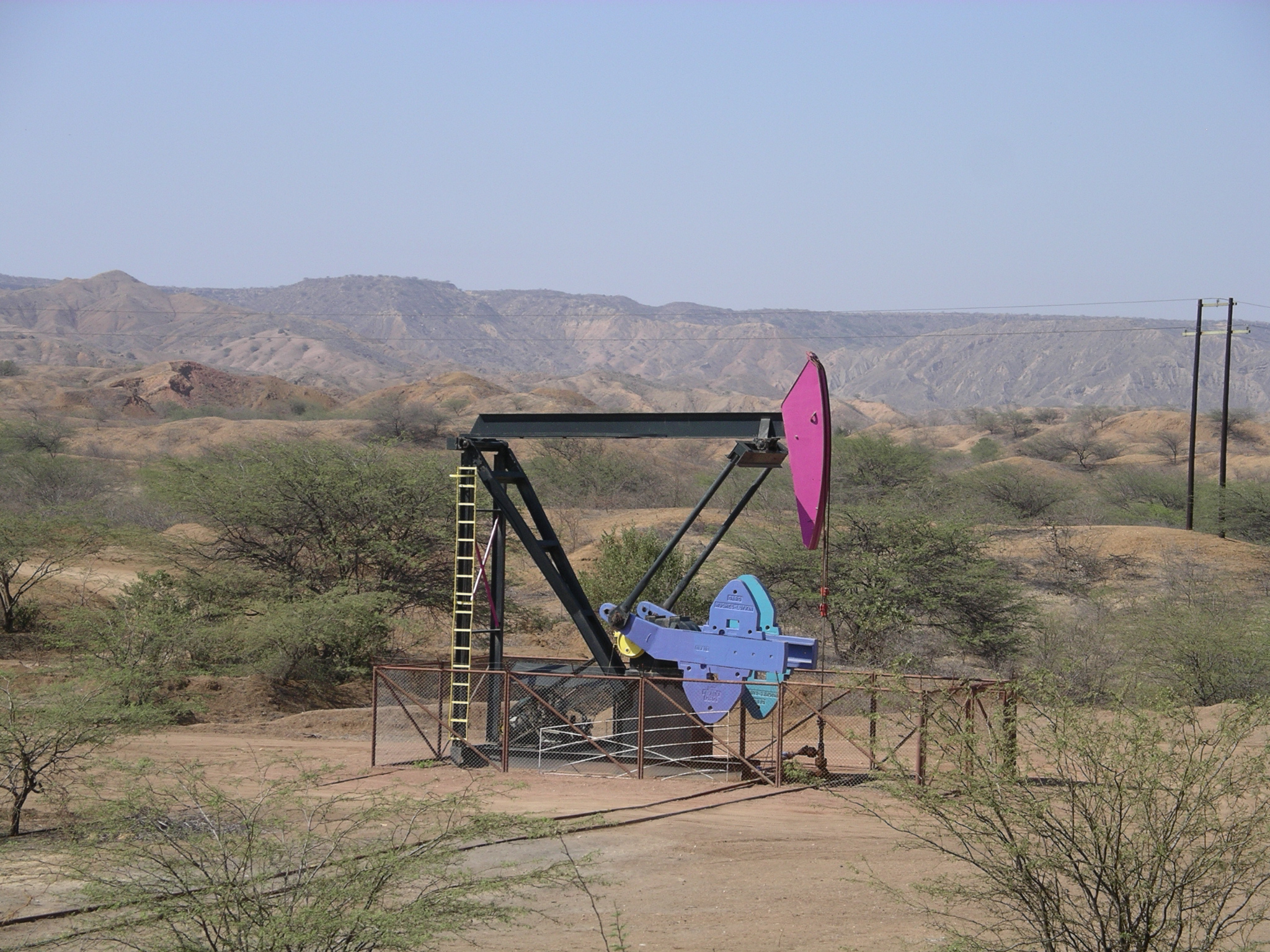
Topline: The federal government often does not have enough time to ensure that oil and gas companies are properly reporting the royalties they owe from drilling on federal land, according to a Dec. 15 report from the Government Accountability Office.
Oil and gas drilling subject to royalty – but are the drillers paying?
Key facts: The Department of the Interior had 23.7 million acres of federal land leased to drilling companies as of 2023, which must pay royalties of 12.5% to 18.8% on all gas and oil they sell using the land.
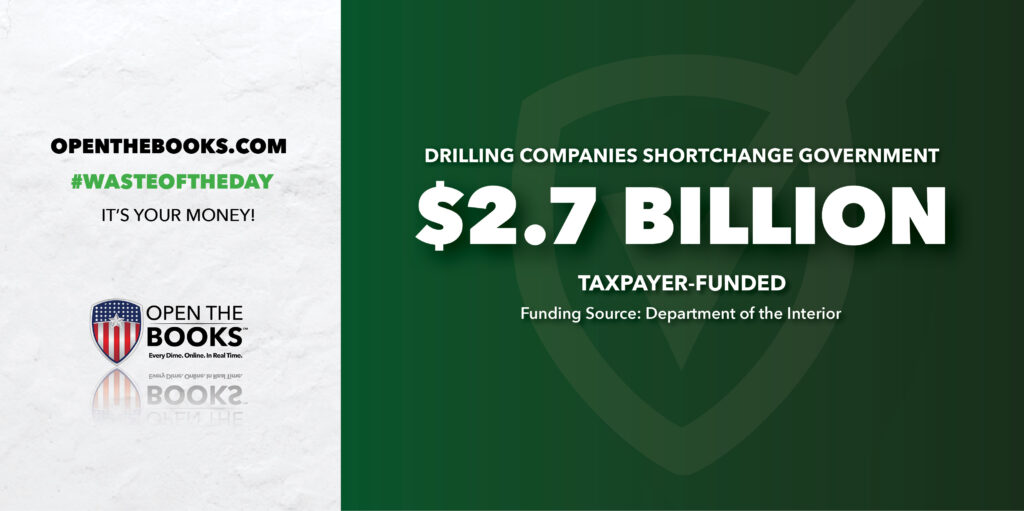
From 2014 to 2024, energy companies promised to pay roughly $96 billion in royalties to the government, according to the GAO. The same companies later adjusted their numbers, claiming they had miscalculated and actually owed $93 billion — a decrease of $2.7 billion.
Due to staffing issues and restrictions in federal law, it is difficult for the Department of the Interior to verify whether the adjustments are accurate or potentially fraudulent, according to the GAO.
A law from 1996 allows oil companies to adjust their royalty estimates up to six years after they are originally reported. The same law gives the Department of the Interior seven years to audit the royalty estimates for accuracy. When energy companies wait until the six-year deadline, they leave the government just one year to complete an audit. But a proper audit typically takes 18 months or longer, according to the GAO.
That “compresses the time available for the [government] to collect and review data, conduct audits or compliance reviews, and issue monetary demands to collect unpaid royalties,” the GAO explained.
More timely royalty reports shouldn’t be a problem
The Department of the Interior asked Congress in 2011 to revise the law and give energy companies only three years to revise their estimates, but the change never happened. Critics felt it would be too burdensome on the energy companies.
However, two oil and gas industry representatives told the GAO they would have no problem with Congress changing the six-year deadline, because modern technology makes it easier to submit royalty estimates in a shorter timeframe. Another representative argued that shortening the deadline would be a mistake; energy companies need time to gather information because of difficulties with “long-term record retention and staff turnover.”
Energy companies have decreased their 2024 estimates of royalties they owe the government by $25 million so far, but that will likely increase before the six-year deadline. Estimates from 2023 have already decreased by roughly $400 million.
Search all federal, state and local salaries and vendor spending with the world’s largest government spending database at OpenTheBooks.com.
Conclusion
Background: The GAO previously found that the number of royalty audits conducted by the Department of Interior has fallen dramatically, from 136 audits in 2012 that collected an extra $100 million in royalties, to 51 audits in 2022 that collected only $24 million. As of 2024, the agency’s recordkeeping was too poor to use the same advanced data models the IRS uses in its audits.
Critical quote: “If the [Department of the Interior] could improve its royalty collections by even one percent, it could increase royalties collected by tens of millions of dollars per year,” the GAO claimed in 2024.
Summary: When Washington potentially misses out on revenue from non-tax sources, it becomes even more difficult to balance the budget or slash taxes for the average family.
The #WasteOfTheDay is brought to you by the forensic auditors at OpenTheBooks.com
This article was originally published by RealClearInvestigations and made available via RealClearWire.

Jeremy Portnoy, former reporting intern at Open the Books, is now a full-fledged investigative journalist at that organization. With the death of founder Adam Andrzejewki, he has taken over the Waste of the Day column.










-

 Executive5 days ago
Waste of the Day: Alabama Hired Lawyer for Lawsuits He Caused
-

 Civilization5 days ago
The Unholy Alliance: Moscow and Beijing’s Invisible Shield Over Tehran
-

 Education3 days ago
Everything’s Bigger in Texas, Including School Debt
-

 Civilization4 days ago
Stimulating Creativity in Human-Machine Teams
-

 Civilization4 days ago
President Should Follow His Instincts, Not the Energy Markets
-

 Education3 days ago
Restoring Duty to God and Country
-

 First Amendment2 days ago
Oregon’s Union Crackdown Spreads
-

 Guest Columns2 days ago
Living in the Empty Tomb Era