
Executive
Waste of the Day: Postal Service’s Record Payroll Leads to Losses
The United States Postal Service is losing money, in large part because it is paying the highest wages and salaries in history.


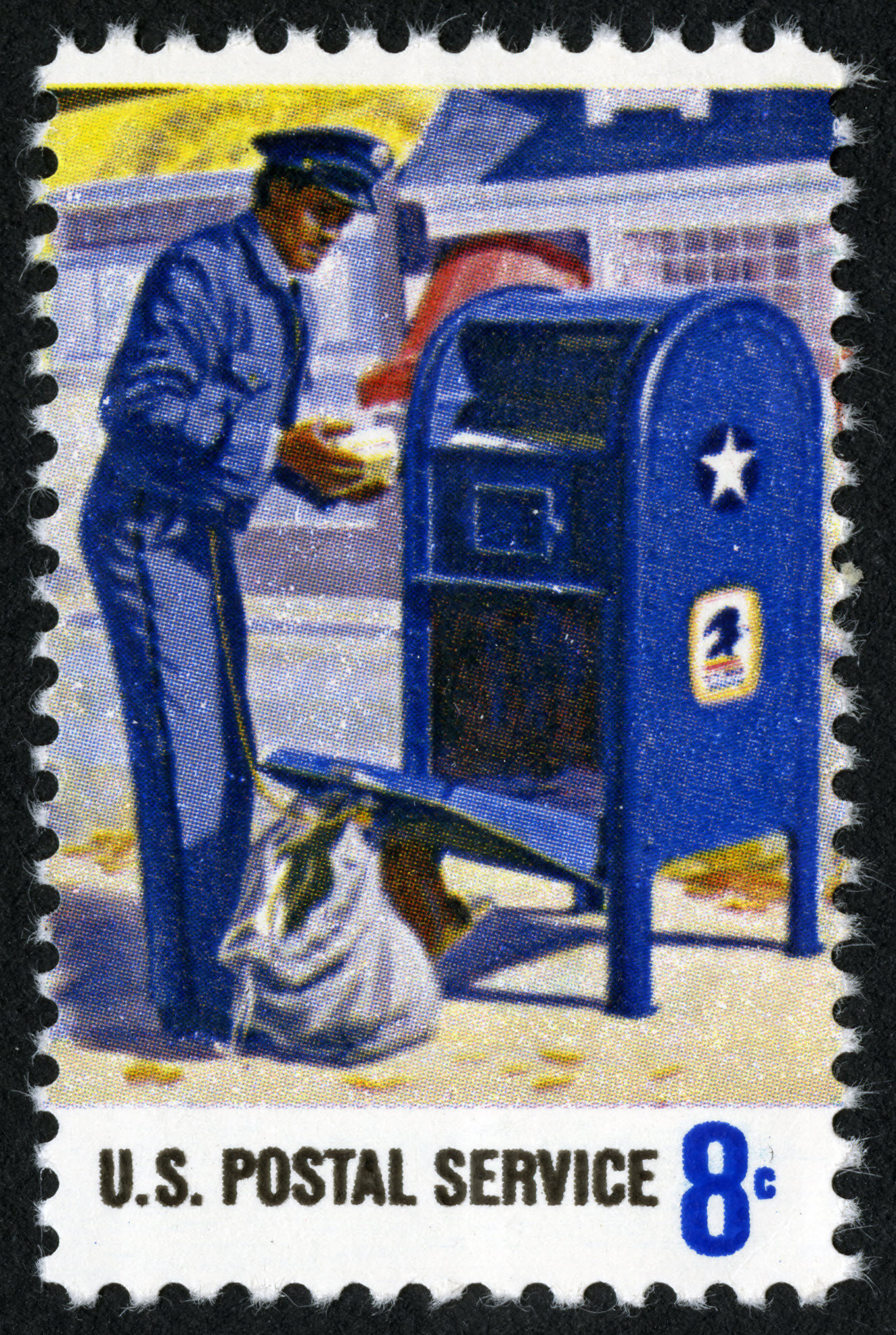
Topline: The U.S. Postal Service spent a record $42.8 billion on payroll in 2025 while posting a $9 billion loss, according to payroll records obtained by Open the Books.
Record salaries in the Postal Service
Key facts: Postmaster General David Steiner earned $350,260, the new records show, the highest salary in Post Office history. Eight others earned more than $300,000. In total, 328 employees made more than $200,000. There were 394 people earning that amount in 2024.
Nearly 20,000 people made $100,000 or more.
The Post Office brought in $80.5 billion in operating revenue, $916 million more than 2024. The boost was attributed to “strategic price increases” in postage costs, especially first-class mail.
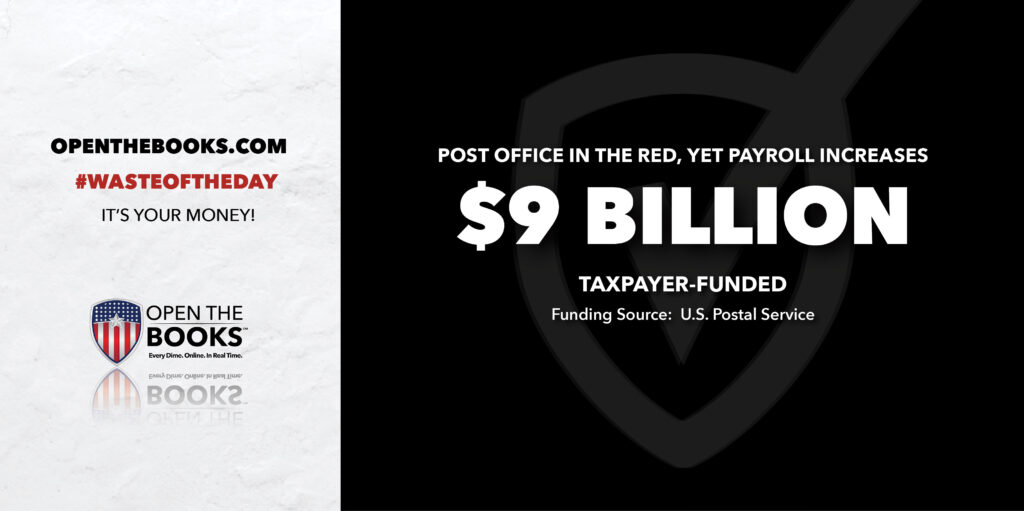
Combined with $89.8 billion in expenses, the Postal Service had a $9 billion net loss. That was better than the $9.5 billion the Postal Service lost in 2024, which makes it appear as if its business model is improving. However, those figures include expenses and revenues that Postal Service management has no control over. Salaries, pensions, workers’ compensation, rent and more are mandated by Congress. Interest rates affect investment income.
When looking at only the spending that’s planned directly by Postal Service management, the Post Office had a “controllable loss” of $2.7 billion in 2025. That was the worst since 2020. Controllable loss was only $1.8 billion in 2024.
Over the next 10 years, the Postal Service plans to spend $20 billion on deferred investment and maintenance to upgrade and repair buildings and technology.
Search all federal, state and local salaries and vendor spending with the world’s largest government spending database at OpenTheBooks.com.
Postal service blames Congress
Critical quote: In its annual report, the Postal Service blamed Congress for many of its financial struggles.
Our financial position remains burdened by non-controllable Congressionally mandated costs, an outdated archaic debt limit not updated in over 30 years, and a lack of strategic infrastructure investment over decades.
Summary: Critics of the Postal Service often argue that mail service should be privatized. Supporters argue that the service is not meant to turn a profit. Regardless, increased salaries and mounting losses will continue to hurt taxpayers’ bottom line.
The #WasteOfTheDay is brought to you by the forensic auditors at OpenTheBooks.com.
This article was originally published by RealClearInvestigations and made available via RealClearWire.

Jeremy Portnoy, former reporting intern at Open the Books, is now a full-fledged investigative journalist at that organization. With the death of founder Adam Andrzejewki, he has taken over the Waste of the Day column.








-

 Executive5 days ago
Waste of the Day: Alabama Hired Lawyer for Lawsuits He Caused
-

 Civilization5 days ago
The Unholy Alliance: Moscow and Beijing’s Invisible Shield Over Tehran
-

 Education3 days ago
Everything’s Bigger in Texas, Including School Debt
-

 Civilization4 days ago
Stimulating Creativity in Human-Machine Teams
-

 Civilization4 days ago
President Should Follow His Instincts, Not the Energy Markets
-

 Education3 days ago
Restoring Duty to God and Country
-

 First Amendment2 days ago
Oregon’s Union Crackdown Spreads
-

 Guest Columns2 days ago
Living in the Empty Tomb Era