
Civilization
The Collapse of Iran’s Islamic Regime
Iran might be the key to changing the balance of power among America, China and Russia – if its Islamic regime were to collapse.


The United States’ Strategic Opportunity
The nationwide protests in Iran, started on September 28, are more than just a period of political and economic unrest. They reflect a deeper problem: the widening gap between the state and a population that views this government as alien to their culture and civilization. And also, a population that believes their country occupies a pivotal position in global geopolitics. The Islamic Republic still possesses significant capacity for repression, and according to some media reports, more than thirty-five thousand have been killed in a matter of days. For the United States, this raises a question that goes beyond human rights or ethical concerns: could the collapse of Iran’s Islamic regime present a geopolitical opportunity to reshape the balance of power against China and Russia?
The Truth About Repressive Violence
Online platforms allow eyewitnesses and ordinary citizens to share firsthand accounts and grassroots reports—voices that can challenge official narratives and broaden the global public’s understanding of events. Dictatorial governments appear to understand this reality very well; they have consistently tried to control the dominant narrative. For such regimes, the internet has become a serious threat, because they can no longer imprison the truth or present their own version as the only reality.
A clear example can be seen in recent protests in Iran, where one of the government’s first actions has repeatedly been to shut down the internet nationwide. In 2019, 2022, during the twelve-day war, and again during the January 2026 protests, the Islamic Republic imposed complete nationwide internet blackouts. During the most recent protests, the full shutdown lasted 18 days and disruptions continue even now. Because today’s realities are often seen through the window of the media, many of the regime’s alleged crimes were never transmitted to the outside world, exactly what the authorities intended. Despite this, citizens attempted to reveal the truth by sharing personal testimonies with Persian-language media outlets, accounts that many outsiders found almost impossible to believe.
Iran cuts all Internet access
On the nights of January 8 and 9, following a public call by Prince Reza Pahlavi for people to take to the streets, the government reportedly cut internet access across the entire country. Estimates from various sources claim that around 36,500 people were killed during those two nights alone—though the author believes through conversations that the real number may be even higher. Reports from organizations such as Amnesty International and Human Rights Watch described alleged secret nighttime burials and mass graves carried out by authorities.
Many families reportedly buried the bodies of their loved ones in their own yards out of fear of harassment and retaliation by authorities, meaning those deaths were never officially recorded.
Before releasing many of the bodies, authorities allegedly imposed several conditions on grieving families: first, paying bullet fee of between one and three billion tomans to the government (each billion tomans roughly equivalent to 50–60 months of an average employee’s salary); second, a written pledge not to speak to domestic or foreign media; and third, a written statement falsely declaring that the deceased had been a member of the IRGC or Basij and had been killed by “rioters.” Among the most horrifying incidents were reports around 86 children under 18 being killed, including a three-year-old child in Kermanshah, events that deeply shocked society.
Too many bodies to handle
Numerous reports indicated that morgues were overwhelmed with bodies and lacked even basic supplies like body bags. Some eyewitness accounts claimed that certain individuals in morgues were still breathing or barely alive. Unofficial accounts suggested that officials were not always certain that all those buried were actually dead. Some families who visited morgues to claim their loved ones said that many bodies were so severely damaged that facial recognition was impossible; they identified relatives only through tattoos or other physical marks. Some bodies remain unidentified because repeated injuries destroyed their faces beyond recognition. Authorities reportedly assigned numbers to unidentified corpses, one recent example, the number 11780, sparked strong reactions among Iranians.
In the city of Gorgan, witnesses claimed that security forces mutilated bodies lying on the ground and photographed them in humiliating poses. Other reports alleged that some wounded protesters were executed in morgues with so-called “final shots.” Some victims were reportedly beheaded, acts compared by observers to the brutality of ISIS. Others allegedly had their throats slit with knives or sharp objects. One particularly shocking incident involved the burning of the Rasht bazaar, known as a Holocaust Bazaar, by government forces. More than 300 shops were burned, and security forces allegedly fired on people who had already surrendered. Streets were blocked off, firefighters were prevented from entering, and many civilians, estimated by witnesses to be close to a thousand—were burned alive. Estimates suggest that between 2,000 and 3,000 people were killed in Rasht during those two nights alone.
Shooting everyone and everything that moved
During the early days of the protests, repression was reportedly so widespread that security forces fired on anyone in the streets, including bystanders. Even some state-controlled domestic media acknowledged that people watching protests from rooftops were targeted by gunfire. Many witnesses claimed that the government used foreign militias to suppress protesters, including Pakistan’s Zeynabiyoun Brigade, Afghanistan’s Fatemiyoun Division, Iraqi Popular Mobilization Forces, and Hezbollah fighters. Some agencies have reported among protests in Iran around 5,000 Iraqi militias entered Iran. Some security personnel were reportedly nationals speaking Arabic among themselves.
In the first nights of the protests, both landline and mobile phone networks were reportedly cut nationwide. Security forces allegedly warned hospitals in advance not to admit injured protesters. Numerous doctors and medical staff have testified that security forces raided hospitals, abducted wounded individuals, and in some cases executed them. In provinces such as Isfahan and Chaharmahal and Bakhtiari, witnesses claimed that security agents removed bodies from hospitals and buried them secretly in mass graves at night. Some reports indicate that authorities allegedly removed organs from wounded protesters, including kidneys and hearts, before returning their bodies to their families.” Many doctors treated wounded protesters secretly in their homes; security forces reportedly raided these houses and arrested the physicians. Arrests of medical professionals accused of treating injured protesters have continued ever since.
Iran and Its Geopolitical Position
Unlike the protests of 2009, 2017, or 2019, the current wave is not merely a reaction to a specific policy or economic shock. It reflects a deeper breakdown: the rulers and the populace are no longer politically aligned. Today, Iran’s government faces a society that no longer sees it as capable of reform, of resolving disputes, or even representing the people. This is precisely contrary to what some left-leaning analysts and the National Iranian American Council (NIAC) attempt to convey to Western audiences. Recognizing this distinction is crucial, not only for Iranians but also for the global understanding of events unfolding in the country.
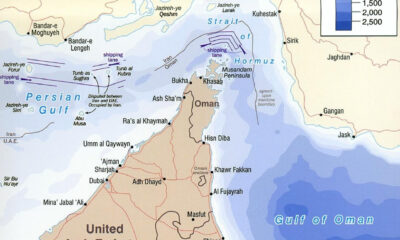
Iran occupies a strategically significant location. Regardless of ideology or regime type, its geographic position alone grants it strategic relevance. Could the internal collapse of Iran become the U.S.’s most important strategic opportunity in great power competition? Iran spans the Persian Gulf and shares borders with Central and South Asia, anchoring the northern edge of the Middle East. The country controls one of the world’s most important energy chokepoints: the Strait of Hormuz. This narrow passage is vital for global oil and gas flows, particularly for energy-dependent nations in East Asia. Today, Iran’s ruling regime leverages this strategic position as a tool of instability, threatening maritime traffic, engaging in proxy conflicts, and deploying calculated acts of disruption. At times, officials have even threatened to close the Strait of Hormuz.
China and the Strait of Hormuz
For China, whose economy relies heavily on uninterrupted access to external energy sources, the stability of key maritime chokepoints is critical. The Strait of Hormuz is not just about tanker transit and maritime trade, it is one of the world’s most strategically vital passages. Its vulnerability represents a persistent threat that could disrupt energy flows beyond China’s control. When, for instance, Iranian President Hassan Rouhani raised the prospect of closing the Strait in 2018, it provoked strong Chinese objections.
From Washington’s perspective, the objective may not be to “control” the Strait but rather to keep it out of the hands of revisionist powers. This becomes increasingly relevant when tensions with China escalate. Here, the Strait of Hormuz demonstrates its crucial role: for China, a Tehran government that challenges the international order, particularly in opposition to the U.S., is more favorable than one aligned with Washington.
Russia and Diminished Influence in Iran
If China’s view of Iran is largely economic, Russia’s perspective is profoundly strategic. This does not mean Russia has a deep strategic partnership with Tehran or desires one; rather, Moscow’s approach to Iran has always been tactical. Nevertheless, Russia leverages Iran as a “bridge of influence” to safeguard its strategic interests. Tehran plays a key role in Moscow’s efforts to counter Western pressure, facilitating sanctions circumvention, supplying military technology, and creating geopolitical distractions that divert U.S. and European attention.
For Moscow, Iran is not an ally but a source of strategic depth. This depth has been particularly valuable since the invasion of Ukraine, as Iran provides drones, diplomatic cover, and alternative channels for bypassing Western pressure. A pro-Western Iran, therefore, could pose a far greater threat to Russia than a nuclear-capable one. Russian officials have expressed frustration during nuclear negotiations with Iran, and Russian analysts note that for Russia a Western-leaning Iran would be far more dangerous than a nuclear Iran.
What else Russia would lose
Should the IR fall, the consequences for Russia would extend far beyond the Middle East. Existing networks would be destabilized, arms cooperation complicated, and Moscow’s ability to project influence weakened, particularly in the ongoing war in Ukraine. At a time when Russia remains unwilling to compromise, losing Iran’s strategic depth could represent a significant setback.
Of course, the assumption that the fall of the IR would automatically align with Washington’s interests is overly optimistic. Ignoring the realities of domestic politics risks repeating the mistakes seen in Afghanistan, where external actors overestimated their influence over a post-collapse order. For the U.S., the main danger lies in the illusion of managing the aftermath. Any alignment would need to be temporary and interest-based, rather than a product of imposed compliance, crucial for the legitimacy of any future government in Iran.
The Illusion of Strategic Neutrality
While unrest unfolds in Iran, the U.S. foreign policy approach has been cautious. Although understandable, such restraint risks creating the illusion of strategic neutrality. Strategic inaction is not cost-free, as it grants adversaries space to maneuver. If the U.S. fails to grasp the geopolitical significance of the IR’s potential collapse, China and Russia are likely to exploit the opportunity. Meanwhile, Wesern hesitancy, exemplified by delays in designating the IRGC as a terrorist organization, further erodes credibility. The gap between U.S. rhetoric and action has imposed a tangible reputational cost among regional actors.
The IR is in its weakest position in 47 years. However, a sudden and decisive strike could topple the regime. In a potential U.S.-China confrontation, a pro-Western government in Iran would strengthen Washington’s strategic position. Unlike many post-collapse scenarios characterized by leadership vacuums, Iran has a known opposition presence abroad, recognized both by large segments of the domestic population and Western capitals as a credible interlocutor. This predictability reduces, at least internationally, the costs of power transition.
Conclusion
Current conditions in Iran present the U.S. with an opportunity to leverage human rights and international law as justifications, but ultimately to advance its geopolitical and strategic interests, by dismantling the ruling regime. Such a move would not only strengthen U.S. influence in the Persian Gulf but also diminish Russian leverage in Iran. In a potential confrontation with China, a pro-Western Iran would provide Washington with a critical advantage while striking a major blow to Moscow. However, success depends on avoiding three key mistakes: leadership vacuums, rival powers seizing the post-collapse crisis, and repeating patterns of failed interventions. Yet the central question is not whether Washington will act, but whether it can afford the costs of inaction.
This article was originally published by RealClearDefense and made available via RealClearWire.

Dr. Julian Spencer-Churchill is associate professor of international relations at Concordia University, and author of Militarization and War (2007) and of Strategic Nuclear Sharing (2014). He has published extensively on Pakistan security issues and arms control, and completed research contracts at the Office of Treaty Verification at the Office of the Secretary of the Navy, and the then Ballistic Missile Defense Office (BMDO). He has also conducted fieldwork in Bangladesh, India, Indonesia, and Egypt, and is a consultant. He is a former Operations Officer, 3 Field Engineer Regiment, from the latter end of the Cold War to shortly after 9/11.



-
 Civilization4 days ago
How Prepared Is the Defense Industrial Base for Iranian Cyber Attacks?
-
 Civilization2 days ago
Stealth, Sensors, and Staying Power: What the F-35 Just Proved—and What Comes Next
-

 Civilization5 days ago
Does the Donroe Doctrine Now Extend to Outer Space?
-

 Civilization5 days ago
Imminent Threat? Iran Was Existential Threat
-
 Civilization4 days ago
No Retreat, No Surrender: Why America Must Prevail in Iran
-

 Executive2 days ago
Citizen Sleuths Spotlight Red Flags Galore in Government Spending
-

 Guest Columns3 days ago
Oklahoma’s Digital Future Will Be Built on Affordable, Reliable, Clean Energy Security
-

 Education4 days ago
Waste of the Day: AZ School Vouchers Used For Hot Tub, Wedding Gifts, More