
Civilization
The Kremlin Is Killing the Tool That Sold Its War
Russia sold its war against Ukraine through Telegram and the channels it created. Now it is dismantling the Telegram ecosystem.


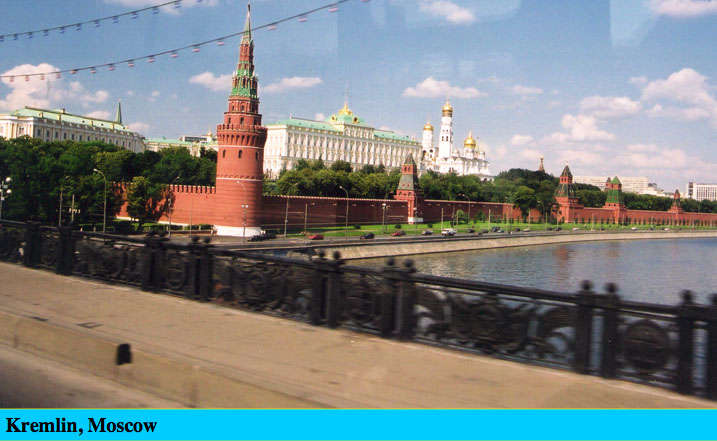
The most powerful tool Russia used to sell its war in Ukraine to its own people was a messaging app — Telegram — one that mobilized domestic support, sustained recruitment, and gave the invasion a cultural identity that state television never could. The Kremlin built an entire war propaganda ecosystem on top of it. Now it is tearing that effective ecosystem down.
What does the Kremlin fear, that they would go after Telegram?
That decision says something important about how Russia’s leadership now sees the war. The greater threat to the Kremlin may no longer be on the battlefield or in the Western information space. It is at home. And when a wartime government turns its information infrastructure inward, treating its own population as the primary target, that is a sign that control might be slipping away from it.
The question is what exactly the Kremlin is afraid of.
Why the Kremlin Has Reason to Worry
On the fourth anniversary of the full-scale invasion, Kremlin spokesman Dmitry Peskov declared that Russians had achieved “fenomenal’naya konsolidatsiya” – phenomenal consolidation – around their president. Four years of war, the argument goes, have produced unity rather than fracture. The economic picture beneath that claim is harder to reconcile.
Last year, 74 of Russia’s 89 regions ended their budgets in deficit, 3.6 times more than the year before. Regional governments are now financing recruitment bonuses, social payments to soldiers’ families, and the growing logistical costs of war while federal revenues flow increasingly toward defense spending. The strain is visible far from the front lines. In Kemerovo, teachers have faced delayed salaries. In Khakassia, doctors. In Trans-Baikal, firefighters. These are not front-line regions. That is the interior of a country being hollowed out to sustain a war its government insists is going well.
The pressure is now visible in household economics as well. For the first time in nearly eighteen years, Russian households are spending nearly 40% of their income on food. Such numbers were last seen in 2008, and before that only during the nineties, the decade Russians use as shorthand for national humiliation and collapse.
When the soldiers start to come home…
At the same time, hundreds of thousands of soldiers are gradually returning from the front. They return to communities that spent four years learning to live without them, to a labor market the war has left disoriented. The government now airs a prime-time television program to help veterans find jobs. It is an acknowledgment that reintegration is a problem the state cannot solve easily, and a piece of propaganda in its own right: the promise that when you come back, the country will, allegedly, take care of you.
The language surrounding the war is changing as well. Soldiers were called heroes when they left. The word circulating now is SVOshnik, a label for the special military operation’s veterans that carries, in its clipped bureaucratic syllables, something closer to dismissal than gratitude. The Z identity, the pro-war symbol that became the invasion’s unofficial badge, has curdled. The men who embodied it are coming home to find the country has moved on.
None of this shows up cleanly in the approval ratings. President Vladimir Putin’s reported support remains near 85%. But approval in an authoritarian state measure expresses sentiment in an environment where expressing the opposite carries risk. More telling is a separate Levada figure: when Russians are asked open-ended questions about trust, Putin’s number sits at 48%. The gap between those two numbers is where the Kremlin’s anxiety lives, and it is most legible not in any poll, but in what the government is building.
Replacing Telegram
Telegram became the hub of Russia’s pro-war information space as the Kremlin built much of its wartime narrative around the platform’s influential channels. Military bloggers with audiences in the hundreds of thousands posted battlefield updates, criticized commanders, raised money for equipment, and shaped the narrative of the war in ways state television never could. The platform allowed a chaotic but highly effective propaganda environment to emerge, one the Kremlin tolerated because it sustained domestic support for the invasion.
The irony is that Telegram was never designed to serve the Russian state. It was founded by Pavel Durov, who built VK, Russia’s dominant social network, and then fled the country in 2014 rather than hand user data to the Federal Security Service (FSB). The Kremlin’s most effective wartime propaganda infrastructure was built on a platform created by a man who chose exile over compliance. The Kremlin tried to ban it in 2018 and failed so completely, it abandoned the attempt two years later.
This time the approach is different, with authorities opting for slow strangulation. The replacement platform, Max, is developed by VK, whose chief executive is the son of Putin’s first deputy chief of staff, effectively the Kremlin’s domestic policy czar. Max integrates with SORM, the System of Operational-Investigatory Measures, the FSB’s domestic surveillance architecture, which stores all user data on servers the security services can reach without a warrant. It is modeled on China’s WeChat: a single point of contact between citizen and state, where the state sees everything.
Building the Kill Switch
The shift away from Telegram is part of a broader architecture the Kremlin has spent years constructing. Russia’s sovereign internet legislation created the legal and technical framework to isolate segments of the country’s internet from the global network. Telecommunications providers were required to install equipment enabling centralized traffic filtering and routing.
In February, Putin added another layer. A new law grants the FSB authority to require telecommunications operators to suspend service on demand. Earlier drafts required security justifications. By the time the legislation reached its final parliamentary reading, reportedly lasting just two minutes, that requirement had been removed entirely. The president can now authorize communications shutdowns nationwide or by region, with no obligation to explain why.
Not a request. A demand. No justification required. No court order. No appeal.
Max is the channel the Russian authorities control. The sovereign internet infrastructure is the architecture they built. The FSB law is the switch they just installed. Combined, they describe something more deliberate than censorship — a government methodically engineering the ability to go dark on its own population, on command, at a moment of its choosing.
The Russia government has gone on the defensive
Read together, these moves point toward a government entering a defensive political crouch. The dismantling of the Telegram ecosystem makes little sense as an offensive information strategy. It makes far more sense as preparation for a period of domestic uncertainty: a difficult peace, an unpopular compromise, news from the front that the official narrative cannot absorb.
For four years, Telegram helped sell Russia’s war to its own people. The Kremlin now appears willing to sacrifice that ecosystem for something it values more: the ability to go dark, on its own terms, at a moment of its choosing.
Editor’s Note: the views expressed herein are the author’s own and do not represent those of her affiliated organizations.
This article was originally published by RealClearDefense and made available via RealClearWire.

Anna Varfolomeeva is a strategic communications analyst specializing in Russian information operations and cognitive warfare. She also serves as Head of Communications at the Cognitive Security Institute. Anna holds graduate degrees from Saint Petersburg State University and Tsinghua University.








-

 Executive5 days ago
Waste of the Day: Throwback Thursday – NSF Funded “Prom Week” Video Game
-

 Civilization4 days ago
Next Gen Propulsion – the Time Is Now
-

 Civilization3 days ago
FBI Misled Court To Spy on Second Trump Campaign Adviser
-

 Education3 days ago
Waste of the Day: Failing Texas School Paid Supt. $900K
-

 Civilization3 days ago
Secret Service Agent Faulted for Butler Failures Suspended Again
-

 Civilization3 days ago
A New Way to Measure U.S. Energy Security
-
 Civilization1 day ago
Election Reform Republicans Can Actually Pass
-

 Civilization3 days ago
Times of Conflict or War Remind Us of the Importance of U.S. Natural Gas