
Civilization
What My Small Town Taught Me About Tribalism
Pendleton, South Carolina has a lot to teach an observer (or visitor or newcomer) about healthy groups and their dynamics.


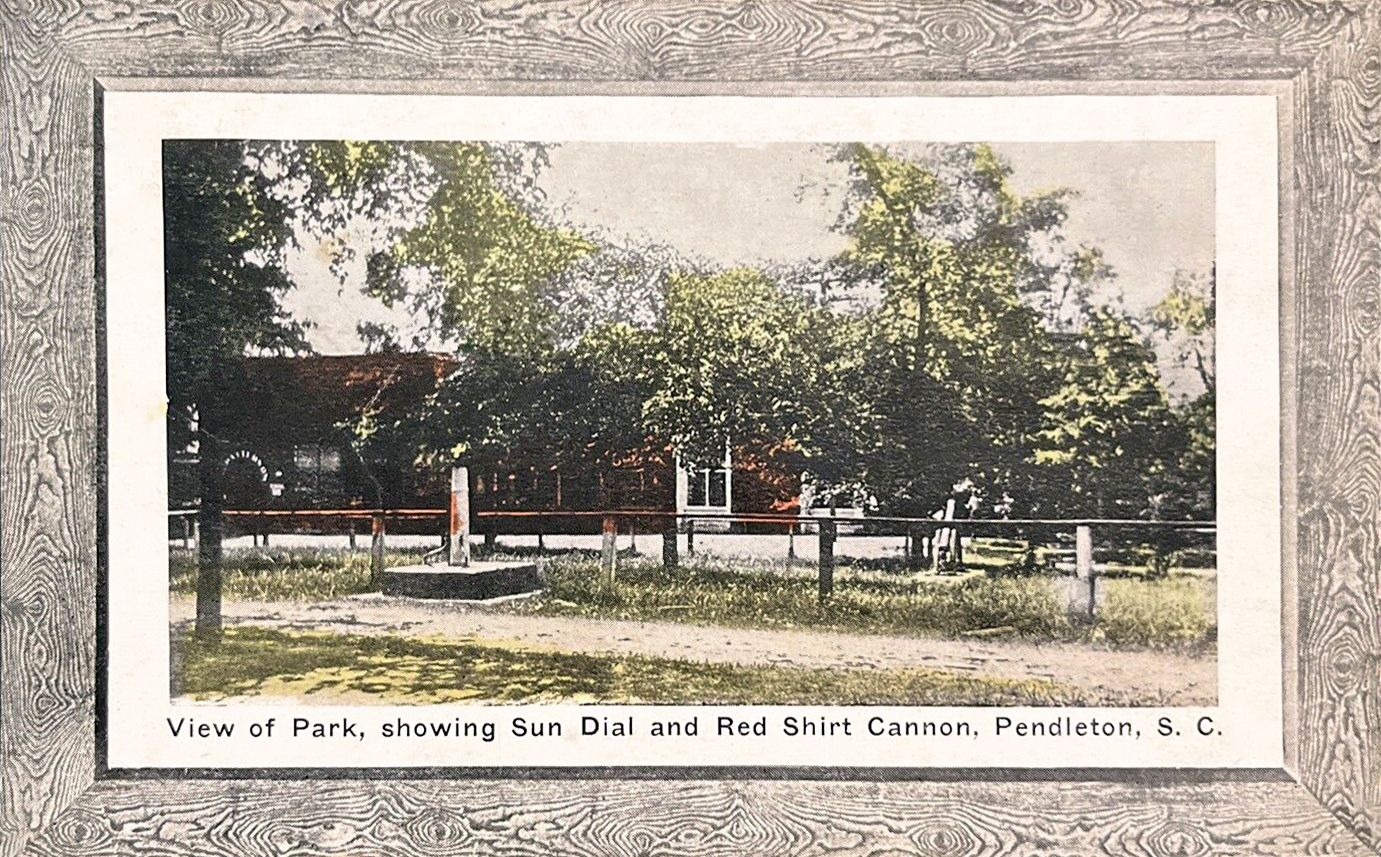
Two years ago, I moved to the very small South Carolina town of Pendleton, where something unexpected happened to me. I became a volunteer.
Pendleton and its positive group mindset
I have found myself scrubbing historic gravestones, picking up roadside litter with my kids, spreading mulch on the nature trail … and I have to wonder how I wound up doing those things. Because I’m not all that civic-minded. Or I wasn’t.
But Pendleton has a culture of people doing things together. They show up, roll up their sleeves, and create things. Historic buildings need preserving. Trails need maintaining. Litter needs to be picked up (so that the town looks nice for the Fall Festival or Spring Jubilee). Whether the problem requires grant-writing or native plant expertise or power tools, someone steps up.
Surrounded by people like that, it would be hard not to join in.
So I did. But because I spend my days studying political polarization and voter disengagement, I also noticed something. The tribal mechanisms that make the Republican and Democratic parties so dysfunctional right now are the same things that make Pendleton a place I want to live.
Groups neither good nor bad – it depends on their organizing principles
Americans are particularly inclined to see ourselves as individuals, but it’s within groups that people are most deeply human. We find meaning in adopting the group’s beliefs and practices. We share resources and make sacrifices that we wouldn’t make for strangers. Groups can lead us to behave in ways we might never choose on our own (grave washing, who knew?).
But there’s also a dark side to groups, which political parties have learned to exploit to great effect. Members reward loyalty and punish dissent. Leaders encourage us to see people on the other side not as fellow citizens but as obstacles to what our side wants. Their gain is our loss, and vice versa.
Political tribes increasingly organize people around defeating an opponent.
But Pendleton organizes people around creating something together. Some of that is hard work, like a few days a year when we clean and tidy up our town together. And some of that is play, like summertime musical performances on the town green or drinking cocoa and mulled wine and shopping local artisans under the town’s Christmas tree on December weekends.
The benefit of all this shared work and creativity isn’t just a cleaner or prettier town. It fundamentally changes how we know one another. Cooperating with people to achieve a shared goal makes it important to understand them more deeply and accurately. Without even trying to, we literally understand each other more fully because we work together. [pubmed.ncbi.nlm.nih.gov]
Agreeing to disagree
That’s not to say we therefore agree. Like any collection of people living together, we have different views about what our problems are, how they should be addressed, and in what order. There is plenty of conversation between and among residents and local officials about these issues, and at times there’s disagreement. But after two years, I still couldn’t tell you whether most of my neighbors are Democrats or Republicans, because our relationships aren’t organized around partisan identity. They’re organized around making this town work.
We can’t dehumanize each other on the basis of political party or ideology because we know from experience that our neighbors aren’t abstractions, they’re complex, nuanced human beings. There’s a man who cleans out the storm drains on the street after a hard rain, because the roads are old and the grates fill with leaves and flood the road. The arborist who makes sure our trees are healthy and safe and thinks about what the town’s tree line will look like in 75 or 100 years. The women who brought meals after my mother died without asking, just showing up with food for my family.
Lately we talk about tribalism as though the tribal part is the problem. If that’s the case, we are indeed stuck, because we’ve organized our lives as members of groups for as long as we have been human. Instead we might ask ourselves what kind of tribe we are being asked to join.
The Pendleton Principle?
Within groups, human beings are capable of extraordinary generosity. We care for other people without expecting repayment. We put what is good for the group ahead of our individual concerns. We make things together that we can’t make individually.
Healthy groups invite members to produce something of value: stronger relationships, safer neighborhoods, functioning institutions, cared-for public spaces, and communities people actually want to live in. Their success does not require somebody else’s harm.
That doesn’t mean every community is healthy. Small towns can be exclusionary, conformist, and cruel. That’s a reality that shouldn’t be overlooked.
This fall, as midterm elections consume more of our attention, we will focus even more on our political identities. We will be reminded constantly that we are Democrats or Republicans, liberals or conservatives, members of one side facing off against another.
Pendleton reminds me that I am something else, too.
I am a neighbor. And apparently, now, a volunteer.
This article was originally published by RealClearPolitics and made available via RealClearWire.

Lura Forcum is the incoming president of the Independent Center. A former professor and researcher, she conveys complex ideas and policy insights to engage independent voters who now comprise the plurality of the electorate.