Education
When Students Self-Censor, They Worry Most About Each Other
Self-censorship on controversial subjects occurs not only from teachers, but also from students worried about what their classmates think.

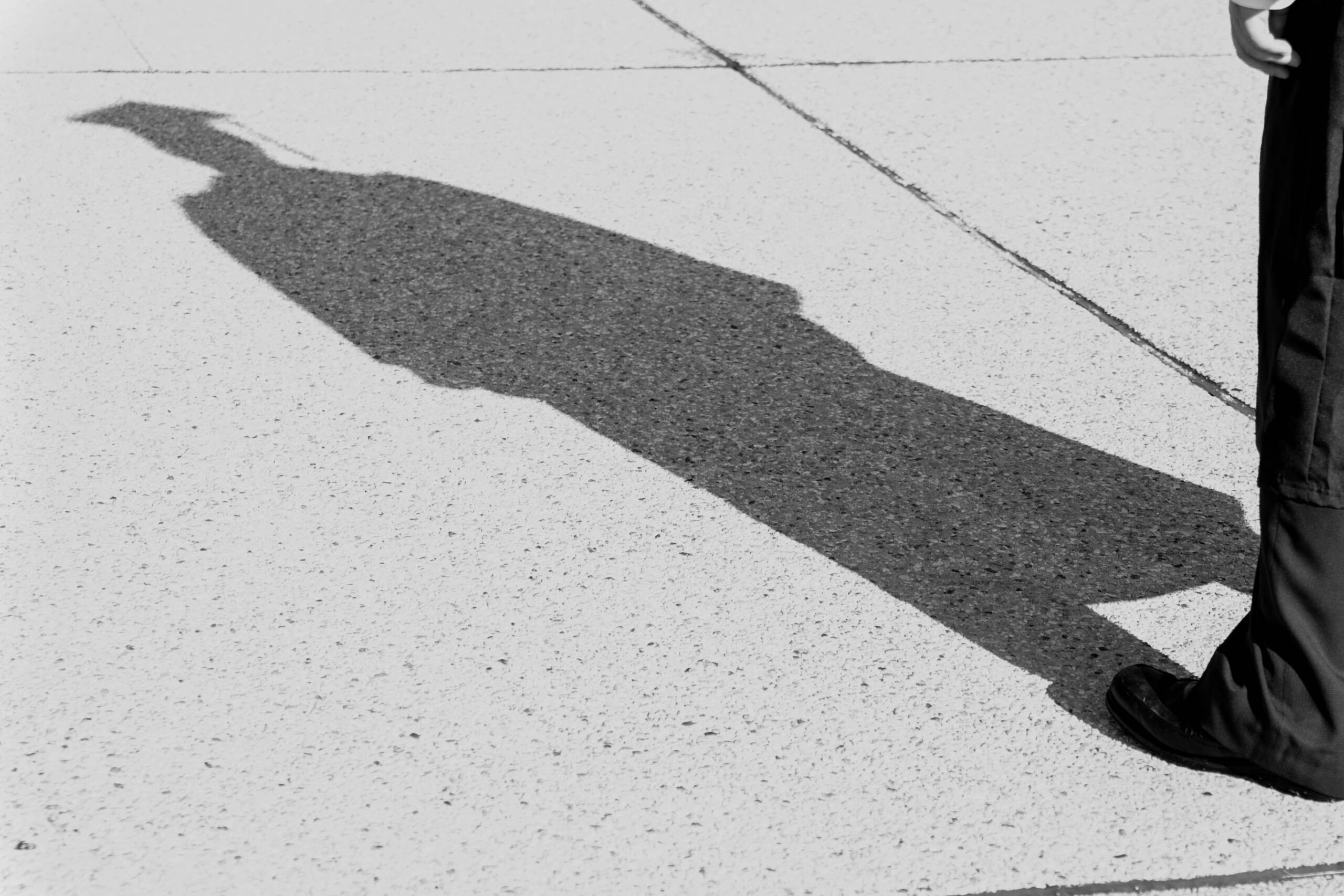
Last year, the Sandra Day O’Connor Institute reported that nearly 80% of civics teachers had self-censored or avoided certain topics in class because they feared pushback or controversy. This year, we talked to the students.
Students, not only their civics teachers, self-censor
Fifty-eight percent of the recent high school graduates we surveyed said they had held back from saying what they really thought about a political or civic topic because they were concerned about how others might react. Most were not describing hostile classrooms: 73% said they were generally comfortable sharing their honest views. Yet 51% of even those comfortable students had still self-censored occasionally.
The striking finding was who they were worried about. Among students who self-censored, 91% cited classmates as a concern. Forty-one percent cited the teacher.
Why does that matter? Because discussion is not an optional extra in civics. Civic education has two related jobs. Students need to understand how American government works. They also need opportunities to practice the skills citizenship requires: making an argument, listening to an opposing one, and working through disagreement.
Not every decision to stay quiet is a problem. Listening is itself a civic skill. But silence driven by anticipated social cost is different. A view or question that never enters the discussion cannot be examined, challenged, defended, or revised. The student loses the chance to practice exactly what civic life demands.
Adults and students alike read the room
That changes the shape of the problem. Debates over classroom speech usually begin with adults: teachers, administrators, parents, school boards, legislators. Those adults matter, of course. But the students pointed most often at one another. A classroom can be open to disagreement in principle while students still hesitate to take part in it.
Students are also reading the room – and they may misread it. They respond not only to what classmates actually believe but to what they think classmates will tolerate. A few visible reactions can make a class seem less open than it is.
Teachers remain central here because they help set the conditions in which peer pressure operates. Fifty-three percent of our respondents had sometimes or often seen a teacher avoid, cut short, or shut down a political discussion. Neither that number nor last year’s teacher findings reduce to a story about one group silencing the other. They may instead describe a room in which both groups are assessing risk: The teacher hesitates to open a hard discussion, students hesitate to enter it, and the room gets quieter without getting better at disagreement.
Safe does not mean comfortable. Serious civic discussion will be uncomfortable at times. A good civics classroom makes it possible for a student to lose an argument without losing social standing.
The students were not asking for less. They wanted more, and better, opportunities for discussion, debate, and current events.
Teaching people to agree to disagree
States and districts should treat constructive disagreement as an explicit civic-learning outcome: Students should learn to make evidence-based arguments, represent opposing views accurately, ask good-faith questions, and distinguish criticism of ideas from criticism of people.
Schools should also make the peer norm visible. Ask students anonymously whether a hypothetical classmate who voices an unpopular opinion should still be treated with respect, and whether they think most classmates would agree. If students support that norm more strongly than they believe their peers do, show them the results.
Lower the social stakes without lowering the standards. Assigned positions, anonymous opening responses, and arguing a view one does not hold give practice before disagreement becomes personal. And because 26% of those who self-censored worried about being discussed or posted about on social media, set a plain rule: what a classmate says is not recorded or circulated out of context.
Finally, back the teacher. Fewer than 15% of the civics teachers we surveyed last year said their districts had given them clear, helpful guidance about what they could teach. School boards can supply it and say plainly that engaging contested civic questions is part of civic education.
Civics is not simply the study of government. It is preparation for citizenship with other people who think differently. Schools cannot prepare students for that work by teaching around disagreement; they must expect and encourage it, and then give students guided opportunities to practice.
This article was originally published by RealClearPolitics and made available via RealClearWire.
Liam Julian was a research fellow at the Hoover Institution, Stanford University, and managing editor of Policy Review, Hoover's Washington, DC–based bimonthly journal of essays, social criticism, and reviews on politics, government, and foreign and domestic policy.
Before coming to Policy Review, Julian was associate writer and editor at the Thomas B. Fordham Institute, a Washington, DC, education policy think tank, where he edited and produced the organization's weekly periodical, The Education Gadfly. He was a Bernard Lee Schwartz Policy Fellow at the Fordham Institute, an editorial board member of the Journal of School Choice, and an adjunct scholar of the James Madison Institute.
Julian writes on many topics. His articles, op-eds, and book reviews have appeared in a variety of national publications.







-

 Civilization4 days ago
China’s Semiconductor Bottlenecks Are Disappearing
-

 Executive3 days ago
People’s Republic of Boulder Wants To Run Your Energy Policy
-

 Civilization4 days ago
Artificial Intelligence Doom: What, Me Worry?
-

 Accountability3 days ago
The New Face of an Old Hatred
-

 Executive2 days ago
The AI Race Is Becoming a Race for Power
-

 Civilization2 days ago
Change is Gonna Come … Soon