
Legislative
US Senate approves $50 billion in financial relief for Postal Office

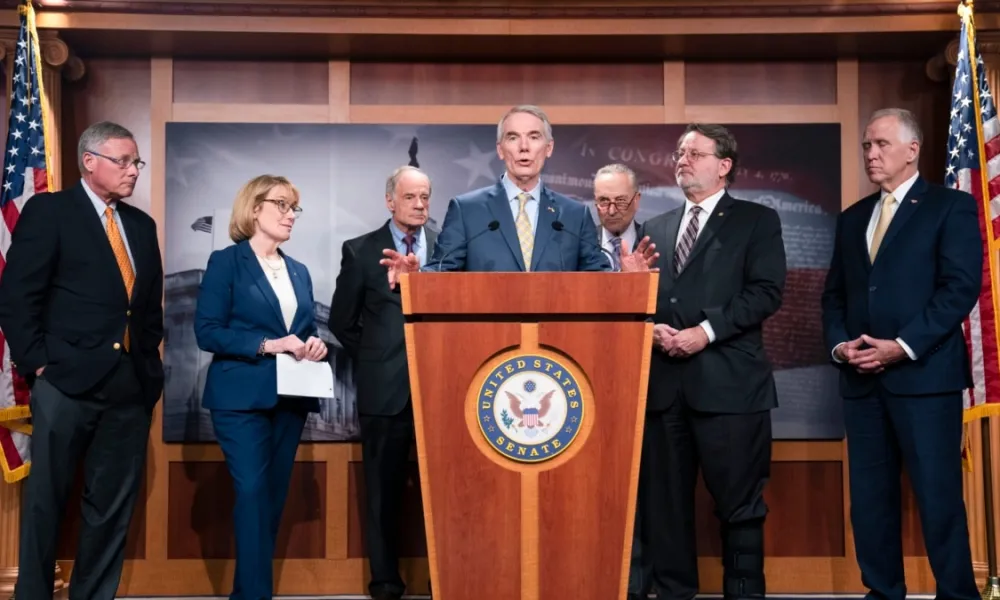
On Tuesday, the U.S. Senate voted largely in favor of providing the United States Postal Service (USPS) with about $50 billion in financial relief over the next 20 years and require its future retirees to enroll in a government health insurance plan.
The passage came as a shocking display of bipartisanship for the narrowly divided Congress with a vote of 79-19.
The USPS has struggled with decreasing volumes of mail despite needing to deliver to a growing number of addresses, and the agency has reported net losses of over $90 billion since 2007. Last month alone, the USPS reported a quarterly net loss of $1.5 billion.
The bill, according to Senator Gary Peters, a Democrat who chairs the committee that oversees the USPS, will ensure “this essential public service” is “set on a path to long-term financial sustain.” Peters is also a lead sponsor of the bill.
AFL-CIO President Liz Shuler, whose union works on behalf of representing postal workers, said that the bill was the product of “15 years of efforts to fund and strengthen USPS.” Other than support from the postal unions, the bill has also gathered the support of Amazon.com, the Greeting Card Association, and Hallmark.
In addition to operational reforms, the legislation will mean “we will be able to self-fund our operations and continue to deliver to 161 million addresses six days per-week for many decades to come,” commented Postmaster General Louis DeJoy.
DeJoy also proposed some of the key financial reforms present in the legislation as those financial changes are a key part of his March 2021 reform plan. He added that the plan could cut $160 billion in predicted losses over the next ten years.


Terry A. Hurlbut has been a student of politics, philosophy, and science for more than 35 years. He is a graduate of Yale College and has served as a physician-level laboratory administrator in a 250-bed community hospital. He also is a serious student of the Bible, is conversant in its two primary original languages, and has followed the creation-science movement closely since 1993.