
Accountability
Department of Justice issues new guidance on use-of-force by federal agents

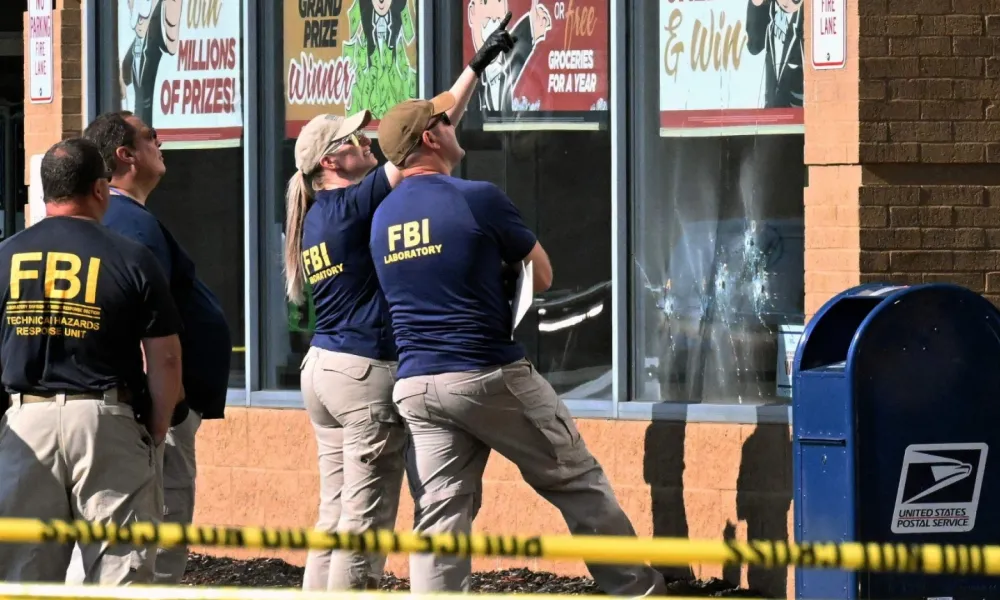
The Department of Justice has issued new guidance on the use of force by federal law enforcement agents, emphasizing the limits on when deadly force is warranted and encouraging officers to intervene in instances of excessive force.
This is the Justice Department’s first update to its use-of-force policy in 18 years.
The memo, signed Friday but not publicly released until Monday, states that the department’s policy is to “value and preserve human life” and that officers should use “only the force that is objectively reasonable to effectively gain control of an incident, while protecting the safety of the officer and others.”
“Officers may use force only when no reasonably effective, safe, and feasible alternative appears to exist and may use only the level of force that a reasonable officer on the scene would use under the same or similar circumstances,” it says.
The guidance says law enforcement and corrections officers can use deadly force “only when necessary,” typically if someone poses “an imminent danger of death or serious physical injury to the officer or to another person.”
The DOJ says deadly force can’t be used to prevent the escape of a fleeing suspect or to disable moving vehicles unless a person in the vehicle is threatening the officer or another person with deadly force.
The policy applies to officers of the FBI, the Bureau of Prisons, the U.S. Marshal Service, the Bureau of Alcohol, Tobacco, and Firearms, and the Drug Enforcement Agency. The memo applies only to federal officers, not municipal police officers, who often have more frequent interactions with the public.
The memo outlines a number of subjects on which officers must now be trained, from de-escalation techniques, “alternative methods and tactics for handling resisting subjects” and intervention techniques to use with colleagues.

Terry A. Hurlbut has been a student of politics, philosophy, and science for more than 35 years. He is a graduate of Yale College and has served as a physician-level laboratory administrator in a 250-bed community hospital. He also is a serious student of the Bible, is conversant in its two primary original languages, and has followed the creation-science movement closely since 1993.
-

 First Amendment4 days ago
Oregon’s Union Crackdown Spreads
-

 Executive3 days ago
The Straits of Hormuz Should Not Be a U.S. Problem
-

 Guest Columns4 days ago
Living in the Empty Tomb Era
-

 Executive4 days ago
Waste of the Day: Maryland Ignored Audit Warning, Increased Overtime
-

 Civilization3 days ago
How China Dominates the World’s Critical Minerals Production
-

 Executive3 days ago
Waste of the Day: Fiscal Doomsday Reached With $193.6T Gap
-

 Education2 days ago
Congress Examines Forces Fueling Campus Antisemitism
-

 Civilization2 days ago
Virginia Democrats’ Proposed Gerrymander is a ‘Span-amander’