
Accountability
Germany turns to coal to replace Russian gas

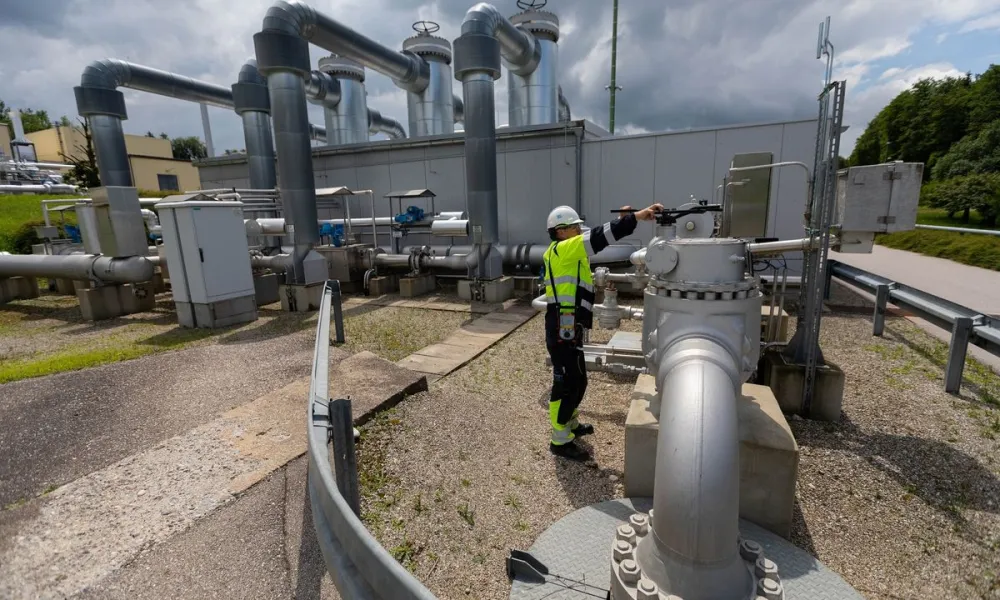
Germany will be turning back to coal amid concerns about possible power shortages caused by a cut in supplies from Russia, its economy minister has said.
Robert Habeck said Germany must limit the use of gas to generate electricity, after Russian oil major Gazprom announced it would slash supplies through the Nord Stream 1 pipeline, apparently for technical reasons. The situation forces the government to burn more coal for a “transitional period,” said Habeck. “That’s bitter, but it’s simply necessary in this situation to lower gas usage.”
The government is also offering businesses incentives to limit gas use, planning to divert the spare fuel to fill up storage facilities ahead of next winter – the “top priority.”
“It’s obvious that (Russian President Vladimir) Putin’s strategy is to unsettle us by driving up the price and dividing us,” Habeck said. “We won’t let that happen.”
Gazprom CEO Alexei Miller said Thursday that Russia will play by its own rules after the firm halved supplies to Germany. “Our product, our rules. We don’t play by rules we didn’t create,” Miller said during a panel session at the St. Petersburg International Economic Forum, according to The Moscow Times.
Italy, Austria and Slovakia have also reported supply reductions from Russia. Policymakers in Europe are currently scrambling to fill underground storage with natural gas supplies to provide households with enough fuel to keep the lights on and homes warm before the cold returns.
The EU, which receives roughly 40% of its gas via Russian pipeline, is trying to rapidly reduce its reliance on Russian hydrocarbons in response to Russia’s invasion of Ukraine.
“The tense situation and high prices are a direct consequence of Putin’s war of aggression against Ukraine. There is no mistake. What’s more, it’s obviously Putin’s strategy to unsettle us, drive up prices and divide us. We won’t allow that. We defend ourselves resolutely, precisely and thoughtfully,” Habeck said.
Germany’s storage facilities are currently at around 56% capacity, above the storage levels in the same period last year, Habeck said.
“The missing quantities can still be replaced, and the gas storage tanks are still being filled, albeit at high prices. Security of supply is currently guaranteed but the situation is serious,” he added.


Terry A. Hurlbut has been a student of politics, philosophy, and science for more than 35 years. He is a graduate of Yale College and has served as a physician-level laboratory administrator in a 250-bed community hospital. He also is a serious student of the Bible, is conversant in its two primary original languages, and has followed the creation-science movement closely since 1993.