
Judicial
SCOTUS hears arguments in case between pork farmers and California over animal welfare law

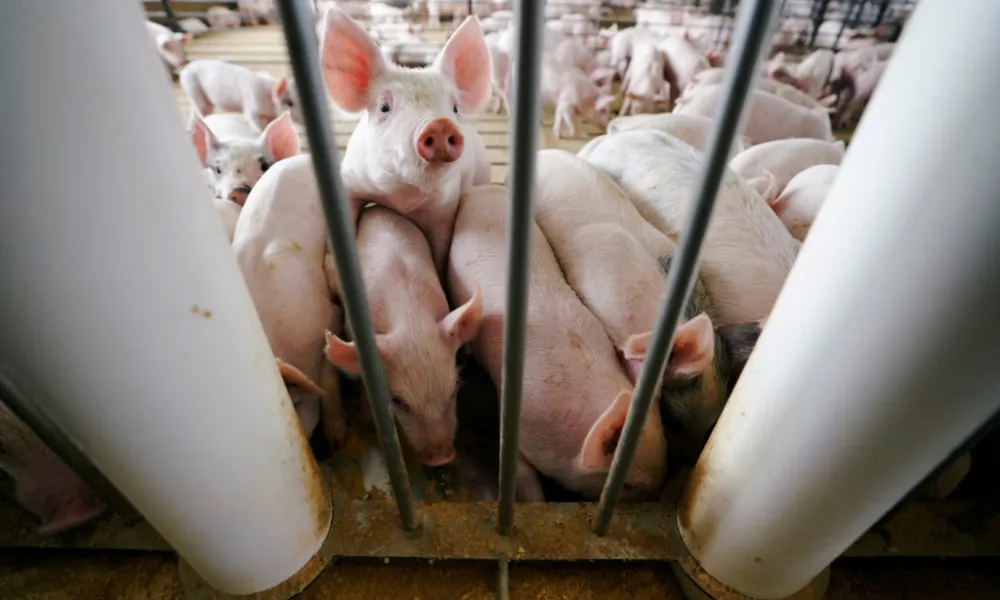
The Supreme Court of the United States heard arguments on Tuesday in a case brought by pork farming groups against the State of California over an animal welfare law that the pork farmers say goes too far by preventing pork from other states from being sold in California.
The law, Proposition 12, places restrictions on the farming and sale of pork in California. The law bans the sale of pork products derived from nursing or pregnant pigs who are kept in confined spaces that don’t allow them room to turn around.
The National Pork Producers Council and the American Farm Bureau Federation argue that the restriction places an undue burden on out-of-state pork producers who can no longer sell their product in California without changing their farming practices.
One argument from the Supreme Court against the measure is that by allowing it to be imposed, laws in other policy areas may be affected and create controversy between states.
“A lot of policy disputes can be incorporated into laws like yours,” said Justice Elena Kagan. “Do we want to live in a world where we’re constantly at each other’s throats and Texas is at war with California and California at war with Texas?” she asked.
Others argued the law may be valid since it is not seeking to ban or regulate farming or sales, but rather putting parameters on what can be sold within its borders.
“As I read California’s law, it’s about products being sold in California,” said Justice Clarence Thomas. “Unlike some of the cases you cite, it’s not reaching out and regulating something across state lines or regulating prices.”
A ruling on the case is due by June next year.


Terry A. Hurlbut has been a student of politics, philosophy, and science for more than 35 years. He is a graduate of Yale College and has served as a physician-level laboratory administrator in a 250-bed community hospital. He also is a serious student of the Bible, is conversant in its two primary original languages, and has followed the creation-science movement closely since 1993.