
Money matters
Adidas announces first annual loss in 31 years

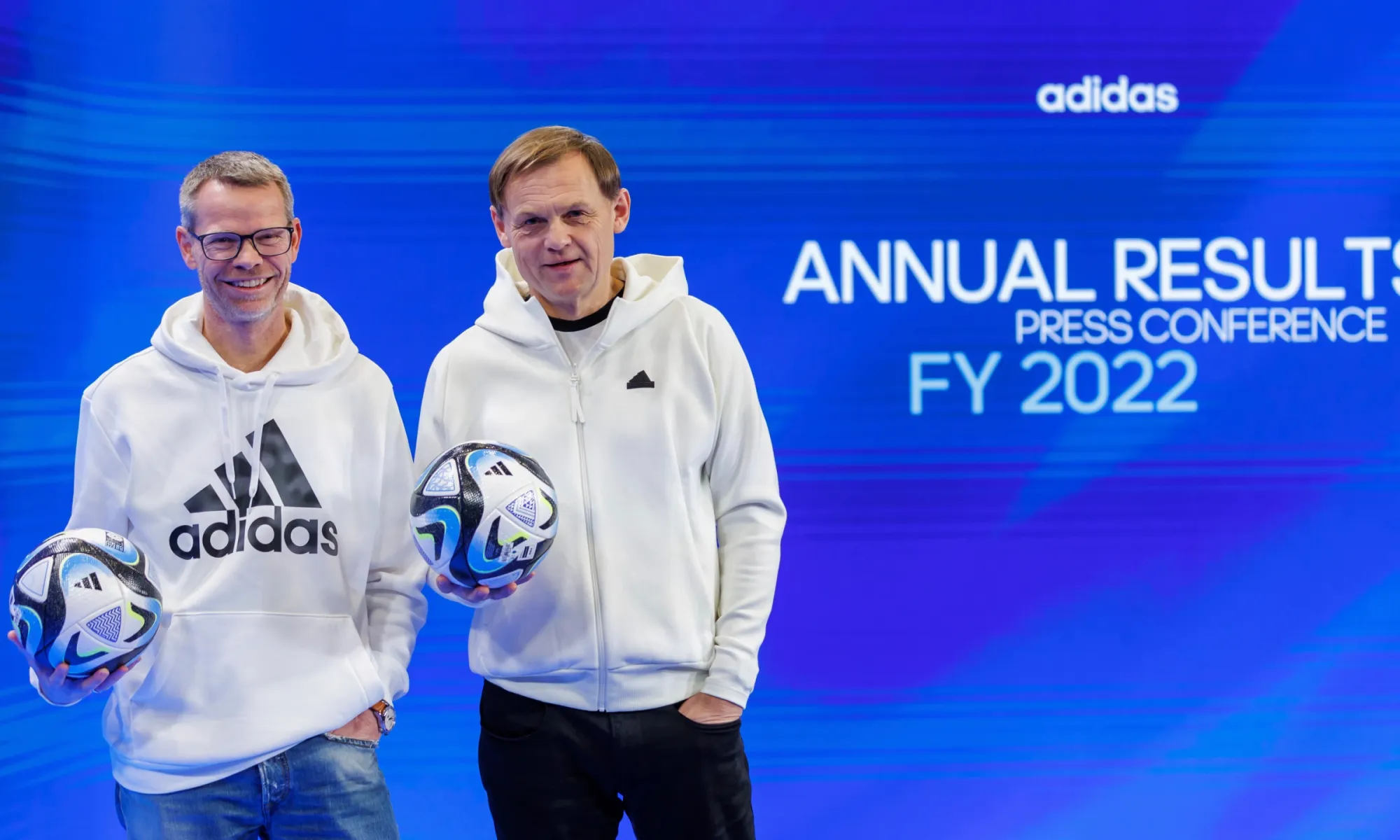
German sportswear company Adidas announced a fourth quarter loss and hinted that they are starting down the barrel of their first annual loss in 31 years. The company have also cut their dividend. Both events are related to their expensive separation from Ye in October.
Adidas posted a fourth-quarter operating loss of 724 million euros ($763 million ) along with a net loss from continuing operations of 482 million euros. ($508 million).
Adidas will also recommend slashing their quarterly dividend by $0.70 per share at their AGM (Annual General Meeting) on May 11th.
Adidas have also forecast a full-year operating loss of 700 million euros ($738 million) in 2023. The company’s forecast includes a write-off of 500 million euros ($527 million) in potential Yeezy inventory write-off along with 200 million euros ($211 million) in “one-off costs.”
The announcement called for Adidas’s share price to drop by 2%.
Chief executive Bjorn Gulden, who took over start of 2023, promised to rebuild Adidas’s reputation but conceded that the company faced a “transition” year with the value of its total inventories standing at $600m, an increase of almost 50% at the same time in 2022.
Chloe Collins, who is head of apparel at data firm GlobalData, noted that Adidas are still 4.8% behind pre-pandemic levels despite the 9.6% growth in the worldwide sportswear market during the last three years.
“In Q4, despite Adidas’s sponsorship of winning team Argentina, the presence of the FIFA Men’s World Cup was not enough to offset the negative impact of the Yeezy controversy on the brand or the fact that its designs lag behind rivals Nike and Puma,” she wrote.
“A catastrophic performance in China was partially to blame for Adidas’s performance in FY2022, as further lockdowns and a shift to local sportswear brands like Li-Ning and ANTA caused currency-neutral sales to topple 35.8%.”
Collins went on to say “Adidas is still deciding what to do with its remaining Yeezy inventory, despite reaching an agreement with West allowing the brand to sell it.
“It faces a difficult choice, as selling the stock could damage its brand perception even further, and not selling it will have a disastrous effect on profit.”


Terry A. Hurlbut has been a student of politics, philosophy, and science for more than 35 years. He is a graduate of Yale College and has served as a physician-level laboratory administrator in a 250-bed community hospital. He also is a serious student of the Bible, is conversant in its two primary original languages, and has followed the creation-science movement closely since 1993.