
News
Analysts say fighter jets ‘worthless’ over Ukraine

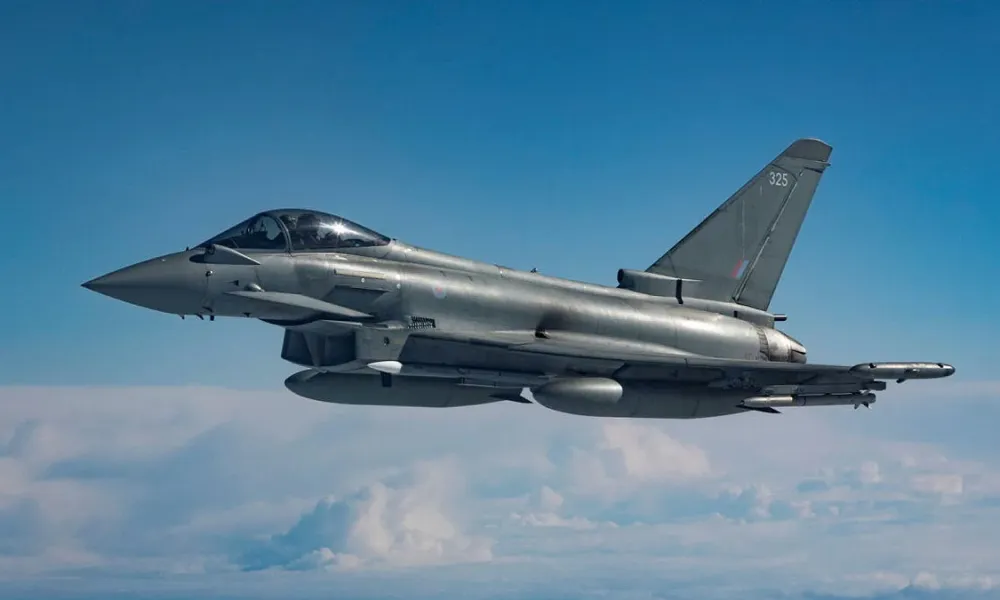
The conflict between Russia and Ukraine has been going on for over a year now. Despite the year-long battle on the ground, the fighter jets for both countries have been close to “worthless” so far as the battle in the skies remains at somewhat of a stalemate.
Despite both countries having fighter jets, they have largely been used for speculative rocket attacks from longer ranges rather than being able to offer support to the troops on the front lines.
Ukraine is believed to have lost over 60 aircrafts while Russia has reportedly lost over 70, according to Gen. James Hecker, commander of US Air Forces in Europe.
Both countries have held aircraft, back from the war and they remain on standby, Hecker told the media at the Air and Space Forces Association symposium on March 6th, however there is a problem.
“The problem is both the Russian as well as the Ukrainian success in integrated air and missile defense have made much of those aircraft worthless. They’re not doing a whole lot because they can’t go over and do close air support,” Hecker said.
Long-range sensors and missiles have allowed Russia to target Ukrainian aircraft behind the front lines, giving further problems to Ukrainian operations, however with the help of arms provided by the United States, Ukraine’s jets have been able to launch some successful strikes on Russian forces.
Using those weapons and other assets, Ukraine’s air force is able to do “a couple of strikes a day” at ranges “a little bit farther than HIMARS can get right now, but not real far out at all,” Hecker said.
The minimal amount of air support for Russian and Ukrainian troops coupled with the thicket of air-defense weaponry preventing it is a departure from what US troops have faced in recent wars, according to Gen. Charles Brown, the US Air Force chief of staff.
“We cannot predict the future of what kind of environment we’re going to fight in, for one, but I fully expect it’ll be much more contested,” Brown said at the symposium on March 7. “The amount of close air support we will do will probably be less than we’ve done in the past, typically in the Middle East, because that environment was that we didn’t have an air threat or a surface-to-air threat.”
Brown was asked about the comments made by Hecker and responded by saying “spot on” to say that “in a contested environment it’s going to be tough to execute the close air support.”
“Close air support in a contested environment, that’s not what we do, no matter who you are,” Brown concluded.


Terry A. Hurlbut has been a student of politics, philosophy, and science for more than 35 years. He is a graduate of Yale College and has served as a physician-level laboratory administrator in a 250-bed community hospital. He also is a serious student of the Bible, is conversant in its two primary original languages, and has followed the creation-science movement closely since 1993.