
Executive
Waste of the Day: Damage From Biden’s Gaza Pier
The vaunted Gaza pier cost more than its materials, because it incurred millions more in damages and injured 62 American service members.


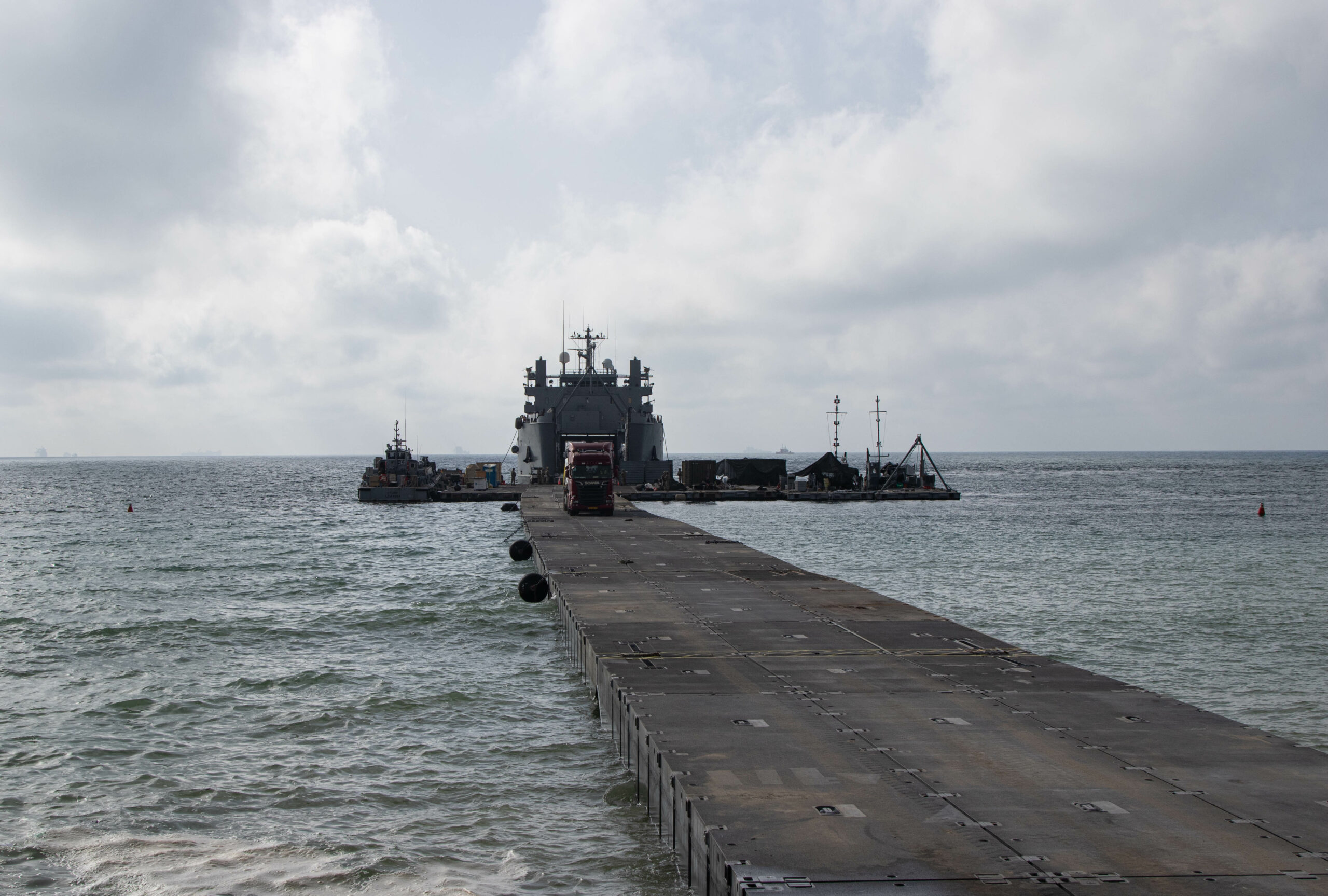
Topline: Taxpayers should already be familiar with the $230 million cost to build a Gazan pier for humanitarian assistance — which began falling apart almost immediately last year.
Loss of the pier, and much more, because the units weren’t ready
Now, a report from the Department of Defense’s inspector general has revealed the operation also injured 62 U.S. soldiers and caused at least $31 million in equipment damage.
Key facts: The audit found that the Army and Navy “possessed the capability” to successfully set up temporary piers and use them to transfer cargo and humanitarian supplies. The mission failed because “the Army and Navy did not meet Service-level standards for equipment and unit readiness, nor did they organize, train, and equip their forces to meet common joint standards.”

The Army and Navy each have different kinds of boats and pier supplies that are not compatible with each other, but soldiers still attempted to use the supplies interchangeably. That caused damage to 27 pieces of Navy equipment, which were required to be repaired for $31 million. It’s possible there was further damage, but portions of the audit are redacted.
Details about the 62 injuries are also redacted, though the report notes that some may have happened off-duty from pre-existing medical issues.
Search all federal, state and local government salaries and vendor spending with the AI search bot, Benjamin, at OpenTheBooks.com.
Delivering less than one-third the planned supplies
Background: The pier was supposed to stay in place for three months and deliver enough food to feed 1.5 million Palestinians. Instead, the pier was only in place for two months and was inoperable for most of that time while under repairs. The mission only delivered enough food for 450,000 people, according to a report last year from the U.S. Agency for International Development.
The same report found that planners “did not fully identify or consider mission-specific requirements, such as beach conditions, average sea states, and other factors,” contributing to the mission’s failure to meet its goal.
Trucks holding food were also looted by Palestinians after the United Nations World Food Programme refused to let the Israeli Defense Forces provide security for USAID and UN humanitarian workers, according to the report.
Summary: If the U.S. is going to involve itself in foreign conflicts, it should at least do so with proper planning and expertise.
The #WasteOfTheDay is brought to you by the forensic auditors at OpenTheBooks.com.
This article was originally published by RealClearInvestigations and made available via RealClearWire.

Jeremy Portnoy, former reporting intern at Open the Books, is now a full-fledged investigative journalist at that organization. With the death of founder Adam Andrzejewki, he has taken over the Waste of the Day column.




-
 Civilization4 days ago
Stealth, Sensors, and Staying Power: What the F-35 Just Proved—and What Comes Next
-

 Executive4 days ago
Citizen Sleuths Spotlight Red Flags Galore in Government Spending
-

 Guest Columns5 days ago
Oklahoma’s Digital Future Will Be Built on Affordable, Reliable, Clean Energy Security
-

 Civilization3 days ago
Dems Scramble After California Governor’s Debate Implodes
-

 Executive4 days ago
A Consent Decree for Freedom of Speech
-

 Civilization4 days ago
Waste of the Day: Cybersecurity Programmers Have Foreign Ties
-

 Executive3 days ago
America’s $130 Trillion Blind Spot
-

 Civilization2 days ago
Iran Could Reshape the Middle East and the Global Balance of Power