
Executive
Yet Another Misleading Report on “Low-Cost” Wind and Solar
Wind and solar cannot be cost-competitive with conventional electricity because they are intermittent and require backup generation.


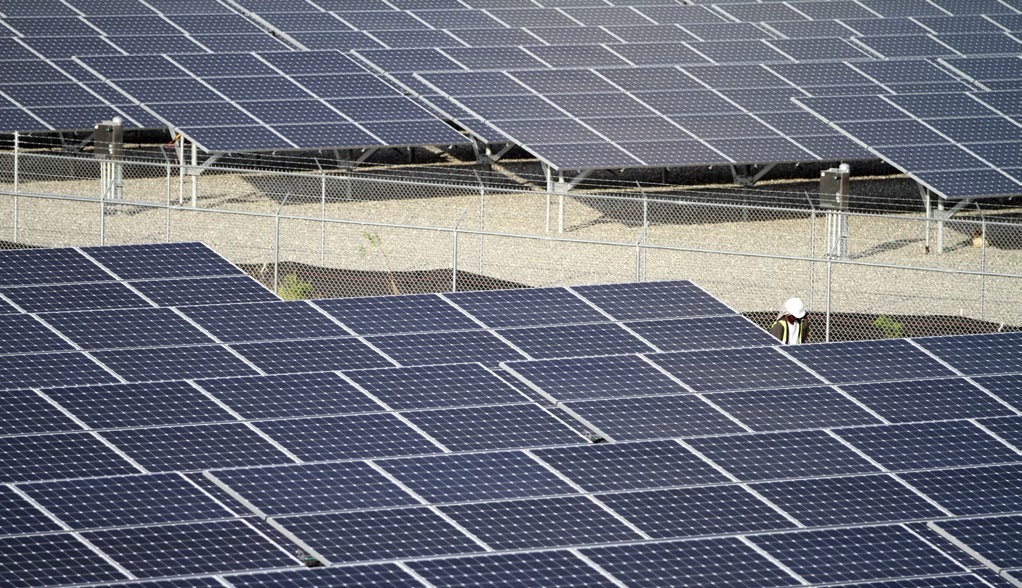
In a just-released report, the International Renewable Energy Agency (IRENA) claims that renewable energy is the most cost-competitive source of new electricity generation worldwide, The report further claims that “91% of new renewable power projects commissioned last year were more cost-effective than any new fossil fuel alternative” based on levelized costs, which can be thought of as the energy equivalent of a fixed mortgage.
Wind and solar and their intermittency
If those claims sound too good to be true, it’s because they are. IRENA’s boasts ignore a fundamental reality: the intermittent electricity generated from wind and solar is fundamentally different than electricity generated by traditional generating resources that are not subject to the whims of the weather.
In the U.S., the Energy Information Administration (EIA) makes the same mistake. The EIA claims that wind and solar will account for the lion’s share of new generating capacity for the next decade and will provide electricity at a lower levelized cost than any traditional resource, including new natural gas generators.
But the episodic nature of wind and solar power has critical impacts on both supply adequacy and cost, which, while recognized by some, are nonetheless not incorporated into bottom-line data. Traditional coal, natural gas, nuclear, and hydroelectric generating plants can be scheduled to run when needed. Some of them, especially nuclear and most coal plants, are designed to operate continuously and are referred to as “baseload” facilities. Others, especially natural gas plants, can quickly be turned on or off (“dispatched”) to match changes in demand. Collectively, traditional generation can be both scheduled and dynamically managed, enabling the operators of electric grids to reliably meet demand at the lowest cost.
Failure to count the cost of backup or batteries
The inherent intermittency of wind and solar reduces the physical and economic value of their capacity relative to traditional generating resources, as sufficient reserves or storage must be maintained to meet demand when they are unavailable. Merely reporting total wind and solar capacity misleads because it does not account for the adequacy of the electrical energy generated to meet demand and the actual costs to do so.
Here’s an analogy. Imagine that a city and its citizens are offered two types of buses for commuting. One is with new buses and free fares. However, these run only one-third of the time, are often unpredictable, and are less likely to show up on bad-weather days. If you wait for one of these new free buses but it fails to show up, you must suffer the inconvenience of having to take a relatively expensive Uber ride, which can cost even more on busy or bad-weather days. Meanwhile, the other option is to pay a modest fare (say, one-tenth of an Uber ride) on a conventional bus—but one that’s reliable, regardless of weather. Over a year of commuting, the total costs for the “free” bus service are likely to be much higher and the value much lower than commuting on the conventional bus service.
Cost v. value
In the context of electric grids, Uber rides represent the cost of either backup generating capacity or battery storage to compensate for wind and solar unavailability. Adding to these costs is the fact that, when electricity demand is greatest—typically, during the early morning and early evening hours—little, if any, solar power will be available. Similarly, meteorological records show that on the hottest and coldest days, there is often little wind. There can also be multiday periods, often lasting days and even a week, when there is little or no wind (a wind drought) and multiple cloudy days when little solar power is generated. Thus, wind and solar are often most available when the electricity they generate has the least value.
Fundamentally, cost and value are not the same thing. Comparing levelized costs, such as fixed mortgage payments for different homes, provides little insight into actual value. For example, a monthly mortgage payment of $2,000 for one house, versus one of, say, $2,500 for another, provides no information about either house’s value in terms of size, location, condition, and so forth. Similarly, the levelized cost doesn’t reveal power plant attributes, especially intermittency. The lowest levelized cost resources may not be the highest-value ones, or even the cheapest ones, when operated over time in the real world.
Wind and solar less valuable than advertised
For electricity planners and regulators to identify the highest true value, they must compare costs and operational benefits. Just like the commuter bus that doesn’t arrive on a rainy morning, intermittent capacity that is unavailable when it is most needed has far lower economic value.
Promoting misleading claims about wind and solar power distorts policymaking and will only exacerbate the growing inadequacy of electric supplies to meet increased demand in the wake of continued electrification efforts. It will lead to more frequent electricity rationing, as the Netherlands has recently imposed.
That may appeal to hairshirt environmentalists, but it won’t appeal to the broader populace, who are likely to express their displeasure at the ballot box.
This article was originally published by RealClearEnergy and made available via RealClearWire.

Jonathan Lesser is the president of Continental Economics, a senior fellow with the Discovery Institute, and an adjunct fellow with the Manhattan Institute. His report, “Green Energy and Economic Fabulism,” was recently published by the Global Warming Policy Foundation.










-

 Civilization5 days ago
Iran Could Reshape the Middle East and the Global Balance of Power
-

 Civilization4 days ago
The conversation women are having
-

 Executive4 days ago
Waste of the Day: NYC Thermostat Repairers Made $325K, Thanks to OT
-

 Executive5 days ago
The Assisted Suicide of Lofty State and Local Taxes
-

 Civilization3 days ago
Winning in Iran Requires More Than Military Success
-

 Civilization3 days ago
Epic Fury as It Is: A Look Inside
-

 Civilization4 days ago
America Needs to Understand Golden Dome Before It’s Too Late
-

 Guest Columns3 days ago
Waste of the Day: $34 Billion In Secretive Military Funding