
Civilization
The Next Phases of Trump Gaza Plan Get Harder
Trump negotiated a cease-fire in Gaza and got the last twenty living hostages out. What comes next is much more difficult.


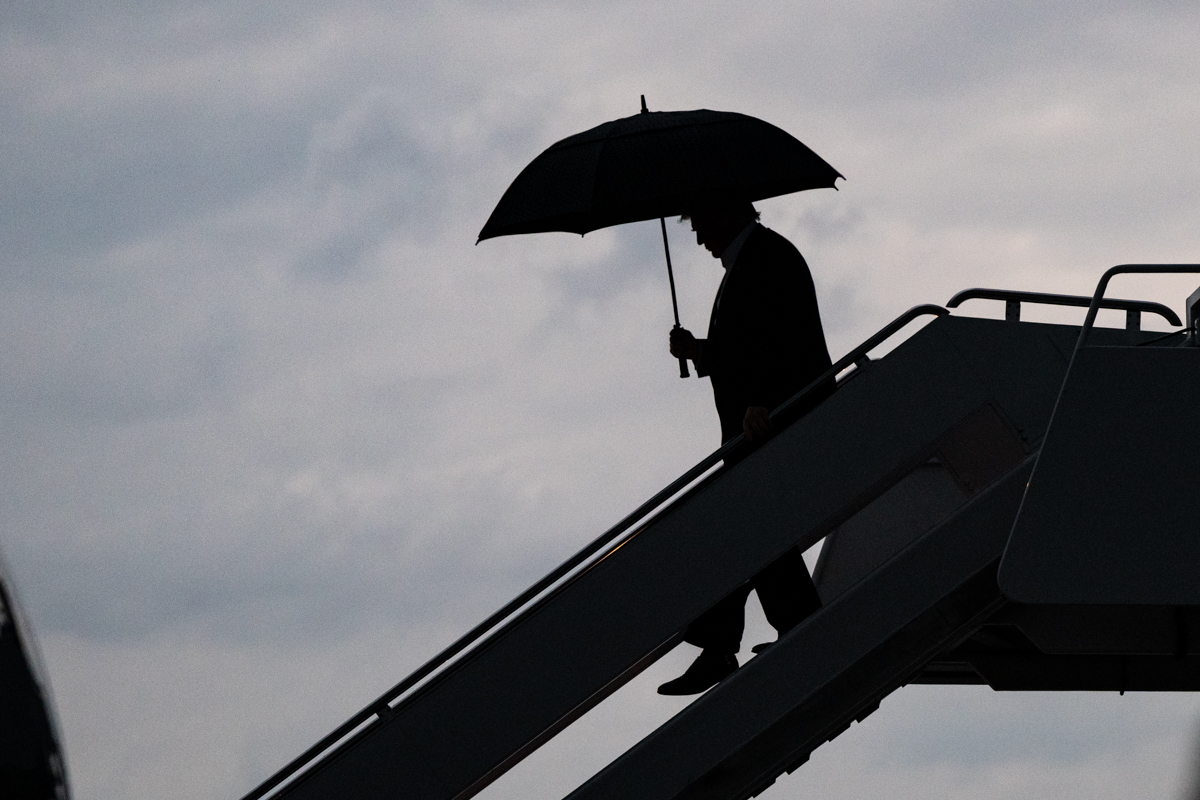
Trump negotiated a cease-fire in Gaza and got the last twenty living hostages out. What comes next is much more difficult.
“This long and difficult war has ended.”
So President Donald Trump proudly declared to his audience’s delight on Monday afternoon, Oct. 13, in Jerusalem at the Knesset.
Trump deserves much credit for getting 20 hostages out of Gaza
In vintage fashion, Trump incorporated casual asides, indecorous comments, and improvised riffs into his formal remarks. And, in vintage fashion, Trump overstated matters.
But the president, the 120-member Israeli parliament, Special Envoy Steve Witkoff and his negotiating partner Jared Kushner, Secretary of State Marco Rubio and Chairman of the Joint Chiefs of Staff General Dan Caine, and the many other dignitaries packing Israel’s legislative chamber were entitled to indulge in a moment, even a full day, of hyperbole. So, too, were Israelis across the political spectrum who were overwhelmed by joy and gratitude. In the morning, thanks in large measure to Israel’s brave military and Trump’s unorthodox diplomacy – which brought on board eight Arab and Muslim countries – Iran-backed Hamas released the final 20 living Israeli hostages, whom the jihadists held in brutal conditions for 738 days. Hamas also returned four bodies from among the 28 dead hostages still in Gaza. These accomplishments improved prospects to expand the Abraham Accords.
The reality remains that Israelis reside in a dangerous neighborhood, and the Jewish state is a long way from living in peace and harmony with its neighbors, beginning with Hamas in Gaza.
Hamas’ return of the hostages and the carrying out of a major portion of the Trump plan’s first phase came with disquieting developments and painful Israeli concessions.
HAMAS is back and firmly in control of Gaza
Since Hamas agreed on Oct. 3 to discuss Trump’s multi-point plan, masked and armed men have roamed Gaza’s streets, and within 24 hours of the ceasefire’s implementation on Friday, Oct. 10, Hamas’ police and interior ministry announced “that security forces had redeployed across the Strip.” By the middle of last week, Hamas had tightened control over Gaza, reportedly killing more than 30 people and publicly executing seven.
Furthermore, the deal obliged Israel to release 250 Palestinian security prisoners serving life sentences for planning or executing terrorist attacks and approximately 1,700 Palestinians captured by the Israel Defense Forces since Hamas’ Oct. 7, 2023, massacres. Many of the released murderers and accomplices to murder will return to war against Israel.
And Hamas has failed to fulfill its first-phase obligations: The jihadists have returned 10 of the bodies of the remaining 28 deceased hostages, and Saturday delivered two more bodies that were still to be formally identified; they agreed to repatriate all.
No reasonable person should be surprised that already at this early stage, implementation of the president’s comprehensive plan – which he originally presented as a take-it-or-leave-it proposition but then agreed to divide negotiations into phases – confronts mounting obstacles. An organization that is capable of the mass atrocities that Hamas perpetrated on Oct. 7, 2023, cannot be trusted to bargain in good faith, honor promises, or understand its interests as do citizens of rights-protecting democracies understand theirs.
Why did Netanyahu agree to this plan?
Why then did Israeli Prime Minister Benjamin Netanyahu agree to the Trump plan?
In an Oct. 8 news analysis, longtime New York Times White House and National Security Correspondent David Sanger indicated that Trump forced Netanyahu to do so. Only if Trump maintained pressure on the Israeli prime minister, Sanger suggested, would the ceasefire hold and would Hamas return the hostages.
In “How to End the War in Gaza for Good,” published by Foreign Affairs, veteran Middle East negotiator Dennis Ross agreed with Sanger. According to Ross, who is Counselor at the Washington Institute for Near East Policy and a Georgetown University professor, Netanyahu “did not want to test what Trump might do if he rejected his proposals.” This is all to the good in Ross’ view because the Trump peace plan, Ross believes, stands a chance of ending once and for all hostilities between Israel and Hamas.
Ross recognizes that phase 2’s implementation poses formidable challenges. It calls for nothing less than
the disarmament of Hamas; Israel’s further withdrawal to a buffer just inside Gazan territory, with a complete withdrawal once Gaza no longer threatens the country; the creation of a board of peace to oversee the enclave’s governance and a technocratic group of Palestinians to administer it; an international stabilization force; and the actual reconstruction of and investment in the strip.
More ambitious still, phase 2
includes genuinely reforming the Palestinian Authority – the organization that administers the West Bank – to set the stage for the political reunification of Gaza and the West Bank and a pathway to Palestinian self-determination and statehood.
How does anyone deal with HAMAS or the PA?
A combination of geopolitical logic and assiduous diplomacy, Ross believes, will enable the parties to implement the plan in its fullness. A “broader constellation of forces” has coalesced, he observes. It includes “a powerful United States, a wider Arab world committed to helping end the conflict, and an Israel that wants the fighting to stop” as well as “a Palestinian public in Gaza that craves normality and is likely to be supportive of forces distributing assistance and safeguarding the public.”
To harness these forces, Ross argues, Trump should enlarge his foreign policy team, and its members “must remain focused and engaged, and hold every actor’s feet to the fire.” Israel must “keep working with Arab countries to set up a peaceful, better government in Gaza.” And Arab states “must keep pressuring Hamas and the Palestinian Authority” to “ensure that Hamas cannot control Gaza directly or indirectly” and “must also insist that the Palestinian Authority carry out substantial reforms.”
Ross, though, asks nothing directly of two key actors: Hamas and the Palestinian Authority. Instead, he treats both as parties to be compelled by others contrary to their inclinations and perceived interests. Oddly, Ross does not regard this as a reason to temper expectations or develop a plan B.
Netanyahu warns the world not to expect much in Gaza
In contrast, Prime Minister Netanyahu began tempering expectations at the rollout of Trump’s Gaza plan at the Sept. 29 joint news conference with the president and very likely has been devising a plan B. At the news conference, Netanyahu underscored the plan’s basic elements: “Hamas will be disarmed. Gaza will be demilitarized. Israel will retain security responsibility, including a security perimeter, for the foreseeable future. And lastly, Gaza will have a peaceful civilian administration that is run neither by Hamas nor by the Palestinian Authority.” Because “Israel will retain security responsibility, including a security perimeter, for the foreseeable future,” it will be able to respond swiftly to a breakdown in the peace process.
Furthermore, Netanyahu emphasized Trump’s “clear statement at the UN against the recognition of a Palestinian state.” But that recognition concerned the here and now. Trump’s peace plan does contemplate the possibility of a Palestinian state down the road: “While Gaza redevelopment advances and when the PA reform program is faithfully carried out, the conditions may finally be in place for a credible pathway to Palestinian self-determination and statehood, which we recognize as the aspiration of the Palestinian people.” It follows from the plan’s highly hedged language, however, that even if the PA faithfully reforms itself, a credible pathway to a Palestinian state may still not be in place.
Netanyahu is in a good position
Netanyahu went further. He hardened the plan’s terms, attributing to it the “firm position that the PA could have no role whatsoever in Gaza without undergoing a radical and genuine transformation.” And Netanyahu elaborated on the far-reaching steps the PA must undertake to achieve a comprehensive transformation: “ending pay to slay, changing the poisonous textbooks that teach hatred to Jews, to Palestinian children, stopping incitement in the media, ending lawfare against Israel at the ICC, the ICJ, recognizing the Jewish state and many, many other reforms.” Such a transformation of the PA is not likely to occur anytime soon.
Contrary to Sanger and Ross, Netanyahu embraced the Trump plan because it gives him just about everything he wanted. In the unlikely event that the parties implement it fully, Netanyahu will accomplish his principal war aims: not only returning the hostages but also disarming Hamas and excluding it from government, demilitarizing Gaza, and deradicalizing the population. If, as he probably expects, the Trump plan stalls in the not-too-distant future because Hamas refuses to cooperate with its own dismantling and effective surrender, then the IDF is well-positioned to return to battle with the severely degraded Hamas forces.
A tactical retreat
Not least, and notwithstanding Ross’ high hopes, the slim chances of carrying out the many substantial steps contemplated by the Trump plan assist Netanyahu in preserving his fragile government. The benefits of cooperation with the United States and numerous Arab and Muslim nations give him cover to decline to pursue the extreme measures – transfer Palestinians from Gaza and establish Israeli settlements there – that his religious ultra-nationalist coalition partners have proposed. At the same time, Netanyahu can placate the religious ultra-nationalists by emphasizing that the obstacles to its realization will soon short-circuit the plan and restore Israel’s freedom of action in Gaza.
One major obstacle to implementing the Trump plan is that Hamas sees agreement to phase 1 as at most a tactical retreat. In its Oct. 3 response, Hamas characterized the plan as “calling for an end to the war on the Gaza Strip” – as if Israel were the aggressor and its enemy was not Hamas but rather the Palestinian people. Hamas said nothing about ending the war on the Jewish state that it proclaimed in its 1988 covenant and has been carrying out ever since.
US diplomats should recognize that Hamas and fellow jihadists may have reined in or paused the long and difficult war they have waged against Israel, but they are far from having ended it.
This article was originally published by RealClearPolitics and made available via RealClearWire.

Peter Berkowitz is the Tad and Dianne Taube senior fellow at the Hoover Institution, Stanford University. From 2019 to 2021, he served as director of the Policy Planning Staff at the U.S. State Department.





-

 Civilization4 days ago
Stealth, Sensors, and Staying Power: What the F-35 Just Proved—and What Comes Next
-

 Executive4 days ago
Citizen Sleuths Spotlight Red Flags Galore in Government Spending
-

 Guest Columns5 days ago
Oklahoma’s Digital Future Will Be Built on Affordable, Reliable, Clean Energy Security
-

 Civilization3 days ago
Dems Scramble After California Governor’s Debate Implodes
-

 Executive4 days ago
A Consent Decree for Freedom of Speech
-

 Civilization4 days ago
Waste of the Day: Cybersecurity Programmers Have Foreign Ties
-

 Executive3 days ago
America’s $130 Trillion Blind Spot
-
 Civilization2 days ago
Iran Could Reshape the Middle East and the Global Balance of Power