
Civilization
This Thanksgiving, Celebrate the New Beacon of the American Dream
The American Dream still lives, and has a research center devoted to its support. A recent immigrant offers valuable perspective.

This Thanksgiving, American polarization is on full display. Some Americans will celebrate the Trump presidency, while others will be thankful for the blue wave that hit New York, New Jersey, and Virginia.
The American Dream lives
Democrat or Republican, there is another reason to give thanks: The American Dream.
As an immigrant from Uruguay, I became a U.S. citizen in 2020, and have never regretted that decision five years later. Recently, I have been intrigued by a newly lit beacon of hope and liberty for the world: The recently inaugurated Milken Center for Advancing the American Dream (MCAAD) and its “American Dream Experience.” Part of the Milken Institute, a nonprofit educational and cultural institution, MCAAD is located next to the White House and serves as a constant reminder to our elected officials that preserving the American Dream for generations to come is their first, second, and third priority.
What does that mean? Nearly 100 years ago, James Truslow Adams coined the term “the American Dream” for a land where
Life should be better and richer and fuller for every man [or woman], with opportunity for each according to his ability or achievement.
Through the American Dream Experience, which I experienced firsthand, citizens and tourists alike can start from anywhere and be “part” of any social group, race, or class. The elaborate exhibitions include stories of civil rights leaders, nonprofit champions, scientists, and so many others, including successful immigrants like Arnold Schwarzenneger, Yvonne Chan, and Gloria Estefan. MCAAD stays true to President Reagan’s maxim that
You can go to live in Germany or Turkey or Japan, but you cannot become a German, a Turk, or a Japanese. But anyone, from any corner of the Earth, can come to live in America and become an American.
Economic and policy research to support the American Dream
Also notable is that MCAAD includes economic and policy research on the American Dream and economic mobility, rather than just wishful thinking or a “vibes check” on the concept – all too common nowadays. The path of upward mobility has been well researched by academics such as Nobel Laureates Gary Becker and James Heckman, in addition to Bates Clark Medalist Raj Chetty, so visitors can understand that the American Dream is emotive and empirical. Still, the exhibits that resonate most are stories of women, men, minorities, immigrants, entrepreneurs – American heroes from all walks of life.
Being thankful for the American Dream also means pushing back against counterproductive narratives. Negative economists and pundits often associate the American Dream only with income mobility measures and not a more holistic, inspiring vision tied to human flourishing and living out the hero’s journey. Besides facts and survey data or even the stories at MCAAD, a physical representation of the American Dream is needed now more than ever, since the pessimism surrounding the American Dream risks becoming a self-fulfilling prophecy. When MCAAD first opened, it received some scathing reviews that failed to objectively see what it could represent as a symbol for millions of visitors.
But Adams already described the skeptics of the American Dream when he coined the original phrase almost 95 years ago. The second part of his definition continued:
It is a difficult dream for the European upper classes to interpret adequately, and too many of ourselves have grown weary and mistrustful of it. It is not a dream of motor cars and high wages merely, but a dream of a social order in which each man and each woman shall be able to attain to the fullest stature of which they are innately capable.
Historical repetition
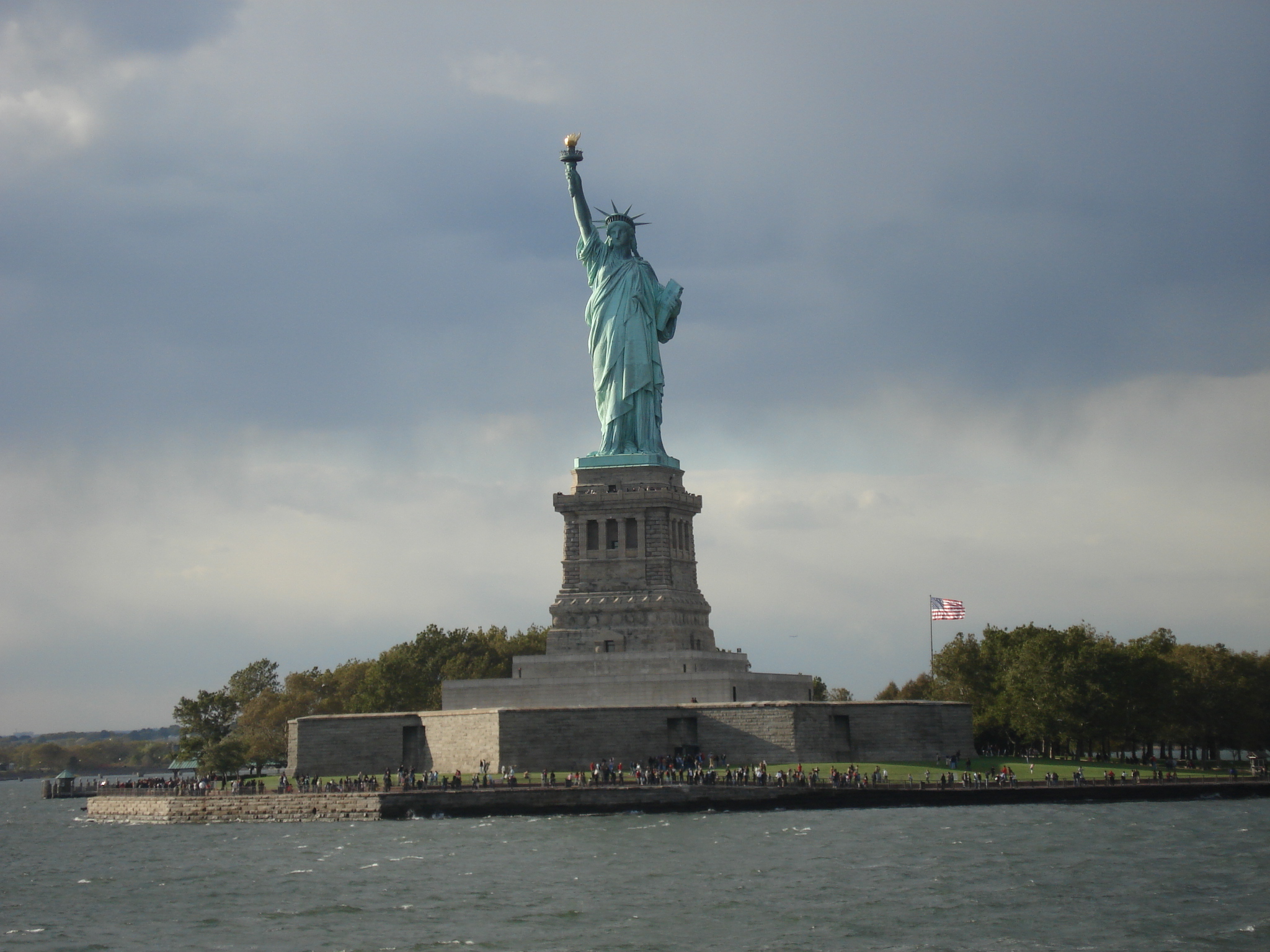
History indeed repeats itself. Some of the criticism levied at MCAAD is similar to what the Statue of Liberty initially experienced. Because at first Americans were hesitant to provide funds to construct the pedestal of Lady Liberty, Joseph Pulitzer, a Hungarian immigrant, promised to publish the name of every person who contributed to the pedestal in the New York World. He ended up raising over $100,000 (most donations were less than $1), publishing each and every name. It fell to people like Pulitzer and other immigrants to sway a skeptical electorate, and the hard work falls to today’s patriots to continue that legacy.
Fortunately, we are not alone. Most people are optimistic about the American Dream. Seven in 10 Americans believe they have achieved their version of the dream or are on their way to achieving it, regardless of race, income, or education.
Can this counteract polarization?
At a time of extreme polarization, it is precisely a built beacon of the American Dream that can rekindle the sense of hope and optimism we need heading into the 250th celebration of our republic – a republic Benjamin Franklin dared us to keep. It is time to be inspired by a new representation of the history of America and her people, and what the future can hold, like the everyday Americans who chose to support building the Statue of Liberty’s pedestal.
The United States is still a nation for dreamers, and we should all be thankful for that.
This article was originally published by RealClearPolitics and made available via RealClearWire.
Gonzalo Schwarz serves and President and CEO of the Archbridge Institute.






-

 Civilization5 days ago
The conversation women are having
-

 Executive5 days ago
Waste of the Day: NYC Thermostat Repairers Made $325K, Thanks to OT
-
 Civilization3 days ago
Winning in Iran Requires More Than Military Success
-

 Civilization3 days ago
Epic Fury as It Is: A Look Inside
-

 Civilization4 days ago
America Needs to Understand Golden Dome Before It’s Too Late
-
 Guest Columns4 days ago
Waste of the Day: $34 Billion In Secretive Military Funding
-
 Civilization4 days ago
Becca Rothfeld’s Fanciful Demands of Liberalism
-

 Education2 days ago
Waste of the Day: School Officials Claim Safari Was “Professional Development”