
Civilization
Seizing the Moment for U.S. Nuclear Energy Dominance
As regulatory barriers to nuclear energy fall, the time is ripe for a strong push to build new power plants and recruit new operators.


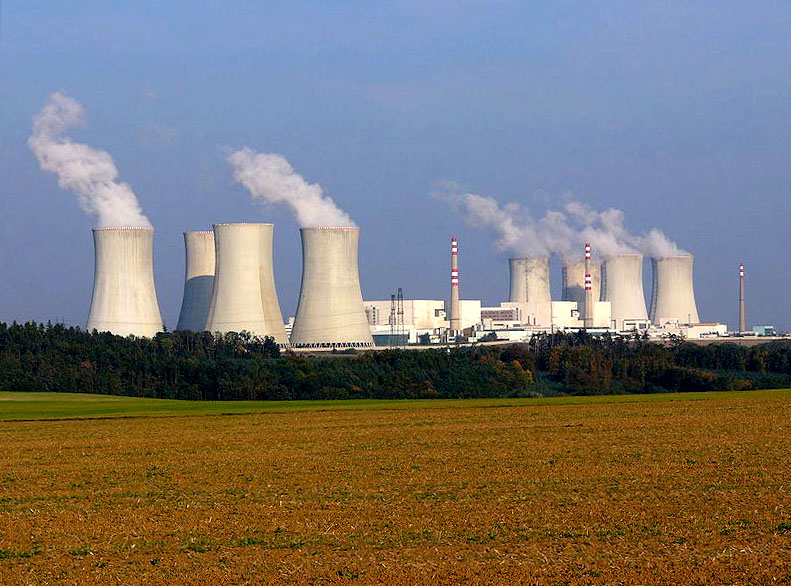
As America’s electric grid faces an unprecedent strain, nuclear power has never been more promising nor more important. Nuclear energy provides clean, reliable power that is vital to our economy and national security. American companies are pioneering some of the most promising advanced reactor designs in the world, but they will not succeed without effective government support for nuclear energy.
Regulatory barriers to nuclear energy are falling
America’s nuclear renaissance has been long delayed by regulatory and financial barriers, but that is rapidly changing. In May, President Trump signed a series of executive orders designed to accelerate reactor licensing and reform regulations, with a goal of bringing 300 gigawatts of new nuclear capacity online by 2050, effectively quadrupling the reactor fleet. A recently announced framework agreement with Westinghouse, Brookfield and Cameco to invest $80 billion in building 10 new, advanced nuclear plants in the United States is an important step towards fulfilling that vision.
The plan reflects the Administration’s understanding of two key facts: Effective government policy support is needed to jumpstart a resurgence of nuclear power; and success depends upon building new reactors in series, not just one or two. That allows companies to establish robust supply chains and secure the manufacturing scale that drives cost-reductions.
While these initiatives indicate important momentum, further federal action will be critical to our success. To evaluate policy options, we convened a bipartisan Working Group on U.S. Nuclear Energy Dominance earlier this year, comprising former senior officials, industry representatives, and subject-matter experts; they identified key priorities for the Administration and Congress to consider.
Support new nuclear energy plants
First, the federal government should provide robust support for a series of new nuclear plants. Every first-of-a-kind plant—including nuclear—entails risks of delay and cost overruns. The Westinghouse agreement recognizes that building multiple plants of the same design is essential. Other countries have achieved impressive cost reductions through sequential construction, and America’s existing nuclear fleet—the largest and most reliable in the world—was built using this model.
Beyond Westinghouse, the United States has a wealth of innovators working to commercialize advanced small modular reactors. Congress and the Administration should facilitate construction of multiple units of the most promising designs. Early federal backing for the initial plants in a series can be decisive in unlocking private capital. Reducing investor risk through targeted insurance mechanisms and measures that prevent costly delays would boost deployment. Enactment of the ARC Act would be a sensible first step in this direction.
New plant designs
Second, the Nuclear Regulatory Commission (NRC) must license a growing number of designs and construction projects safely and efficiently. Workforce reductions at a time of potential agency restructuring and rapidly growing responsibilities will hinder progress. Congress should ensure that the NRC has adequate resources and staff to achieve President Trump’s nuclear energy goals.
Congress should also ease the licensing burden on small, innovative reactor developers. The NRC is funded almost entirely through industry fees—more than $800 million annually—while agencies like the Environmental Protection Agency use taxpayer funds to support its work regulating other power generators. Nuclear should be treated no differently.
And Congress should adopt selected reforms to ensure that licensing review is proportionate to risk. For example, amending the Atomic Energy Act so that the Advisory Commission on Reactor Safeguards reviews only new or novel license applications, rather than all applications, would streamline the process without compromising safety.
The bipartisan Refuel Act is another example of a commonsense adjustment to reflect evolving technologies. There are new technologies and processes for recycling used fuel that never isolate plutonium; it is appropriate to differentiate their regulatory review from the traditional processes that do produce plutonium.
Attention to workforce and supply chain
Third, expansion of America’s nuclear industry will require a rapid build-out of our nuclear workforce and supply chain. Along with nuclear engineers, the industry will need thousands of skilled construction and maintenance workers and reactor operators. Supporting series production of both large reactors and small modular reactors will send an important demand signal to both suppliers and manufacturers. As the Department of Energy (DOE) supports series production of both large and small reactors, it should also use the Office of Energy Dominance Financing to support investments by suppliers and manufacturers. But expanding supply chains will take time; in the near term, lowering tariffs on essential imports would reduce both reactor costs and downstream electricity prices.
Fuel is equally essential, and there too, we lost our supply chain when we stopped building nuclear plants. Congress and DOE have provided initial support for uranium mining and enrichment firms and nuclear fuel fabricators, but more must be done to ensure predictable, long-term demand for suppliers. Congress should also encourage emerging private-sector efforts to recycle used fuel.
As electricity demand rises and global competitors accelerate their own nuclear programs, restoring U.S. leadership in nuclear energy is essential to ensuring reliable, affordable, and resilient power for decades ahead.
This article was originally published by RealClearEnergy and made available via RealClearWire.

Sam Thernstrom is the founder of the independent think tank, Energy Innovation Reform Project. He served at the Council for Environmental Quality during the George W. Bush Administration.

A former, State Department energy official, Paul Saunders is President of the Center for the National Interest.

Todd Abrajano is the President & CEO of the United States Nuclear Industry Council.












-

 Civilization4 days ago
The GOP’s Latino Reset Can Happen Now
-

 Executive5 days ago
Waste of the Day: Feds Bought Golf Carts For $8.4 Million
-

 Executive4 days ago
Waste of the Day: NYC’s $3.5 Million Toilets Are “In Purgatory”
-

 Civilization3 days ago
Does the Donroe Doctrine Now Extend to Outer Space?
-

 Civilization4 days ago
The Kremlin Is Killing the Tool That Sold Its War
-

 Civilization3 days ago
Imminent Threat? Iran Was Existential Threat
-

 Civilization2 days ago
How Prepared Is the Defense Industrial Base for Iranian Cyber Attacks?
-

 Civilization2 days ago
No Retreat, No Surrender: Why America Must Prevail in Iran