
Civilization
Iran: A Humbling Reminder of the Public Square We Take for Granted
America has a robust public square because American guarantees freedom of speech – unlike Iran, which never respected it.

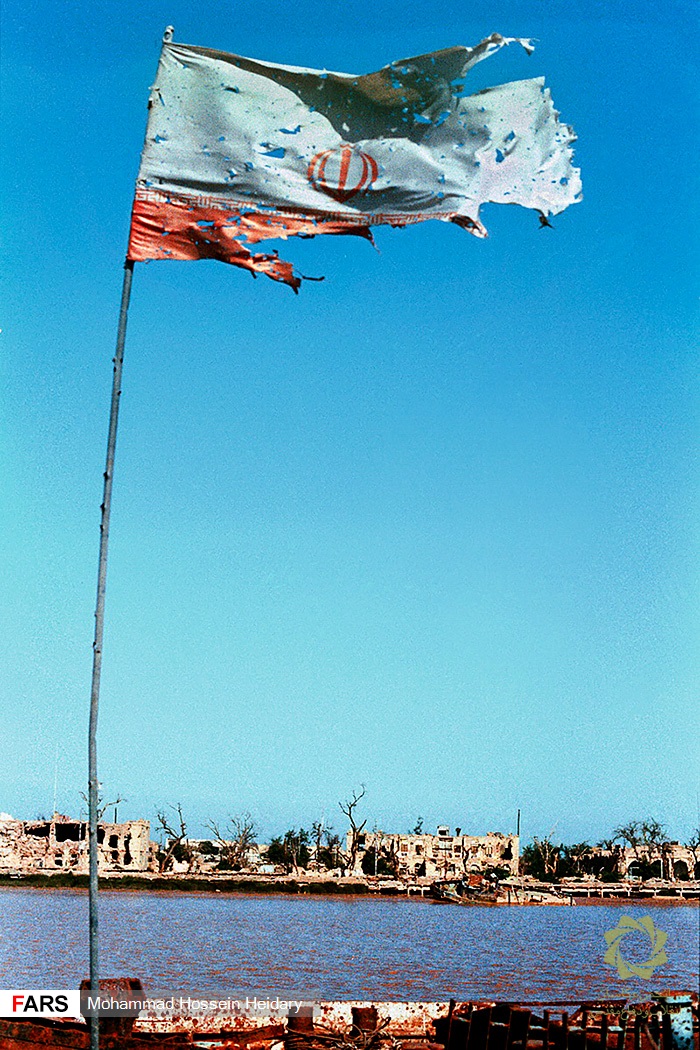
In the days since Operation Epic Fury was launched, tens of thousands of Iranians have gathered to celebrate the destruction of their government. It’s a sharp contrast to a week ago, when protesters were slaughtered.
Iran had no public square until the latest operation
It’s also a contrast to free speech in America. We aren’t perfect, but not only can a critical word against the government get off the ground, but a whole communications infrastructure exists to amplify it for you.
We the authors are part of that infrastructure. An average day for us is helping clients participate in the American public square. They may advocate for policies, challenge government decisions, defend their reputations, or simply ensure their voices are heard.
This week’s events opened a new thought box: What would our profession look like in a place like Iran, where free speech simply does not exist?
For Kerri, a 30-year movement conservative with decades in communications and public policy – from think tanks to presidential campaigns to advising the White House and serving as a commissioner on the U.S.-China Economic and Security Review Commission – this principle of open and loud liberty has always been foundational. And taken for granted.
And Dustin, who owns a public affairs firm, is a former blogger and journalist with more than two decades in media. He has never worried much about a challenge from above to the belief that ideas should compete freely and combatively in the marketplace of public debate.
When free speech does not exist
In the United States, a client might want to complain about an official or a government agency, and so he comes to us with an op-ed – and no concern about being shot. We debate strategy, refine the message, and pitch it to a newspaper or digital outlet. The argument might spark disagreement or debate – as it should in a healthy society – but in America, we don’t have to fear for our lives or our families when we accept a client.
On the other hand, if we had clients in Iran who wanted to challenge a government program or question the authority of a political leader, the mechanics of our profession would collapse instantly. There would be no op-ed page willing – or able – to run the piece. There would be no newsroom free to evaluate the argument on its merits. There would be no social media posts from influencers – unless they outmaneuvered the censors, as happened when the world watched Neda Agha-Soltan get shot to death during the 2009 Arab Spring.
In Iran, the consequences for us would be terrifyingly simple. The client would disappear. In the worst case, he would never be seen again. And we who helped him “dissent” could expect about the same.
That reality forces a humbling realization about our profession. Public affairs’ most basic component is simply this: helping people exercise their freedom to speak in public.
Again, Iran didn’t have a public square
In America, that freedom is so embedded in our system that entire industries exist to support it. Communications firms, journalists, advocacy organizations, and think tanks all operate within a vast ecosystem built on the assumption that ideas – even uncomfortable ones – can be expressed openly.
In Iran, the public square barely existed unless you were praising the ruling mullahs.
The Iranian people have been voiceless because their government punishes speech with intimidation, imprisonment, and violence. The regime understood that free-speaking citizens bring accountability to those in power.
For those of us who work in communications and media, that truth should never be abstract. Our profession exists because freedom exists.
We should never stop recognizing the stark contrast between our system and regimes that fear their own citizens’ voices. We should never take our free speech for granted – even if we find a fellow citizen’s voice or position profoundly annoying,
What happens next?
One day, we hope the Iranian people will experience a different reality – one where debate is not criminalized and dissent is not deadly. We long for an Iran where journalists can publish criticism without fear, where citizens can challenge government policies openly, and where businesses and nonprofits can advocate for their interests in the media and their communities.
Perhaps someday, an Iranian entrepreneur, activist, or civic leader will hire a public affairs firm like ours not in secret or in exile, but openly, to share an idea, persuade fellow citizens, and participate in their nation’s public life.
That may sound like a modest aspiration. But in a place where speaking freely can cost you your life, it would be a powerful measure of success – and a sign that the public square finally belongs to the public.
This article was originally published by RealClearPolitics and made available via RealClearWire.

Dustin Siggins is a business columnist and founder of the publicity firm Proven Media Solutions.

Kerri Toloczko is Proven Media Solutions’ director of public affairs, and has been a senior policy advisor to grassroots coalitions and public policy organizations.



-
 Civilization4 days ago
How Prepared Is the Defense Industrial Base for Iranian Cyber Attacks?
-

 Civilization5 days ago
Does the Donroe Doctrine Now Extend to Outer Space?
-

 Executive5 days ago
Waste of the Day: NYC’s $3.5 Million Toilets Are “In Purgatory”
-

 Civilization2 days ago
Stealth, Sensors, and Staying Power: What the F-35 Just Proved—and What Comes Next
-
 Civilization5 days ago
Imminent Threat? Iran Was Existential Threat
-
 Civilization4 days ago
No Retreat, No Surrender: Why America Must Prevail in Iran
-

 Executive2 days ago
Citizen Sleuths Spotlight Red Flags Galore in Government Spending
-

 Guest Columns3 days ago
Oklahoma’s Digital Future Will Be Built on Affordable, Reliable, Clean Energy Security