
Civilization
NATO: No Action, Talk Only — The Alliance That Forgot How to Fight
NATO has become an all talk, no action body, and the Iran conflict proves it is a paper tiger that has outlived its usefulness.


Introduction: A Confession
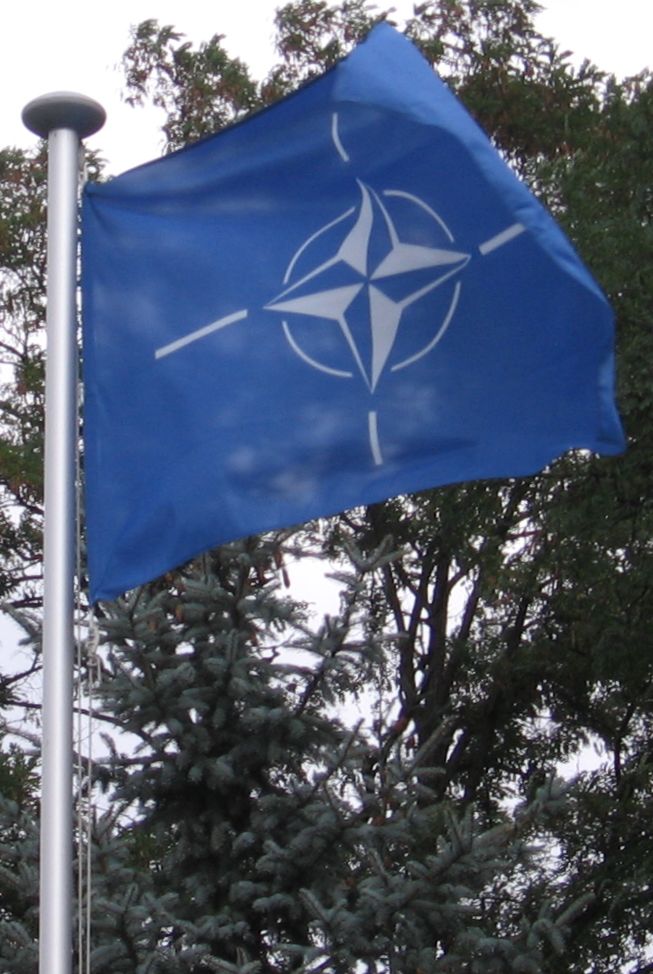
Let us begin with a confession. I am a devoted admirer of NATO. I believe in collective defense, in transatlantic solidarity, and in the sacred principle that an attack on one is an attack on all. I believe in this the same way I believe in Santa Claus — with great warmth, considerable nostalgia, and the quiet understanding that the evidence has become somewhat inconvenient.
So let us examine the evidence together. Calmly. Without partisan affiliation, without personal animosity toward any leader, without the fog of political preference. Just facts. You may draw your own conclusions.
The Birth of a Great Idea
On April 4, 1949, twelve nations gathered in Washington and signed the North Atlantic Treaty. The logic was elegant in its simplicity: the Soviet Union was expanding, Europe was exhausted, and America was the only power capable of holding the line. Collective defense would deter aggression. An attack on one would be treated as an attack on all.
It was, by any measure, one of the most successful security arrangements in history. For forty years, it worked. The Soviets did not march west. Europe rebuilt. The alliance held. And then the Soviet Union collapsed. This is where our story gets interesting.
NATO is No Action, Talk Only
There is a phrase that circulates quietly among senior military officials within NATO itself — not in press releases, not in summit communiqués, but in the corridors where people speak honestly. They call the alliance “No Action, Talk Only.”
I have heard this personally from sources inside the organization. NATO. No Action, Talk Only. It is, as acronyms go, devastatingly accurate.
When the Soviet threat disappeared, NATO faced an existential question: what are we for? The answer, delivered by President George W. Bush after 2001, was that NATO would now fight terrorism. This sounded decisive. It was, in practice, philosophically catastrophic. NATO’s post-Cold War strategists decided that the enemy was a tactic. They would fight “terrorism” — an abstraction, a method, a fog. Predictably, they could never agree on what terrorism actually was.
Meanwhile, in 2008, Russia attacked Georgia. The alarm bells rang. NATO remembered, briefly, what it existed to do. But only briefly.
The 2% Fiction
NATO’s financial model is, in theory, straightforward. Each member maintains its own military and is expected to spend at least 2% of GDP on defense. In practice, during Donald Trump’s first presidency, a rather uncomfortable truth emerged: almost no one was paying.
Trump’s assessment was direct: You are not paying your dues. The United States finances 80% of this alliance. You have dismantled your own defense forces, confident that America will protect you. Biden arrived, reassured everyone that America would always be there, and NATO’s member states promptly resumed their previous arrangements — paying less than required.
NATO Article V: A Clause in Search of a Country
Let us count. Because counting is instructive.
Iran struck a British military base in Cyprus. Both Britain and Greece are NATO members. Article V — not invoked.
The Royal Navy’s Scheduling Conflict: Britain agreed to send a single frigate to protect its base. It was discovered that the vessel required repairs. The trade unions refused to authorize overtime. A British warship could not be repaired because labor regulations did not permit workers to exceed eight hours per day.
The Turkish-Polish Incident: Iran struck Turkish territory multiple times with ballistic missiles. Turkey requested a single Patriot battery from Poland. Poland said no. The United States intervened. Poland said no again. Three NATO members struck by Iranian weapons. Zero invocations of Article V.
Coalition of the Willing — To Watch
When Iran threatened to close the Strait of Hormuz, global oil prices surged. Trump called on NATO allies to protect their own tanker routes. The response was instructive.
Spain refused American forces use of its bases. France did the same. Italy declined refueling.
Germany’s Chancellor Merz offered to send one warship — provided the United States guaranteed its safety, and provided Iran gave its permission first. France, at the United Nations, voted alongside Russia and China to block a resolution that would have authorized forcible reopening of the Strait.
The Question Americans Are Asking
The American taxpayer is beginning to ask: Why exactly are we in this alliance? We pay 80% of NATO’s collective costs. We maintain the nuclear umbrella. And when we ask our allies to protect their own tanker routes, they cite scheduling conflicts and labor regulations.
The Monroe Doctrine — which some in Washington now call the “Donroe Doctrine” — has returned to American strategic thinking. The premise is simple: America’s primary interest is America’s hemisphere. Everything else is a choice, not an obligation.
What Is NATO For?
In 1951, General Dwight D. Eisenhower wrote: “If in ten years, all American troops stationed in Europe… have not been returned to the United States, then this whole project will have failed.” That was 75 years ago. American troops are still in Europe.
There are two possible arrangements. First: America is NATO’s client (Europe hires protection). Second: America is NATO’s ally (partners share risks). NATO has spent thirty years insisting on the second arrangement while practicing the first — without paying for it.
Conclusion
I have presented you with facts. Dates, amounts, decisions, votes, labor disputes, and ballistic missiles. I have offered no verdict. I would ask only that you read what you have read again and draw your own conclusion. Some conclusions write themselves.
This article was originally published by RealClearDefense and made available via RealClearWire.

Emzar Gelashvili is a former Member of the Georgian Parliament (7th convocation) and a former senior official across Georgia’s Special Services, including the Ministry of Defense, the Ministry of State Security, and the Ministry of Internal Affairs. He is an independent security and intelligence analyst based in California and publishes regular geopolitical insights on Substack.







-
 Executive4 days ago
The Straits of Hormuz Should Not Be a U.S. Problem
-
 First Amendment5 days ago
Oregon’s Union Crackdown Spreads
-

 Guest Columns5 days ago
Living in the Empty Tomb Era
-

 Executive4 days ago
Waste of the Day: Maryland Ignored Audit Warning, Increased Overtime
-

 Civilization4 days ago
How China Dominates the World’s Critical Minerals Production
-

 Executive3 days ago
Waste of the Day: Fiscal Doomsday Reached With $193.6T Gap
-

 Education3 days ago
Congress Examines Forces Fueling Campus Antisemitism
-

 Civilization16 hours ago
Iran’s Chemical and Biological Options in a U.S. Ground Invasion