Civilization
President Should Follow His Instincts, Not the Energy Markets
President Trump should follow the instincts that have served him well, not energy markets that calculate for the short term.


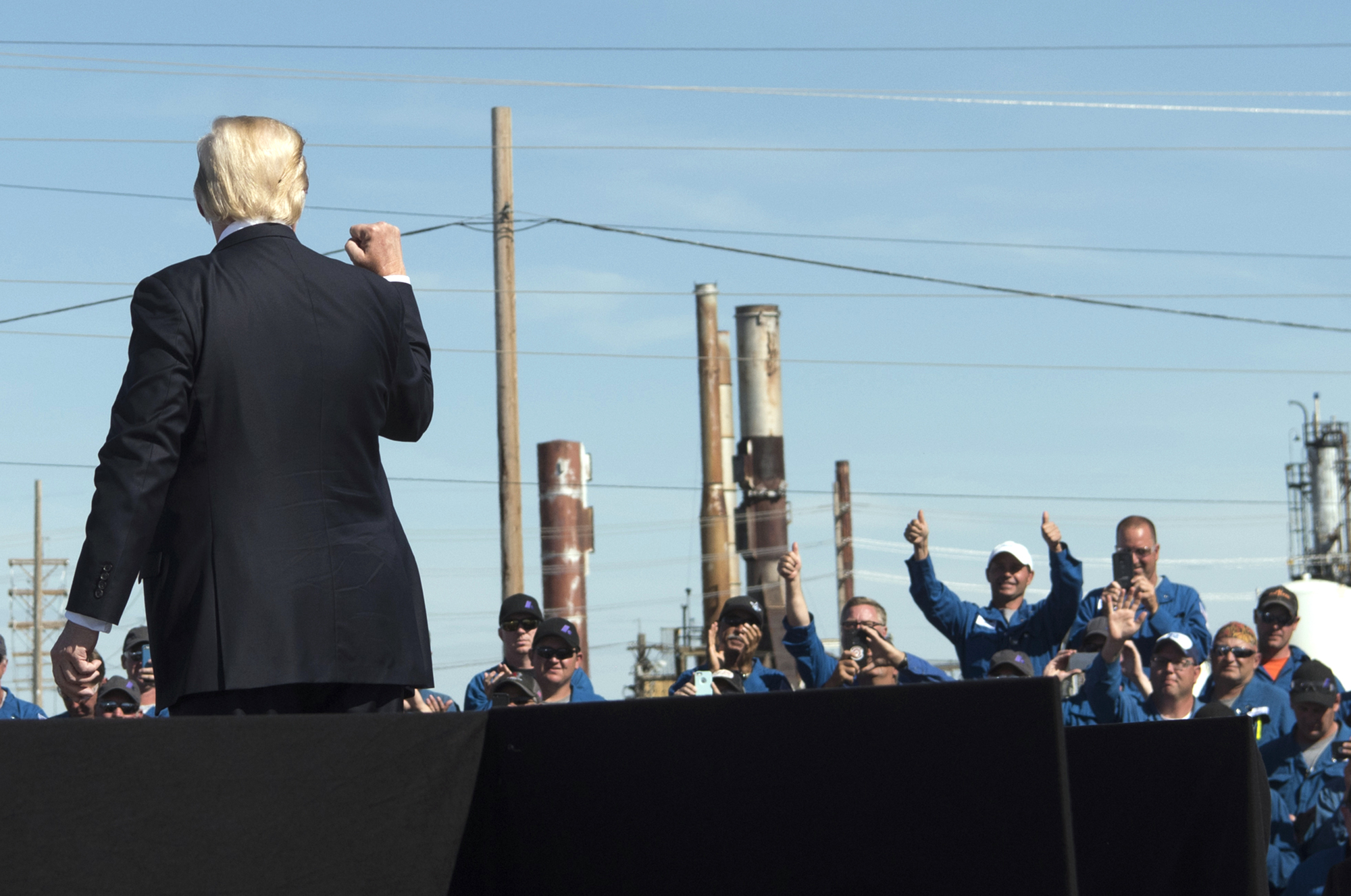
Several days ago, President Donald Trump threatened to strike Iranian power plants if free transit wasn’t allowed through the Strait of Hormuz. That potent threat was subsequently delayed with a new deadline of April 6, although new threats may make strikes against energy targets more imminent. Meanwhile, American ground forces continue to converge on the Middle East, and a threat of boots-on-the-ground is becoming more real and more concerning. It is a strategy fraught with risk.
The President has avoided striking energy-related targets thus far
Thus far, the United States has gone out of its way to avoid striking energy-related targets in Iran. Concerns about inflationary pressures on oil markets appear to be a driving factor in such a decision. The American president has even chastised Israel for their limited strikes against this type of target set, making it crystal clear that energy targets were off-limits.
Furthermore, no action had been taken against Iranian energy flows which enjoy unobstructed transit to Iran’s customers of choice. All other transport through the Strait of Hormuz has been halted, strangling 20% of worldwide oil supply and uniquely disadvantaging allies and partners of the United States. It has been a one-sided element of the current conflict that uniquely benefits Iran and hamstrings America’s ability to exert maximum pressure on the regime.
The president’s threats promised to quickly reverse the losing energy battle. Iran’s economic lifeline continues to be oil exports, and hitting energy-related targets would demonstrate that the United States will no longer allow an energy sanctuary for an enemy regime. Once these threats materialize into action, Iranian leaders would quickly realize they could no longer hold the world hostage without direct ramifications that would yield them irreversible harm.
Maximum costs, minimum risk
Striking Iranian energy targets as originally threatened by President Trump promised to flip the script and impose disproportionate costs back on the adversary. It followed the wise strategic maximum – success results when you impose maximum costs while incurring minimal risk. Such a favorable benefit-cost-risk equation is absent in the other strategic options being considered by the United States.
The utilization of friendly ground forces against energy locations – like Kharg Island – would indeed impose substantial costs on Iran, but it would also incur significant risk. Friendly ground forces would have to sail through the Strait of Hormuz, transit the entire length of the Arabian Gulf, and invade heavily defended enemy terrain. As an alternative, ground forces would need to undertake a risky airborne assault. Either way, the seizure of terrain may be the easiest part of such an operation, realizing that the ground forces would then be forced to hold that terrain while defending against relentless Iranian missile, rocket, mortar, and drone threats launched from nearby locations. Those friendly forces would operate in sustained conditions of significant risk.
Alternatively, aerial strikes against energy-related targets would impose costs without incurring such risk. Blockades and seizures of Iranian oil tankers would yield similar and complementary benefits. These actions would create a strategic foundation that fundamentally reorients the strategic calculus in favor of friendly forces.
A prolonged conflict or quick strikes? Take your pick
Would energy costs rise with such strikes? Probably yes, but no more than the soaring economic toll that would be caused by a prolonged conflict that severely limited the free flow of commerce through the Strait of Hormuz.
Would Iran lash out against the energy-related targets of its Gulf neighbors? Yes, but not significantly more than they already have in the first month of the conflict, with more than 80% of such strikes against civilian infrastructure targets in the region.
Do Iranian leaders care more about their radical ideology than the costs of the conflict? Yes, but without the funds to support the ruthless grip of the regime, they would face long term internal challenges from a dissatisfied population without the financial resources to support their decades-long strategy of internal suppression and external aggression.
A counter-energy strategy that heavily leverages diplomatic and economic instruments of power, backed by credible military threats, would remove the current sanctuary of the adversary. The president’s original threats against Iranian energy targets, driven by astute instincts, revealed an understanding of this important truth. It is now time to follow those instincts, immediately reversing the ongoing power imbalance and turning Iran’s one-sided sanctuary into a strategic liability.
This article was originally published by RealClearPolitics and made available via RealClearWire.
Brigadier General John Teichert (U.S. Air Force, ret.) is a prolific author and a leading expert on foreign affairs and military strategy. He led as the Commander of Joint Base Andrews and Edwards Air Force Base, served as the U.S. senior defense official to Iraq, and recently retired as the assistant deputy undersecretary of the Air Force, international affairs. General Teichert can be regularly seen on NewsNation, Fox News, and Newsmax. His activities can best be followed on johnteichert.com and LinkedIn.