
Civilization
The Thread of Liberty: Keeping Our Republic
Benjamin Franklin told a certain woman that the Constitutional Convention produced a republic, if we can keep it. Can we?


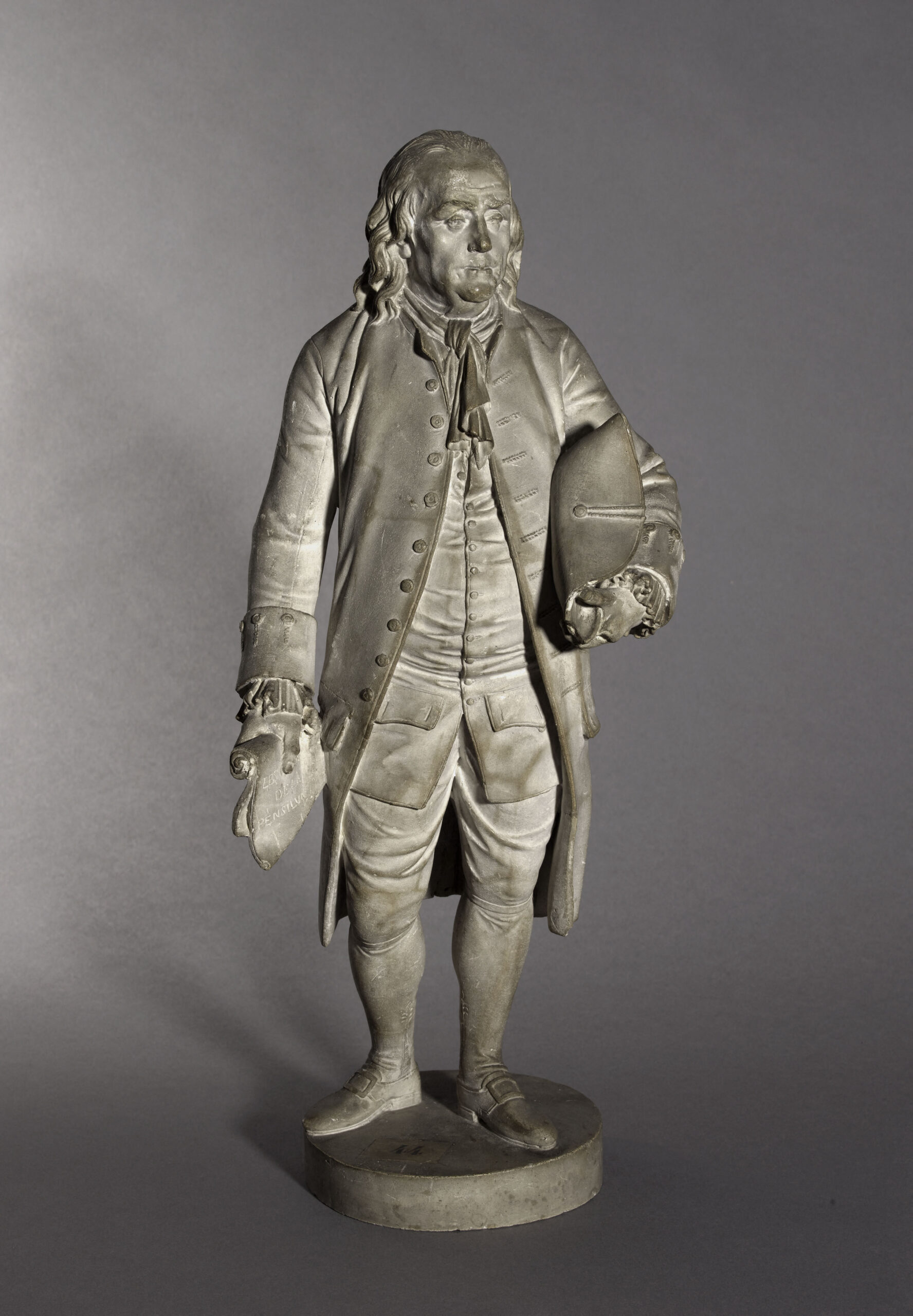
Benjamin Franklin walked out of the Constitutional Convention in September 1787 and was asked what kind of government the delegates had given the country. “A republic,” he said, “if you can keep it.”
Can we keep our republic?
Two hundred fifty years after the Declaration that made such a government thinkable, that conditional clause is one of the most important phrases in American life: “If you can keep it.”
Franklin did not say the work was finished. He said it was handed to us. Every generation since has either carried it forward or let it slip, and the carrying has never been guaranteed. It has always depended on Americans understanding what they were given and why it is worth holding on to.
The documentary, “The Thread of Liberty: Keeping Our Republic,” was made because fewer and fewer of us understand the importance of our Republic and why its founding principles should endure, and because the not-understanding is no longer accidental.
Teaching lies about the republic – if schools teach history at all
Consider what our children are taught. On the most recent national assessment of eighth graders, only 13% reached proficiency in American history. Forty percent fell below even a basic standard, meaning they could not read a simple historical document and draw a conclusion from it. In civics – if it is even taught at all – the scores fell for the first time since the test began in 1998. These are not the children of some other country. They are ours, and they are coming of age with almost no working knowledge of how their own government was built or why.
That alone would be reason enough to act. A people who do not know their history cannot defend it, and a people who cannot defend their inheritance will not keep it. But ignorance is only the first half of the problem.
The harder truth is that what knowledge young Americans do receive has too often been bent to serve a purpose. The founding is taught now, in many places, not as a difficult and remarkable achievement – a miracle even, given the odds against the Founders – but as a crime scene.
The men who pledged their lives and fortunes and sacred honor are presented mainly as hypocrites. The principles they declared – and for which millions of Americans have died – are dismissed as cover for self-interest. A student can leave a classroom knowing exactly what may have been wrong with the Founders and nothing at all about what was right.
Not history
This is not history. It is history put in the service of an argument, and the argument is that the country was rotten at its root. Once you believe that, everything follows. If the foundation is rotten, then tearing it up is not vandalism. It is justice.
Which brings us to the second reason this film was made: Over the past half-century, a growing number of our fellow citizens have come to feel no particular love for this country, and in many cases outright contempt. For many, this is simply the fruit of ignorance. You cannot love what you do not know and have never been given reason to understand.
But the sentiment has hardened into something more deliberate. There is now a current of thought, well represented among people of real influence in our universities, our institutions, and our media, culture and politics, that regards the American founding not as a flawed beginning to be perfected but as a mistake to be overcome.
These are men and women who have enjoyed every blessing our Republic affords: the liberty, the opportunity, the protection of rights the Founders secured, and who have concluded that the framework which produced those blessings is illegitimate. They do not wish to keep the Republic. They wish to replace it with something they consider more just, more managed, more answerable to experts and less answerable to the people.
They mistake the scaffolding of their own freedom for a cage.
Alexis de Tocqueville’s warning
Alexis de Tocqueville, who saw the young American Republic more clearly than most Americans saw it themselves, saw this coming and predicted that the danger to American liberty would not arrive as a tyrant; it would arrive softly, as comfort, as the slow surrender of self-government by a people too content to bother with it.
“The Thread of Liberty” does not pretend the country was born innocent. The film looks directly at our failings and at times when the nation fell short of its own creed. But it insists on the thing the crime-scene version leaves out: that the creed was real, that it was radical, and that it has been the most powerful engine of human dignity the world has ever produced.
The proposition that all men are created equal did not describe America in 1776, but it has been calling the country toward its better self ever since. Frederick Douglass understood this. So did Lincoln. So did every American who ever held the founders to their own words and demanded that the promise be kept.
That is the thread. It runs from a Puritan governor on a ship in 1630 to a general who handed back his sword in 1783, from Jefferson’s pen to Gettysburg to the long, unglamorous work of ordinary citizens governing themselves in ten thousand towns. It has been pulled taut many times, even frayed on occasion.
Hope for the Republic
But it has not yet broken.
This Fourth of July, as the country turns 250, the question Franklin left us is still open, as it was always meant to be. The Republic is not just some possession. It is an inheritance held in trust, and a trust must be renewed by each generation that receives it. This film is meant to remind our fellow citizens of what they have been given, and to make the case, plainly and without apology, that it is worth keeping.
The thread is in our hands now. It always was. What comes next depends entirely on what we choose to do with it.
This article was originally published by RealClearPolitics and made available via RealClearWire.

Ned Ryun is a grassroots and conservative activism expert. He is the founder and CEO of American Majority, a non-partisan political training institute whose mission is to identify and mold the next wave of liberty-minded candidates, grassroots activists and community leaders. Since its founding in January of 2008, while under Ryun’s leadership, American Majority has trained candidates and activists in all 50 states.