
Executive
Waste of the Day: Rotten “Super Cereal”
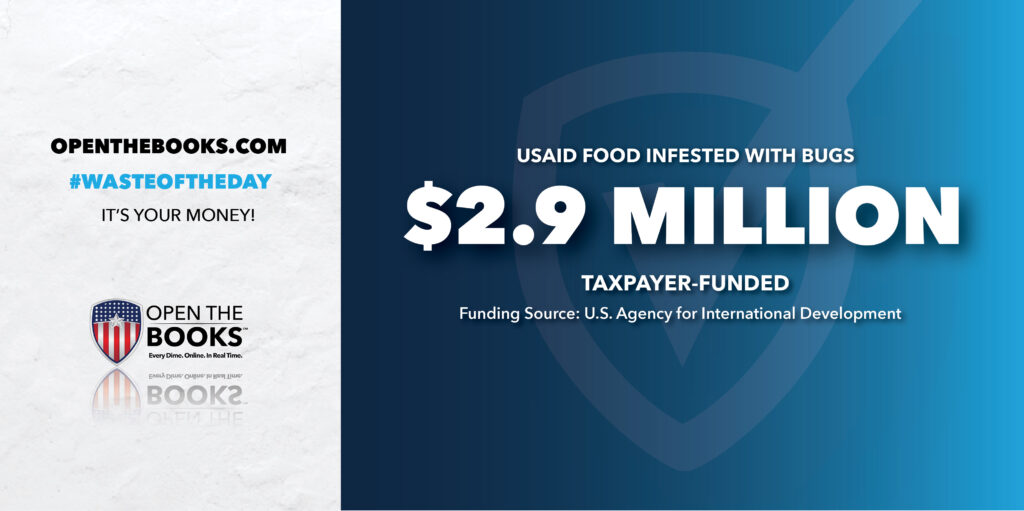
USAID stored $2.9 million worth of super cereal that turned out to be rotten, and $10 million of food that was due to expire.


Topline: As of June 2025, the U.S. Agency for International Development (USAID) was paying to store $2.9 million of rotten “super cereal” and $10 million of food that was going to expire in less than a year in a Djibouti warehouse, the agency’s inspector general found in a recent audit.
The super cereal that was not so super
Key facts: The U.S. planned to donate the super cereal to the United Nations’ World Food Programme. A mix of ingredients like corn, soybeans and dried skim milk, it’s used as an emergency source of nutrition for infants and small children.
USAID contractors accepted a shipment of super cereal in Djibouti City in January 2024, but they never opened the box to check its contents. If they had, they might have identified a packaging defect that allowed insects to infest the cereal.
Some of the cereal was stored in a warehouse with no air conditioning, where temperatures reached 109 degrees. Other warehouses had dirt covering food packages or mold on the ceiling.
The contractors accepted three more defective shipments of cereal and sent all of it to a UN office in Ethiopia where staff discovered the infestation.
USAID told its staff to donate the cereal to the Djibouti Ministry of Agriculture for use as animal feed. But as of November 2025, there were still 2.9 million pounds of rotten cereal in storage. In total, taxpayers spent $460,000 to store the rotten food after it was first delivered.
Search all federal, state and local salaries and vendor spending with the world’s largest government spending database at OpenTheBooks.com.
About that expiring food…
At the time, the Djibouti warehouse also had $10 million of food that was going to expire within 12 months, including more than 8,000 pounds of vegetable oil worth $7.5 million. The audit does not specify whether the food eventually reached needy families.
Many countries do not accept food items that are less than 12 months from their best-used-by date. As a result, food aid may end up being used as animal feed or destroyed outright, resulting in waste.
USAID was shuttered in July 2025. Some of its functions were absorbed by the Department of State.
Summary: Debate continues to rage about the merits of abruptly closing USAID, but there is no denying that many of the agency’s programs were riddled with waste and mismanagement.
The #WasteOfTheDay is brought to you by the forensic auditors at OpenTheBooks.com
This article was originally published by RealClearInvestigations and made available via RealClearWire.

Jeremy Portnoy, former reporting intern at Open the Books, is now a full-fledged investigative journalist at that organization. With the death of founder Adam Andrzejewki, he has taken over the Waste of the Day column.