Executive
Reflections on the 25th Anniversary of the 9–11 Attacks: Our Collective Failure of Imagination
The Nine-eleven Commission blamed a failure of imagination for making the attacks possible. Are we again failing in imagination today?


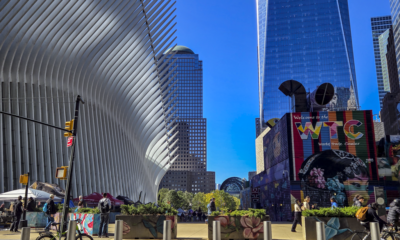
Where were you on the morning of September 11, 2001?
Where the author was
Because we lived not far from the Pentagon, I heard the explosion that resulted from the hijacked American Airlines jet slamming into the Pentagon. I was helping load a suitcase for our son for another trip to the Emergency Room at Johns Hopkins Hospital in Baltimore. He was 5 years old and had already been through several neurosurgeries as a result of repeated brain bleeds that left him with multiple disabilities including significant brain damage and paralysis over much of the right side of his body. (Thankfully, we had access to the gifted hands of the world’s best pediatric neurosurgeon, Dr. Ben Carson, who saved our son’s life on many occasions. God bless you, Ben.)
Our daughter was a few blocks away at elementary school. My wife and I decided that I would stay home, and she would drive our son to the ER. As they drove over the Woodrow Wilson Bridge on the way to Baltimore, she reported that smoke from the fire at the Pentagon had just reached the Bridge.
After our daughter arrived at home, like millions across the nation we remained glued to the TV as rescue efforts were underway at both the Pentagon and World Trade Center. I tried to make sense of it all: Who was responsible for such heinous acts? Would there be more attacks? How would the attacks change our lives, our nation, our world?
Failure of imagination
The principal finding of the bipartisan 9-11 Commission report was that “a failure of imagination” had prevented those charged with safeguarding America from effectively anticipating and preventing such an attack on the U.S. homeland.
It is appropriate, therefore, as we approach the 25th anniversary of the 9-11 attacks, to ask, how might America’s enemies seek to exploit gaps and seams in the U.S. homeland security posture today? And what steps must be taken now to deter such attacks or lessen their impact, should deterrence fail?
America’s adversaries have numerous means and methods of carrying the fight to the homeland. Four plausible attack scenarios are:
- Attempts to influence the outcome of the U.S. national elections in November 2028 through a campaign of targeted political violence and assassinations.
- Cyber and physical attacks on various critical infrastructures to inflict pain and suffering on the American people and cripple our economy.
- Operations to degrade U.S. munitions production and delay distribution of critical war materiel in order to inhibit a timely and effective response to overseas aggression that threatens vital U.S. national interests.
- Attacks to disrupt and degrade U.S. national decision making and strategic military operations.
America’s enemies possess the means and methods to conduct such attacks. This includes assassinations of politicians, cyberattacks, drone strikes, sabotage, violent protests, hypersonic and other missile strikes, terrorism, and more. Planning for such nefarious operations is likely underway.
From imagination to reality
In fact, there have been numerous attempts to assassinate President Trump and threats against U.S. Senators and Members of Congress have skyrocketed. China, Russia, Iran, and North Korea and their “cut outs” are conducting sophisticated cyberattacks on U.S. critical infrastructures. Drones have overflown key U.S. military bases and other sensitive facilities. Chinese nationals have illegally entered U.S. military bases in order to probe weaknesses in base security. Well-armed transnational criminal organizations, to include drug cartels, have a significant presence in many U.S. cities. Beijing and Moscow are fielding an array of sophisticated weaponry that can disable or destroy critical U.S. space systems used for missile attack warning and command and control of U.S. military forces as well as other advanced weaponry to “decapitate” the U.S. political and military leadership.
Enemies of the United States have identified key gaps and seams in our defenses and are actively plotting to exploit those weaknesses, just as bin Laden and his henchmen did over two decades ago. Sadly, many Americans do not appreciate the severity – or even the existence – of these and other threats to the homeland.
Federal, state and local law enforcement, national intelligence agencies, and military organizations are working tirelessly to uncover and defeat such plots. It remains to be seen, however, whether current and planned U.S. defenses can prevent widespread damage to the U.S. economy and major loss of life, and forestall a possible domestic political crisis.
Twenty-five years later
Where were you on that fateful September morning twenty-five years ago? What were your emotions as you watched brave firefighters, police and volunteers rush to save lives as the Twin Towers came crashing down and the Pentagon burned?
Let’s not let future historians condemn today’s leaders for yet another failure of imagination.
The views expressed herein are solely those of the author.
This article was originally published by RealClearDefense and made available via RealClearWire.
Chris Williams served in various national security positions in the Department of Defense and the U.S. Congress.