Civilization
America at 250: The Post-War Years: Prosperity with Growing Pains
In the years after World War II, America enjoyed unprecedented and unequaled prosperity, while trouble brewed beyond the borders.


After World War II ended, people around the globe were ready for a break from seemingly endless bloodshed. The two major conflicts which occurred from 1914 to 1945 primed Americans for a return to something they had long yearned for: peace with prosperity, jobs with rising incomes and more comfortable lifestyles unencumbered by shortages and bread lines. The industrialization of the wartime economy set the stage for a consumer-driven economic boom which revolutionized every layer of society.
Newfound Wealth – and Places to Spend It
Millions of servicemen and women returned home from overseas eager for a life where they could raise a family, have a good-paying career and enjoy a decent home. As they began to experience these things, a major transformation took place: the Baby Boom Generation came onto the scene. From 1946 to 1964, America witnessed a tidal wave of births. Postwar prosperity fueled a desire for a wide variety of consumer goods – cars, television sets, dishwashers, refrigerators, vacuum cleaners and washing machines – all part of a construction boom in housing that arose to meet those newly on the scene.
Between 1946 and 1960, gross national product (GNP) increased by an amazing 250%, per capita income rose by 35%, new construction multiplied by nine times and consumption of personal services increased by a factor of three. Economist Walt Rostow termed this a “high mass consumption” stage of economic development, with 87% of families owning a TV set, 75% having a car and washing machine.
Peace and Prosperity – For the Most Part
Many historians consider the Eisenhower years (1953-1961) a period of increasing opulence affecting tens of millions who entered the stable, but rising middle class. America became the world’s factory as companies churned out an endless variety of time and labor-saving amenities which made life far easier than during the scarcity-induced recycling drives of the war years. While not necessarily a ‘Golden Age’, the 1950s nonetheless are today considered by many an especially desirable time to live in America.
As America Grows, An ‘Iron Curtain’ Goes Up
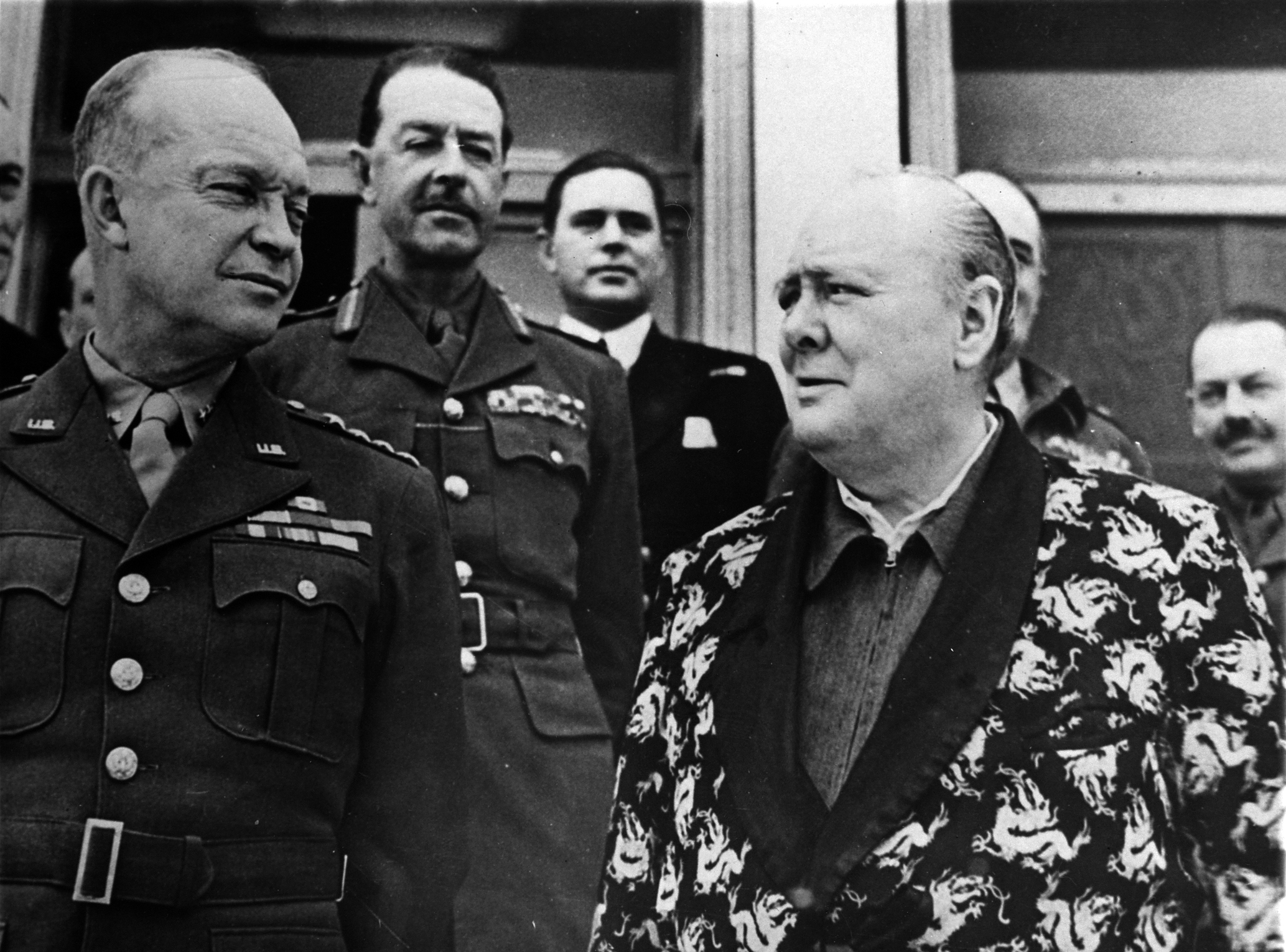
Despite the unparalleled prosperity our nation enjoyed, problems were brewing in countries around the globe. Disregarding its promises, the Soviet Union did not withdraw from Eastern Europe after the war, but instead installed “puppet governments” in territories it had occupied. By 1947, the Soviets had overtaken the three Baltic States and also exhibited strong influence in Poland, East Germany, Czechoslovakia, Romania and Bulgaria. At Westminster College in Fulton, Missouri Winston Churchill warned Americans of a foreboding ‘Iron Curtain’ going up all around Europe.
The United States failed in negotiating a truce between the nationalist Chinese led by Chaing Kai-shek and the Communists under Mao Zedong. Communists took over China in 1949, beginning what would become a wave of similar movements in other nations. In 1950, China supported North Korea’s military aggression against its neighbor South Korea. So, despite prosperity reigning across America, the specter of Communism reared its head and began spreading its arms, ready for control and dominance.
Hot Spots Spanning the World
Joseph Stalin supported North Korea’s plan and in 1950, America grudgingly entered yet another war- this one in southeast Asia, an area many Americans could not identify on a map. In 1952, Dwight Eisenhower campaigned for President, railing against Harry Truman’s “Korea, Communism and Corruption”-and won a landslide victory. Eight months later, after threatening to use nuclear weapons against North Korea, Eisenhower achieved an armistice which lasts to the present day.
When Life Looks Like Easy Street, There’s Trouble at the Door
Aside from the Suez Crisis in 1956, Eisenhower faced another major challenge. In 1959, Fidel Castro overthrew the government in Cuba- just 90 miles from Key West- and soon came under the wing of the Soviets. After a dismally failed invasion at the Bay of Pigs on that island in 1961 approved by newly elected President Kennedy, people across America sensed something very serious was brewing. When the Soviets began shipping nuclear weapons to Castro, the world held its breath as the two nations threatened nuclear war. A new phrase, “Duck and Cover” entered the vernacular as millions of schoolchildren- this author included- learned what to do if bombs started falling. Thankfully, cooler heads prevailed. Kennedy had his shining moment as he and brother Bobby persuaded the Soviets to withdraw their weapons in exchange for an American withdrawal of weapons from Turkey. People across all 50 states breathed easier again.
Cultural Shifts in a Volatile World
Starting in the 1950s, young Americans were eager for something new, in some ways- “anti-establishment”- and a new genre emerged. Rock and roll was a teen-oriented release from the perceived stodginess of the war years and disillusionment with the “status quo.” Elvis Presley, Chuck Berry, Jerry Lee Lewis and other rising stars literally ‘shook things up’, giving millions in their teens and 20s a new way to have fun- and rebel at the same time. The 1950s and 1960s saw an explosion of musical creativity which gave rise to a generation that embraced wild trends in clothing, personal habits, attitudes and lifestyles. This demographic segment would in many ways literally “change the world” and later call itself the “Woodstock Generation.”
Don’t Look Back – Keep Your Eyes on the Road Ahead
Despite the ravages of World War II, nations from Europe to Asia lifted themselves up from the rubble- with help from America’s Marshall Plan- and began to re-industrialize in a major way. Japan and Germany emerged as budding powerhouses which would eventually nip at the heels of the American economic juggernaut. Meanwhile, the cultural shifts that began in the 1950s extended well past the 1960s and changed virtually every aspect of life in America. As tumultuous as this period was, with rapidly improving developments in a wide range of industries including computers, it set the stage for a subsequent generation to embrace technological change, question the extreme cultural shifts and reset the nation’s course as we left the 1960s behind and approached the 1980s. Those changes are still being felt today … and will be for years to come.
This article was originally published by RealClearPennsylvania and made available via RealClearWire.

Gene Pisasale is an historian, author and lecturer based in Kennett Square. His 11 books focus mostly on the history of the Chester County/mid-Atlantic region. Gene’s latest book is "Heritage of the Brandywine Valley," showcasing the fascinating people, places and events of this region over more than 300 years.