
Civilization
Winning the Kinetic Battle, Losing the Narrative War
Iran might well have no military of any consequence, but Washington risks losing the narrative even with the military gone.


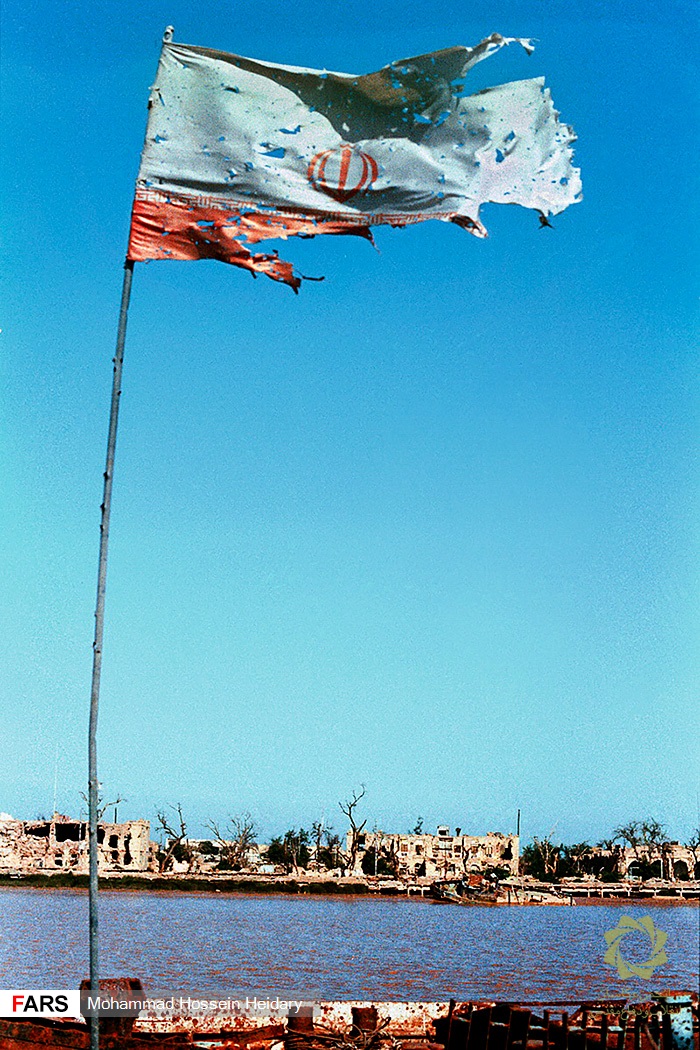
Andrew Fox recently described a strategic nightmare now unfolding in Iran. Military power has damaged the Islamic Republic’s military infrastructure and weakened parts of its security architecture. Air superiority has allowed American and Israeli forces to dismantle missile production, strike naval assets, and degrade facilities tied to Iran’s military posture. None of these accomplishments resolve the central question that determines the outcome of wars. Military destruction alone does not impose political order.
Iran will be tough to subdue even without a military
Iran remains a large, complex society governed by a system that has survived decades of sanctions, covert attacks, and internal unrest. The regime has never relied solely on military strength for survival. Its endurance rests on coercive institutions, ideological networks, and the ability to control the narrative of resistance. When those pillars remain intact, even a heavily damaged state continues to function. The danger Fox describes lies here. A wounded regime that survives retains the power to repress its population while lacking the capacity to stabilize the country.
Such an outcome does not produce victory for Washington or Jerusalem. It produces a fractured Iran that spreads instability across its borders while reinforcing the survival instincts of its ruling institutions. The United States and Israel can dominate the airspace above Iran and still lose the broader contest unfolding across the region and the international arena. Air power represents only one battlefield.
History offers a sobering parallel. During the Vietnam War the United States maintained overwhelming control of the skies throughout the conflict. American aircraft struck supply routes and inflicted enormous damage on North Vietnamese infrastructure. Air superiority never belonged to Hanoi. Yet the war did not end in American victory. Political will and narrative legitimacy ultimately outweighed aerial dominance. Vietnam demonstrated that air power can punish an adversary without compelling surrender when the opposing system draws strength from ideology and endurance. Iran now presents a similar danger.
The coalition against Iran fell together hastily
The first strategic weakness appears in the handling of regional partners. Several Middle Eastern governments entered the conflict with little time to prepare their defensive systems for escalation. Iranian retaliation quickly extended beyond Israel and struck energy infrastructure and commercial nodes across the Gulf. Interceptor stocks fell rapidly as ballistic missiles and drones targeted oil facilities and transport hubs. Air defense networks across the region faced sustained pressure while governments scrambled to protect their most critical economic assets.
Gulf states warned about these dangers for years. Regional leaders repeatedly cautioned that confrontation with Iran would trigger attacks on their sovereignty, destabilize their societies, and produce energy shocks capable of shaking the global economy. Iran issued its own warnings as well, openly threatening retaliation against American bases and allied infrastructure. Despite these signals, Washington failed to translate them into adequate defensive preparation. Regional governments faced missile barrages while rushing to secure interceptors and reinforce vulnerable infrastructure.
Repairing that failure requires more than reassurance. The United States has to demonstrate commitment through action and through a far more effective narrative strategy. It must communicate with different audiences in language that reflects their fears and priorities while building relationships that extend beyond military basing agreements. In Bahrain that means addressing the water insecurity worsened by Iranian attacks on desalination infrastructure and treating the issue as a strategic challenge rather than a humanitarian afterthought. In Saudi Arabia and other vulnerable partners it means signaling concrete assistance in protecting energy infrastructure from further blows.
New technologies
It also means integrating newly available Ukrainian anti-drone capabilities into a coherent regional partnership rather than limiting them to narrow deployments guarding individual bases. The Gulf has become a laboratory for drone warfare and infrastructure targeting. Technologies and operational lessons forged in Ukraine belong inside a regional framework built on intelligence sharing, joint training, and reciprocal defense cooperation.
Another dimension of the conflict receives far less attention but carries serious consequences. Iranian strategy has long relied on asymmetric pressure through networks embedded in neighboring societies. Radicalized groups aligned with Tehran operate across Bahrain, Iraq, and the Eastern Province of Saudi Arabia. These networks maintain ideological loyalty and operational ties with Iranian security institutions while living close to vital energy infrastructure and shipping routes. Even when Iranian military facilities suffer damage these actors retain the ability to mobilize unrest, sabotage infrastructure, and trigger sectarian tensions.
What can the Kurds do?
A related miscalculation appears in Washington’s increasingly public discussion about arming Kurdish militias to open a ground front against Tehran. Kurdish groups along Iran’s western frontier possess combat experience and longstanding grievances against the regime. Yet turning them into the centerpiece of a strategy against Tehran carries serious risks. Kurdish communities across the Middle East remember decades of shifting alliances in which their fighters served as battlefield partners only to face retaliation when geopolitical priorities changed. Public speculation about mobilizing Kurdish forces exposes Kurdish civilians in Iran to immediate repression while reinforcing the regime’s claim that foreign powers seek to dismantle the country through ethnic fragmentation.
The approach also misunderstands Iran’s centralized structure. Power in the Islamic Republic flows through nationwide security institutions rather than regional administrations, meaning pressure applied solely through Kurdish regions cannot destabilize the regime’s core. Other restive regions including Baloch areas in the southeast, Arab communities in the oil-rich southwest, and dissident networks in major cities hold equal strategic importance. Encouraging Kurdish militancy would also reverberate across neighboring states where governments already treat Kurdish political activity with suspicion, triggering broader crackdowns against Kurdish populations far removed from the battlefield.
The population of Iran, and what kind of regime comes later
Another vulnerability emerges in the shifting signals directed toward the Iranian population. For years American rhetoric emphasized solidarity with Iranians seeking freedom from authoritarian rule. Protest movements drew encouragement from repeated statements that the regime lacked legitimacy. The opening phase of the conflict reinforced the belief among many Iranians that external pressure might finally accelerate the collapse of the system governing them.
Public messaging soon began to shift. Statements from Washington narrowed the objectives of the campaign to military targets while discussions of diplomacy with surviving elements of the regime entered public debate. The result has been profound uncertainty among the population that many Western policymakers once described as the natural partner of democratic change.
This confusion undermines the credibility of external pressure. Political transformation requires clarity about the desired end state. Mixed signals create space for authoritarian systems to reclaim legitimacy by presenting themselves as the only stable guardians of national sovereignty.
Another strategic concern lies in the absence of planning for the political environment after the bombing campaign subsides. Military strikes have damaged segments of Iran’s weapons infrastructure yet they have not dismantled the institutional machinery that governs the country. The Revolutionary Guard Corps continues to control large sectors of Iran’s economy and security system while the Basij network remains embedded across towns and cities.
The information war
Beyond these structural challenges lies a battlefield that receives far less attention in Western strategy. Information warfare shapes global perception of the conflict and influences political outcomes inside Iran. Tehran has invested decades in building propaganda networks that reach audiences across continents. Religious institutions, cultural organizations, and digital campaigns amplify narratives portraying Iran as the victim of foreign aggression.
American communication strategies rarely engage these audiences with comparable sophistication. Messaging directed toward Iranian citizens often relies on generic language about democracy that fails to connect with the diverse identities inside the country. Without a coherent narrative strategy Washington leaves the informational battlefield largely uncontested.
The result is the paradox Andrew Fox identified. Military operations weaken Iran’s conventional capabilities while strengthening the regime’s ability to frame itself as the defender of national sovereignty. Air power damages infrastructure yet leaves the ideological architecture of the regime intact.
Strategic victory requires coherence across every dimension of conflict. Military power must operate alongside diplomatic coordination, political clarity, and persuasive messaging. When these elements drift apart, battlefield success becomes detached from political outcomes.
Conclusion
History records many wars in which superior military forces achieved remarkable tactical victories while losing the political struggle that determines the final verdict. Vietnam stands as the clearest reminder that control of the skies does not guarantee victory on the ground or legitimacy in the minds of populations. Iran now threatens to become another example. The skies over the country may belong to the United States and Israel. The future of the region will depend on whether victory in the air translates into strategy, legitimacy, and stability beyond it.
This article was originally published by RealClearDefense and made available via RealClearWire.

Irina Tsukerman is a U.S. national security lawyer, geopolitical analyst, President of Scarab Rising, Inc., a security and geopolitical risk strategic advisory, and Board Member of The Washington Outsider Center for Information Warfare.





-

 Civilization4 days ago
Dems Scramble After California Governor’s Debate Implodes
-

 Executive4 days ago
America’s $130 Trillion Blind Spot
-
 Civilization3 days ago
Iran Could Reshape the Middle East and the Global Balance of Power
-

 Civilization3 days ago
The conversation women are having
-

 Executive3 days ago
Waste of the Day: NYC Thermostat Repairers Made $325K, Thanks to OT
-

 Executive3 days ago
The Assisted Suicide of Lofty State and Local Taxes
-

 Civilization1 day ago
Epic Fury as It Is: A Look Inside
-

 Civilization2 days ago
America Needs to Understand Golden Dome Before It’s Too Late