
Civilization
The Anchor and the Speedboat: Lessons from the 45-Second Kill Chain
A lean, mean Operating Force in American battlefield intelligence has become a speedboat setting new standards for quick response.


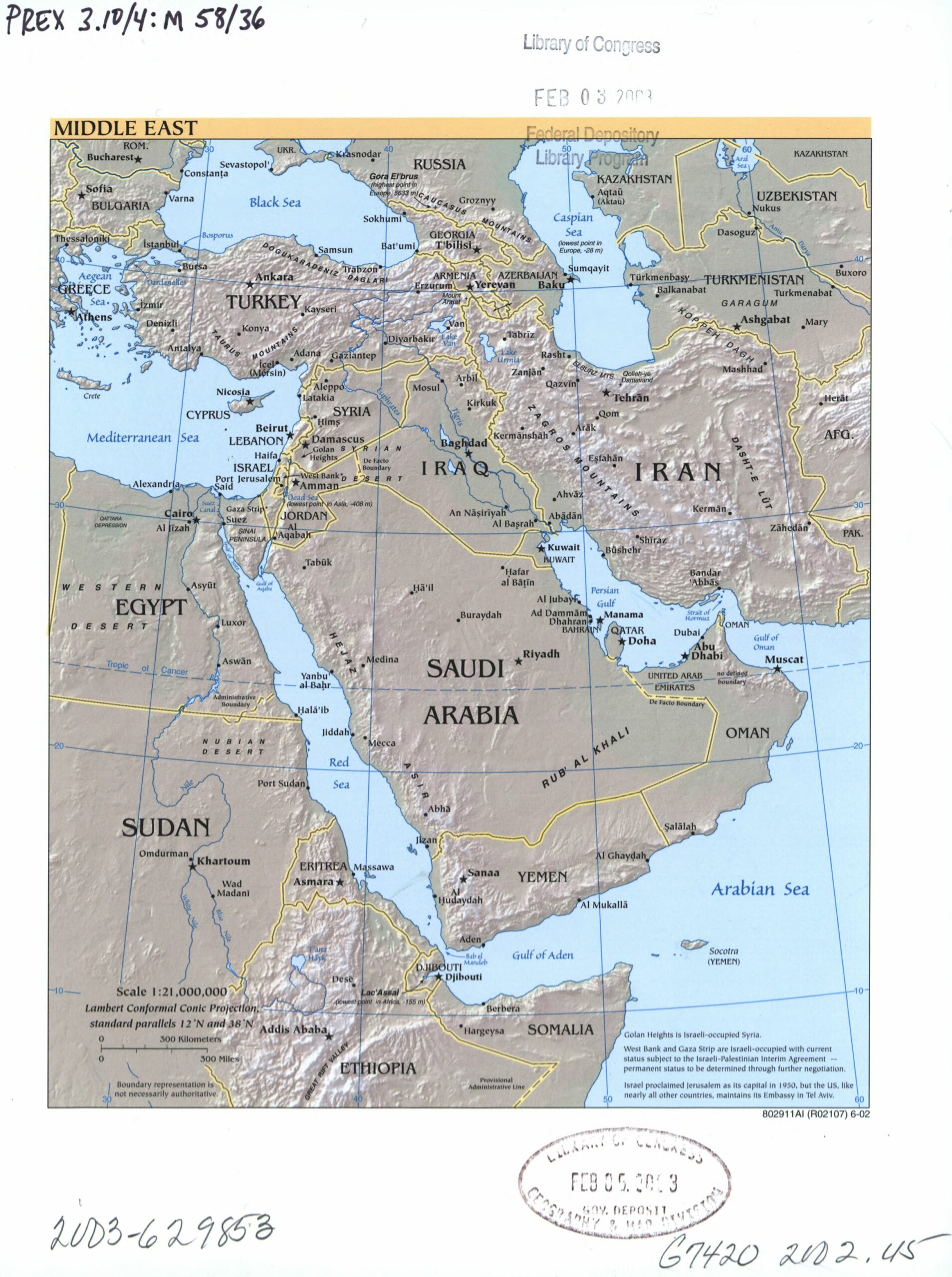
The first week of Operation Epic Fury in Iran has shattered the traditional metrics of military personnel requirements. According to recent reporting in “Decision Compression: AI Calculation In The 2026 Iran Conflict,” by Diwas Budhathoki (March 3, 2026) a lean targeting cell of just 20 officers successfully managed an analysis workload that would have traditionally paralyzed a 2,000-person intelligence staff. By integrating frontier AI models like Claude directly into the JADC2 framework, the Operating Force has established a 45-second kill chain—a lethal “speedboat” that is now rapidly outpacing the bureaucratic “anchor” of the Generating Force.
How the Speedboat did it
While the Operating Force weaponizes speed, the Generating Force remains mired in an institutional “wait-out” strategy. Organizations like T2COM (Transformation and Training Command) and the consolidated Portfolio Acquisition Executives (PAEs) are effectively “rearranging the deck chairs,” preserving redundant bureaucratic layers under the guise of modernization. To these organizations, consolidation is a defensive tactic: a way to hide legacy administrative structures under a single roof until the current leadership’s clock runs out.
A History of Lag: From Portals to M-Code
The Generating Force has historically treated technology adoption as a marathon rather than a sprint. While the Operating Force adopted collaborative portals at least a decade before the Generating Force, the Army’s transition to electronic staffing and paperless workflows only hit “full mission capability” around 2018. Prior to the 2015-2018 rollout of the Task Management Tool (TMT), Headquarters Department of the Army (HQDA) relied on a piecemeal system of folders being passed around—a “dinosaur age” process that persisted long after the digital revolution had been operationalized at the tactical edge.
Even today, the Generating Force relies on static repositories and disparate systems that are not tethered to actual acquisition workflows. A prime example is the management of M-Code GPS guidance. Despite statutory requirements for M-Code capability dating back to FY2017, acquisition professionals are still forced to manually research guidance and file waivers in standalone repositories that lack formal data validation or real-time integration into the Defense Acquisition System. This manual “research-and-file” culture is a choice that prioritizes procedural friction over operational relevance.
AI as the Scalpel for the Speedboat: Reducing Time for the Warfighter
AI is the technical lever that allows us to shrink the Generating Force by eliminating the personnel who introduce friction through egos and resistance to change. By automating large portions of the monotonous manual labor of organizations like the G-3/5/7 (Operations and Planning), the G8 budget sections, the Naval Ordnance Safety and Security Activity (NOSSA), the Army Test and Evaluation Command (ATEC), and the Army’s Centers of Excellence, we remove the justification for the massive, ego-driven staffs that protect their “turf”.
Imagine a Generating Force that utilizes an AI-driven architecture to continuously analyze capability gaps in relation to CONPLANs (Contingency Plans) while simultaneously ingesting, synchronizing, and aligning proposed industry concepts to identify symbiotic capabilities and tether them to Key Performance Parameters (KPPs). This system would reduce inter-Service program redundancy through automated collaboration, realign funding in real-time based on contract performance, and project schedules with a level of accuracy that makes the current PPBE (Planning, Programming, Budgeting, and Execution) cycle obsolete.
Secretary Hegseth’s “Artificial Intelligence Strategy for the Department of War” (Jan 9, 2026) correctly identifies that “speed wins” and directs the Department to become an “AI-first” force. Directives within “Pace Setting Projects” of Enterprise Agents (PSP 7) and GenAI.mil (PSP 6) are designed to democratize AI experimentation and automate enterprise workflows that currently consume the time of thousands of personnel. AI allows for 99.9% accurate audits and real-time mission alignment that renders legacy layers of tenure-protected middle management obsolete.
The Legislative Wall: Meritocracy vs. Tenure
However, AI is only the tool for efficiency; the Defense Officer Personnel Management Act (DOPMA) remains the primary barrier to cultural transformation. While Secretary Hegseth’s vision for a true meritocracy is widely applauded, it is fundamentally hamstrung by a DOPMA framework that remains strictly tenure based. By mandating a “up-or-out” system, DOPMA effectively fosters the Generating Force’s resistance to flattening; it incentivizes generalists to protect their bureaucratic “kingdoms” by maintaining redundant layers of oversight to justify their own rank and presence.
DOPMA forces the Department to treat personnel management as a box-checking exercise rather than a competition for the best and brightest. Changing or eliminating this act is the legislative lever Hegseth must pull to ensure the Department of War becomes a merit-based organization—placing talent where it is most effective rather than where the calendar dictates. This shift would dismantle the Generating Force’s role as a sanctuary for those who hide behind seniority to avoid the streamlining that AI makes possible, forcing the “anchor” to finally match the speed of the warfighter.
A Final Choice: Codification or Collapse
If the Department of War is to return to a true “Warrior Ethos,” Secretary Hegseth must recognize that his directives alone are not enough. While his vision for a meritocracy is the correct path forward, it remains fundamentally hamstrung by a DOPMA framework that is strictly tenure-based. He must work with Congress to dismantle this legislative barrier, but he cannot trust the Services to codify these changes themselves. Bureaucrats understand that without permanent legal change, any administrative order can be outlasted; they are betting that if they can maintain the friction of redundant administrative layers long enough, the Department will eventually return to its comfortably bloated status quo.
To prevent a bureaucratic “shell game,” the Secretary should consider an independent audit of all structural shifts to ensure they are not only lasting but strictly congruent with his directives to flatten the force. The Operating Force has already proven that 20 people can do the work of 2,000. We do not need fewer PEOs; we need zero PEOs/PAEs—replaced by direct-reporting Portfolio Leads empowered by AI-driven risk assessments focused on cost and safety. If we fail to leverage Congress to break the tenure system now, the “anchor” will eventually drag the “speedboat” back into the depths of bureaucratic irrelevance.
This article was originally published by RealClearDefense and made available via RealClearWire.

Stephen D Cook is a retired U.S. Army Special Forces Lieutenant Colonel with 25 years of service. A combat veteran decorated for both heroism and valor, he is the author of the field manuals Plan Like a Green Beret, and Choose the Heavier Ruck, and the techno-thriller In the Shadows of the Sky. His work explores the intersection of elite military decision-making, intuition, and disruptive leadership. He is based in St. Augustine, Fla.








-

 Executive3 days ago
Waste of the Day: Alabama Hired Lawyer for Lawsuits He Caused
-

 Education4 days ago
Waste of the Day: School Officials Claim Safari Was “Professional Development”
-

 Executive5 days ago
Hell No, We Won’t Go!: A Florida Man’s Response to NY’s Gov. Hochul
-

 Civilization3 days ago
The Unholy Alliance: Moscow and Beijing’s Invisible Shield Over Tehran
-

 Executive4 days ago
Waste of the Day: Throwback Thursday – Crash Landing for NASA Video Game
-

 Civilization4 days ago
Reclaiming the Lunar High Ground
-

 Executive5 days ago
Why Small Business Matters More as Iran Drives Costs Higher
-

 Civilization3 days ago
Stimulating Creativity in Human-Machine Teams