
Civilization
Stealth, Sensors, and Staying Power: What the F-35 Just Proved—and What Comes Next
The F-35 proved to be a valuable fighting machine in Operation Epic Fury in Iran, but without sustainment, that means little.


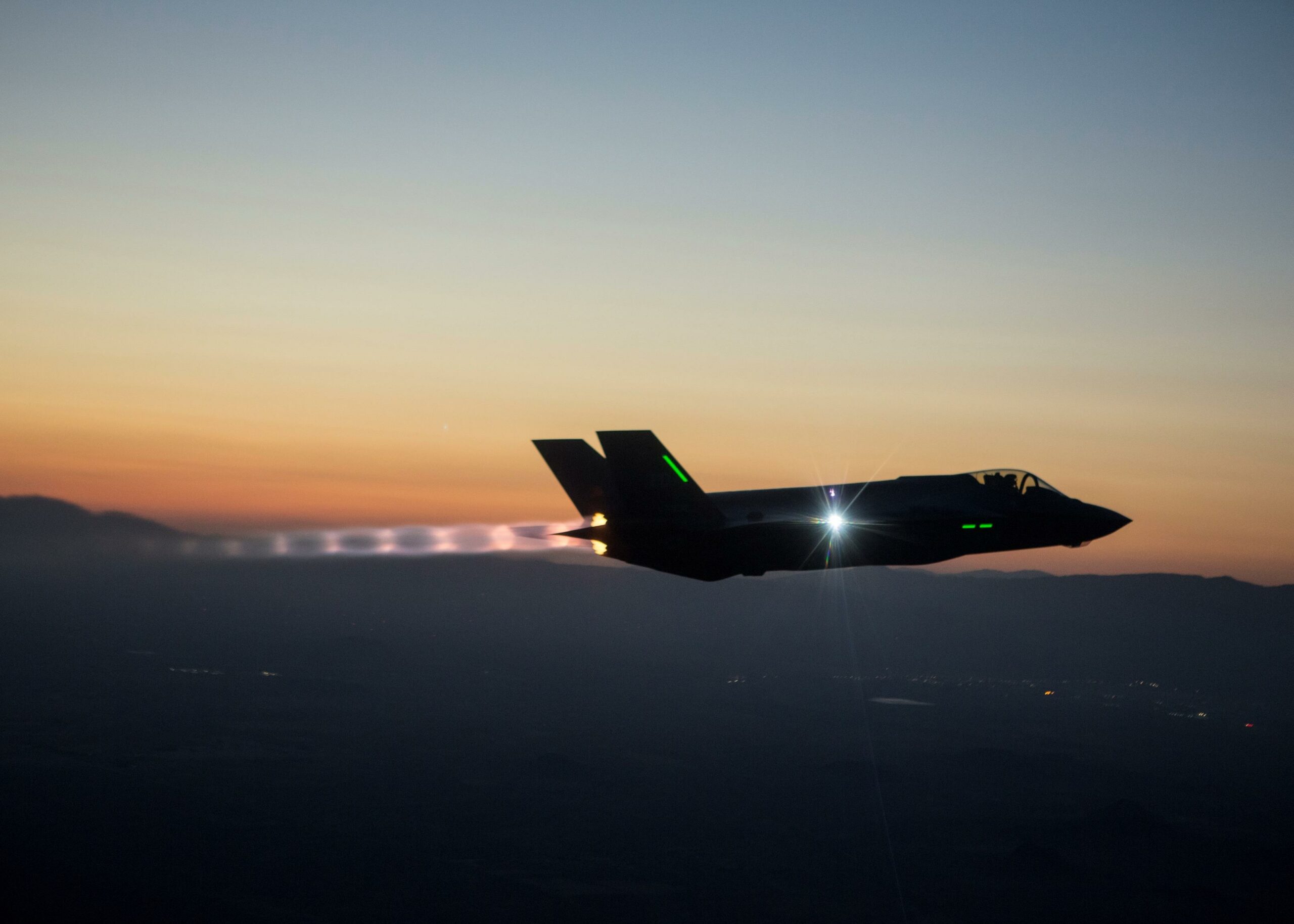
If there was any lingering debate about the value of the F-35, the past round of operations against Iran should put it to rest.
The F-35 is a different way to fight
For years, pilots and planners have said the F-35 wasn’t just a better fighter—it was a different way of fighting. That’s no longer theory. It’s been demonstrated in real-world conditions.
In heavily defended airspace, F-35s didn’t just survive—they operated with a level of confidence that would have been hard to imagine a generation ago. They pushed deep, helped escort high-value assets, and stayed on station longer than legacy aircraft could have. That’s not just about stealth, though that matters. It’s about what the jet can do once it gets there.
The real edge is awareness. The F-35 pulls in data from radar, infrared sensors, and electronic surveillance systems and fuses it into a single, usable picture. Pilots aren’t sorting through stovepiped feeds—they’re seeing the fight as it unfolds, in real time. That changes decision-making. It compresses timelines. It lets U.S. forces act faster and with more precision than an adversary can realistically counter.
Against a military like Iran’s—still built largely around older platforms and less integrated systems—that advantage is decisive. Not just tactically, but operationally. It’s the difference between executing strikes and controlling the fight.
And that’s the part that should get attention well beyond the Middle East.
China isn’t guessing—they’re following
Beijing has been watching this evolution closely. The development of aircraft like the Chengdu J-20 and Shenyang J-35isn’t happening in a vacuum.
China understands where airpower is going. Stealth, sensor fusion, and networked operations aren’t niche advantages anymore—they’re the price of entry. If you can’t penetrate defended airspace or build a coherent picture of the battlespace, you’re already behind.
The United States still has the lead. The F-35 benefits from years of operational experience, continuous upgrades, and a global network of operators that share data and tactics. That ecosystem matters.
But leads like that don’t hold automatically. They erode if they’re not sustained.
The weak point of the F-35 isn’t the jet—it’s everything behind it
The uncomfortable reality is that the biggest risk to the F-35’s long-term effectiveness isn’t a Chinese fighter. It’s sustainment.
Readiness rates have struggled, hovering well below where they need to be. That’s not a minor program hiccup—it goes directly to combat power. A fifth-generation aircraft that isn’t available doesn’t deter anyone.
Part of the problem is complexity. Stealth coatings aren’t quick fixes. The sensors that make the aircraft so effective depend on advanced electronics and specialized components. The software backbone requires constant updates. None of this is simple, and none of it moves quickly when the system is under strain.
And the system is under strain.
The F-35 depends on a sprawling, global supply chain—semiconductors, composites, rare earth materials. Some of those inputs come from regions that are either politically sensitive or operationally vulnerable. When something breaks in that chain, it doesn’t just cause delays—it cascades. Maintenance takes longer. Aircraft sit. Readiness drops.
In a sustained conflict, those issues don’t stay contained. They compound. You don’t just lose efficiency—you lose tempo.
And tempo is everything.
What needs to change
The takeaway from recent operations isn’t just that the F-35 works. It’s that it works when it’s available. That sounds obvious, but it has real implications.
For years, the focus has been on buying the aircraft—getting more jets on the ramp. That still matters. But it’s no longer the limiting factor.
Sustainment is.
That means hardening the supply chain—bringing more production onshore where it makes sense, diversifying sources where it doesn’t, and reducing reliance on fragile inputs. It means investing in maintenance infrastructure and workforce so repairs happen faster and more predictably. It means treating software updates and parts availability as operational priorities, not back-end functions.
Most of all, it means recognizing that readiness isn’t an administrative metric. It’s combat capability.
China isn’t just building stealth fighters. It’s building the industrial base to support them at scale. If the United States doesn’t keep pace on that side of the equation, it risks giving up its advantage in a way that has nothing to do with aerodynamics or radar cross-section.
The bottom line
The F-35 has shown what modern airpower can look like when everything comes together—stealth, information, speed, and precision all working as a system.
But that edge is only as strong as the infrastructure behind it.
Having the best aircraft in the world matters. Keeping them ready, repaired, and flying when it counts matters more.
This article was originally published by RealClearDefense and made available via RealClearWire.

John Cofrancesco, CEO of American AI Logistics, helps the national security community better understand opportunities presented by large language models and business intelligence to make critical war fighting and logistics decisions before they become mission inhibitors.




-

 Civilization4 days ago
The GOP’s Latino Reset Can Happen Now
-

 Executive5 days ago
Waste of the Day: Feds Bought Golf Carts For $8.4 Million
-

 Executive4 days ago
Waste of the Day: NYC’s $3.5 Million Toilets Are “In Purgatory”
-

 Civilization4 days ago
The Kremlin Is Killing the Tool That Sold Its War
-

 Civilization3 days ago
Does the Donroe Doctrine Now Extend to Outer Space?
-

 Civilization3 days ago
Imminent Threat? Iran Was Existential Threat
-
 Civilization2 days ago
How Prepared Is the Defense Industrial Base for Iranian Cyber Attacks?
-
 Civilization2 days ago
No Retreat, No Surrender: Why America Must Prevail in Iran