Civilization
The Pope Plays Politics
Pope Leo XIV is playing Chicago Southside politics at a critical moment in America’s election cycle and the Iran conflict.


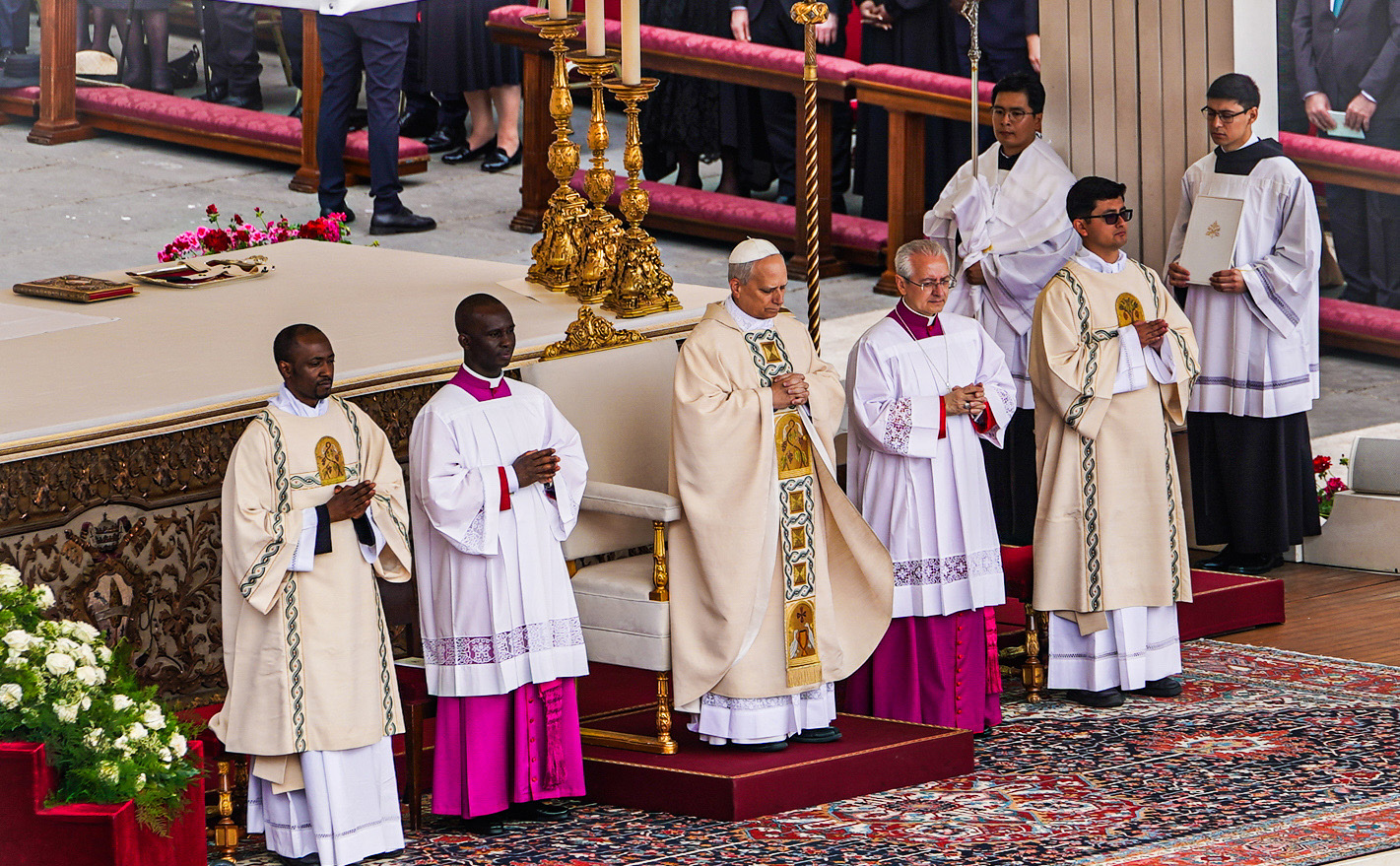
Chicago politics have taken root in Vatican City.
Pope Leo plays politics
Pope Leo XIV may be a man of the cloth, but he is also a Southsider, so it is not surprising that he can’t rise completely above the fray. How else to explain his ramped-up criticism of the Iran war right after granting an audience to fellow Chicagoan David Axelrod, the influential Democratic operative and Barack Obama advisor – and the appearance of three anti-war cardinals on “60 Minutes” two days later?
With the 2026 U.S. midterm elections on the horizon and President Trump’s historic taming of Iran increasingly looking like it just might work, getting the leader of the Holy See to join the Resistance seems like a masterstroke.
It is, of course, appropriate that Christ’s vicar is advocating for peace – if he won’t, who will? What’s disquieting is the brazen timing of the Church’s partisan push. The Chicago-born Pope meets with the sharp-elbowed operative and then bashes Trump. It’s hard to see any Adam and Eve fig leaf hiding this nakedly political act.
Democrats have no room to play such games
One can only laugh at the eagerness of Democrats and their media acolytes, who have beat up on devout Catholics for decades while insisting on the strict separation of church and state, to piggyback on the pontiff’s moral authority. Today’s progressives may be defined, in part, by their disdain for people who, as Obama famously put it, “cling … to religion.” But faith has its uses. The enemy of my enemy captures their cynical spirit. The phony outrage at Trump’s forceful dismissal of Leo’s critique is also worth a chuckle. As always, Trump is supposed to turn the other cheek in response to the outrageous slings and arrows of never-ending attacks (which might not be a bad idea once in a while).
But the pope’s partisan rhetoric underscores how politics has subsumed almost every aspect of modern life – how even the transcendent message of Jesus is often just a tool for the acquisition of power. Yes, Christianity as practiced by fallen individuals has always been used for base purposes. That, however, is not a defense but an indictment of our religious leaders.
Pope Leo selectively condemns kiling
More specifically, the spirit of faith should be a channel that urges us to rise above the mundane – especially the tribal mindsets that divide nations and lead to wars – to see how each of us is a little miracle made in God’s image. Even if you’re not religious, the lesson that everyone’s life is as meaningful as our own, that because we are all flawed and incomplete, we deserve understanding and love, is as close as we will ever get to a universal truth.
That ethos is hard to live by, particularly when we’re not talking about individuals but communities of people. The madness of crowds is a driving force of human history. That is why we need faith leaders and other enlightened minds to remind us of basic truths voiced by our better angels. When those leaders rake the muck instead of gazing at the heavens, their moral authority, which we need, is diminished.
So, yes, it is right and proper for Pope Leo to condemn killing – whether it is of innocent babies in the womb or people in far-flung countries. But his moral authority is undercut when it is selective.
Leo, for example, did not condemn the Iranian regime’s murder of tens of thousands of its own people in January who were demanding freedom and dignity. In response to the slaughter, he issued this anodyne statement:
I hope and pray that dialogue and peace may be patiently nurtured in pursuit of the common good of the whole of society.
Previous Popes have been just as selective
Iran isn’t the only place where previous popes have failed to call out evil forthrightly. It took Leo’s predecessor, Pope Francis, years to acknowledge the murder, torture, and persecution of millions of Uyghur Muslims in China. Yet, he was quick to denounce the “sin of racism,” and voice support for the Black Lives Matter protests after George Floyd’s death while in police custody in 2020.
One of the great gifts Judeo-Christian teachings has given the West is the power of self-criticism. The Hebrew Bible, in particular, is a long indictment of the Jewish people, leavened by the message to do better. The ability to acknowledge one’s errors is essential to improvement.
That said, the Vatican’s selective morality reflects the left’s secular transmogrification of this principle. Instead of calling for everyone, everywhere to honor the dictates of conscience – the seeds of morality which, C.S. Lewis argued, God had planted in all people – recent popes seem to have adopted the Marxist duality of perfidious oppressors and the largely blameless oppressed. In the hierarchy of suffering, even the most heinous sins of those deemed weak are excused, while the supposedly strong are vociferously held to account. As it undermines the universal message of the Gospels, this double standard becomes an apology for evil.
The message we need to hear is that we must do better. All of us. Everywhere.
This article was originally published by RealClearPolitics and made available via RealClearWire.
J. Peder Zane is a columnist for RealClearPolitics and an editor at RealClearInvestigations. He was the book review editor and books columnist for the News & Observer of Raleigh for 13 years, where his writing won several national honors, including the Distinguished Writing Award for Commentary from the American Society of Newspaper Editors. He has also worked at the New York Times and taught writing at Duke University and Saint Augustine’s University. He has written two books, “Off the Books: On Literature and Culture,” and “Design in Nature” (with Adrian Bejan). He edited two other books, “Remarkable Reads: 34 Writers and Their Adventures in Reading” and “The Top Ten: Writers Pick Their Favorite Books.”
Note: the profile image by Ellen Whyte is licensed under the Creative Commons Attribution/Share-alike 4.0 International License.