Guest Columns
Talking Across the Divide
A conservative tries to talk across a key divide of American politics, which is whether the rich should give up all they have.


How we see politics reveals a lot about who we are. But it is less akin to a Rorschach ink blot than one of those reversible images, like the drawing that is both a rabbit and a duck. As messy as society might be, it is not some blob open to any interpretation (at least not yet, anyway). The patterns are there. But where we see one clear thing clearly, our pal may see another just as sharply.
Politics as reversible image: the debate on taxing others’ wealth
The difference is that we can ultimately resolve the artistic conflict – yes, I see both my wife and my mother-in-law in the drawing; when it comes to politics, we tend to dig in our heels and insist on our single reading.
I felt as if I was peering at a reversible image the other day while talking with a progressive friend about the major challenges confronting the U.S. Surveying the American landscape, he saw a nation in peril largely because of a handful of billionaire “oligarchs” who use their tremendous influence to shape policy while resisting efforts to pay their “fair share.” Imposing wealth taxes and closing loopholes, he said, is both a moral and economic necessity to start improving the picture.
I countered that I didn’t see the problem as a handful of rich guys but the many millions of Americans who lack the education, skills, and burning desire to better their own lives. The problem is not, for example, a lack of funding, but a broken education system; it is not a porous safety net, but the unwillingness of people to work.
The politics of taxation
As these discussions go, my friend was not armed with studies and statistics to support his point – he’s kept busy by his demanding job and the family he loves. Honestly, this can get frustrating for those of us who are paid to know and remember such material. It’s taken me too long to realize that commanding more evidence doesn’t necessarily make me right. Other people’s summary knowledge of all they’ve seen and read may lack specifics, but it doesn’t make them wrong.
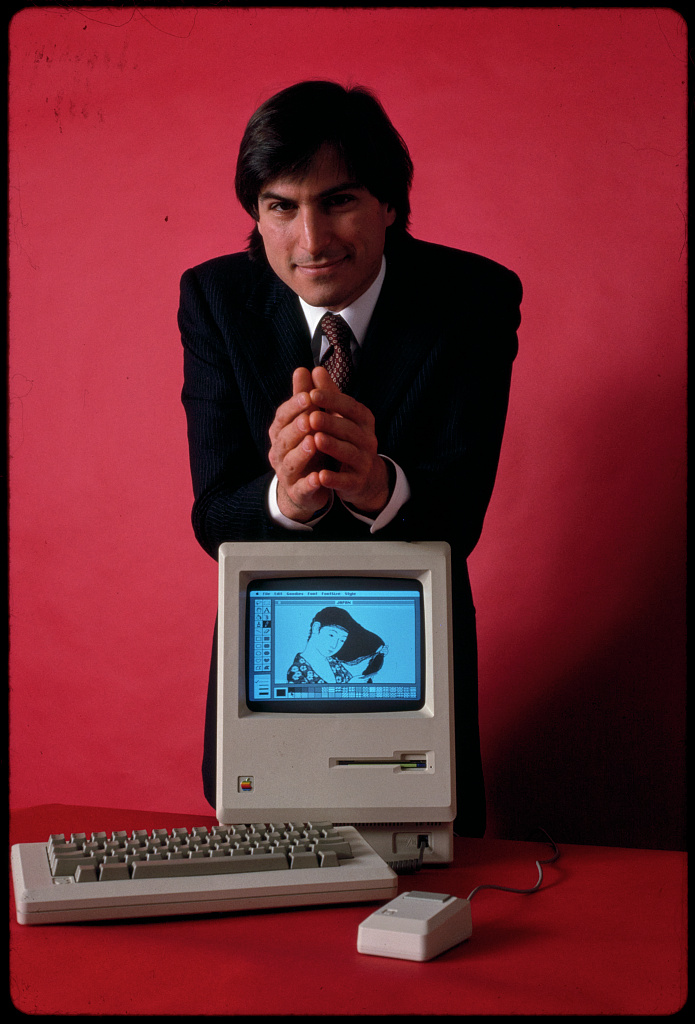
He made some excellent points. The rise of technology has allowed a coterie of true visionaries – including Jeff Bezos, Elon Musk, and the late Steve Jobs – and the hedge fund guys who’ve piggy-backed on their talents to become unimaginably rich. They didn’t invent the future, but were smart, and lucky enough to see where things were headed and did a better job than other smart and tenacious people to drive and capitalize on change. No matter their talents, many of them could only have grown so rich in America, which is home to about a third of the world’s billionaires.
What is a fair share?
As almost every American agrees on the need for a tax system, he noted, the question is not whether they should pay a portion of their earnings to the government, but how much. He could not pinpoint exactly what a fair share would be. He said that the question is beside the point – fair is not a firm rate but an ever-changing number based on what people have and what the government needs. He did say that I wasn’t crazy to think progressives reject any set limit as a ceiling that would limit their demand for more.
He was roughly aware that top earners pay a large share of federal taxes. I told him that the most recent IRS data indicates the top 1% paid about 38.4% of all federal individual income; include the top 10% and the figure rises above 70%. That’s a lot of their money going to us.
But he noted that their effective tax rate – for the top 1% it was 26.1% in 2022 – is not onerous. And the billionaires, in particular, use a passel of legal deductions and carve-outs to reduce their tax bills.
I know their money creates jobs and investments in the private sector, but we have a massive debt [now north of $39 trillion] and huge annual deficits that have to be paid by someone. They can best afford it. Maybe we should, like Europe, raise everyone’s taxes a lot, but that is not politically viable right now. Since we need money, the rich and very rich are the best place to start.
We both agreed that people should pay for the government they want and that tax rates should not be set because of some abstract notion of fairness, but at levels that will maximize revenue.
What the rich have, is nothing compared to what the government spends
Nevertheless, I countered that the American landscape can be viewed another way. First, I said the focus on the rich seeks to create a single bogeyman to blame for all our problems. The implication that simply taking more from Bezos and Musk is the cure for what ails us is not true – rich as they are, their fortunes are small compared to government spending. More importantly, the focus shifts the responsibility from individuals who are the captains of their own ships and leaders who have failed to govern wisely to a relatively small number of largely blameless individuals.
To take a few examples, I asserted that the superrich are not to blame for the chronic rate of absenteeism at our public schools; the record numbers of young men who are not part of the workforce; the declining rates of marriage and births. The superrich are not the reason why some of the most heavily regulated industries, including health care, education, and housing, have seen some of the highest rises in costs. Our aching moral challenge is not centered in the tax code – which falsely suggests our problems could be easily solved – but in the decisions we the people are making in our own lives.
The government has a lot of money – but spends even more
Finally, I said, the government has plenty of money. If the federal government were a private business, its increasing revenues over the years would make it a darling of Wall Street. The problem is we spend even more. And, as recent reporting has documented, a good deal of that spending is lost to waste and fraud at every level of government.
“Let’s try to fix what’s broken,” I told my friend, “instead of throwing more money on the dumpster fire.”
“I see your point,” he responded, “but we can’t let problems fester waiting for a fix that might never come. And it’s just wrong that these guys have so much when the need is so great.”
At the end, neither of us changed our minds; we still viewed the American landscape differently. But given how bitterly divided our nation is, I found great value in just having the conversation; in respectfully listening to one another, making the effort to see where each is coming from. So much political discussion looks for fault lines in the other side’s arguments rather than their strengths. We look to confirm our views rather than expand them. If we want to persuade others, the first thing we must do is listen to them. This seems obvious, so why don’t we start doing it?
This article was originally published by RealClearPolitics and made available via RealClearWire.

J. Peder Zane is a columnist for RealClearPolitics and an editor at RealClearInvestigations. He was the book review editor and books columnist for the News & Observer of Raleigh for 13 years, where his writing won several national honors, including the Distinguished Writing Award for Commentary from the American Society of Newspaper Editors. He has also worked at the New York Times and taught writing at Duke University and Saint Augustine’s University. He has written two books, “Off the Books: On Literature and Culture,” and “Design in Nature” (with Adrian Bejan). He edited two other books, “Remarkable Reads: 34 Writers and Their Adventures in Reading” and “The Top Ten: Writers Pick Their Favorite Books.”
Note: the profile image by Ellen Whyte is licensed under the Creative Commons Attribution/Share-alike 4.0 International License.