
Civilization
The Strategic Price of Waiting: Iran, Time, and the Erosion of Deterrence
The West must reckon with Iran now, with no further delay – because the longer the West delays, the easier for Iran.


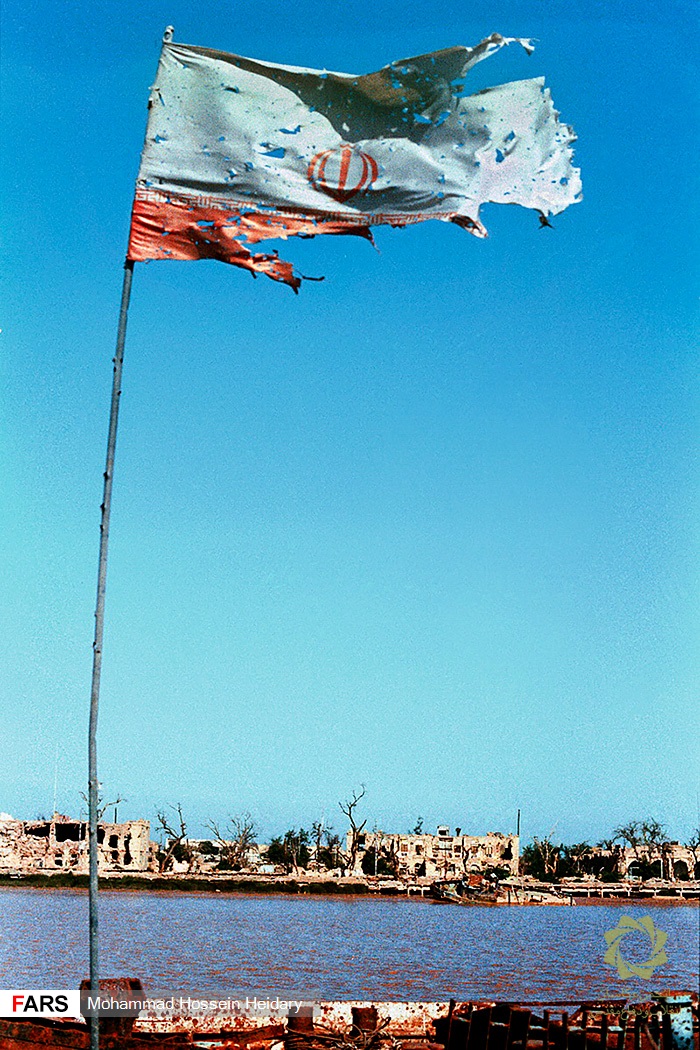
The hardest lesson in strategy is that time is not neutral. It is a resource, and someone is always using it. In the case of the Islamic Republic of Iran, time has become a weapon—one Tehran wields with growing sophistication, while the United States and its allies continue to treat delay as prudence rather than as risk. The result is a widening gap between Iran’s capabilities and Western political will, a gap that history suggests will eventually be closed not by diplomacy but by crisis.
Iran works within Western decision cycles
This is not an argument about whether war with Iran is desirable. It is a sober assessment that the current trajectory—incremental Iranian nuclear advances, expanding regional aggression through proxies, and episodic Western responses—systematically raises the eventual cost of confrontation. The choice is not between “war now” and “peace later,” but between confronting a weaker Iran under conditions of relative Western initiative or a stronger Iran under conditions of Iranian initiative and global vulnerability.
Iran has learned to operate within Western decision cycles. It advances its nuclear program just far enough to alter the facts on the ground, then pauses or modulates to avoid triggering a decisive response. It arms and directs proxies to harass U.S., Israeli, and partner interests, then calibrates escalation to stay below the threshold for a full-scale war. It probes the global economy’s chokepoints—from the Strait of Hormuz to the Red Sea—demonstrating its capacity to disrupt markets without yet imposing intolerable costs.
The West doesn’t know what to do
The West, by contrast, has come to rely on a familiar set of tools: sanctions, warnings, limited strikes on proxies, and renewed calls for diplomacy. Each of these tools has its place. None of them, as currently employed, changes the fundamental reality that Iran’s position is improving over time. The longer this pattern persists, the more likely it becomes that the United States, Israel, and Europe will face a future crisis on terms largely set in Tehran.
To understand why delay is so dangerous in this case, we need to look at two intertwined clocks: the nuclear clock and the regional clock. One tracks Iran’s progress toward a latent or actual nuclear weapons capability. The other tracks the growth of its capacity to wage war through proxies, missiles, drones, and economic disruption. Both clocks are moving in the same direction.
The nuclear clock: from breakout to “weapon on demand”
At the heart of the nuclear problem is a simple but unforgiving fact: Iran has dramatically shortened the time it would need to produce weapons-grade uranium if it chose to. According to an analysis of the International Atomic Energy Agency’s (IAEA) August 2024 report, Iran’s stockpile of enriched uranium and expanded advanced centrifuge capacity are now sufficient to produce enough weapons-grade uranium for multiple nuclear devices in weeks, not months or years.1
The Institute for Science and International Security’s assessment of the IAEA report concluded that, using only a portion of its uranium enriched to 60 percent and a limited number of advanced centrifuge cascades, Iran could produce its first quantity of weapon-grade uranium—roughly 25 kilograms—in about one week. The same analysis noted that, with careful planning and by concentrating its 20- and 60-percent enriched stocks at the deeply buried Fordow facility, Iran could produce enough weapon-grade uranium for several nuclear weapons in a matter of weeks.2
This is not a hypothetical capability. It is the result of years of incremental advances: higher enrichment levels, larger stockpiles, more advanced centrifuges, and the hardening of key facilities.3 By late 2023, independent experts were already warning that Iran’s accumulation of 60 percent enriched uranium had significantly shortened the time needed to produce fuel for multiple nuclear weapons, even if Tehran had not yet made the political decision to cross that threshold.4
Iran is at the weapon-on-demand stage
The nuclear clock, in other words, is no longer about “breakout” in the classic sense—a sudden, detectable dash to a bomb from a relatively low baseline. It is about “weapon on demand”: the ability to move from an already advanced enrichment posture to weapons-grade material so quickly, and potentially at such hardened sites, that detection and response become extremely difficult.5 The IAEA itself has underscored the gravity of this shift, noting that Iran is “the only non-nuclear-weapon State” accumulating such quantities of highly enriched uranium and warning that its verification efforts are “seriously affected” by Iran’s restrictions on inspectors.6
In this context, time does not favor the status quo. Every month that passes without a fundamental change in Iran’s trajectory is a month in which Tehran gains more experience operating advanced centrifuges, more material that can be rapidly upgraded to weapons-grade, and more leverage in any future negotiation. By contrast, the West gains nothing comparable from delay. It does not acquire new tools of coercion or persuasion at the same rate that Iran acquires new nuclear options.
Iran can threaten to build a nuke on short notice
The danger is not only that Iran might one day decide to build and test a nuclear weapon. It is that Iran will reach, and arguably is approaching, a point at which it can credibly threaten to do so on short notice, under crisis conditions, as a means of deterring or constraining Western action. That is the logic of latent deterrence: the ability to brandish the prospect of rapid nuclearization as a shield for aggressive behavior.
Once a state reaches that position, the cost of confronting it rises sharply. Any serious military or coercive campaign must then be planned and executed under the shadow of potential nuclear escalation. The political appetite for such action diminishes, especially in democracies. The adversary’s room for maneuvering expands. Delay, in other words, does not merely postpone the problem; it transforms it into something more dangerous and less tractable.
The regional clock: a war already underway
If the nuclear clock measures Iran’s progress toward a latent or actual nuclear capability, the regional clock measures something more immediate: Iran’s ongoing war against the United States, Israel, and their partners, waged through proxies, missiles, drones, and subversion.
For years, Iran has invested in a network of non-state and quasi-state actors—Hezbollah in Lebanon, militias in Iraq and Syria, the Houthis in Yemen, and others—intended to give Tehran strategic depth and plausible deniability. These groups are not independent actors in any meaningful strategic sense. They are instruments of Iranian policy, supplied, trained, and often directed by the Islamic Revolutionary Guard Corps (IRGC).
The recent attacks on U.S. forces in Iraq and Syria, the sustained rocket and missile threat from Hezbollah against Israel, and the Houthi campaign against commercial shipping in the Red Sea and the Gulf of Aden are all manifestations of this strategy. Each episode is treated in Western capitals as a discrete crisis to be managed. In Tehran, they are understood as linked campaigns in a long war of attrition.
Time favors Iran, not the West
Again, time favors Iran. Each cycle of proxy escalation and limited Western response teaches Tehran more about the thresholds it must respect to avoid decisive retaliation. Each successful attack that goes unanswered, or is met only with symbolic strikes, reinforces the perception that the United States and its allies are risk-averse and politically constrained. Deterrence, which depends on the adversary’s belief that certain actions will reliably trigger unacceptable costs, erodes with each demonstration that such costs are negotiable or delayed.7
Meanwhile, the proxies themselves are becoming more capable. Hezbollah’s arsenal of rockets and missiles has grown in both quantity and quality over the years, including more accurate systems capable of threatening critical infrastructure and population centers.8 The Houthis have demonstrated the ability to target commercial shipping and naval vessels with missiles and drones, disrupting one of the world’s key maritime corridors. Iraqi and Syrian militias have used rockets and drones to harass U.S. forces, prompting costly defensive measures and increasing the risk of miscalculation.9
Iran and its proxies continue to learn
None of this is static. Iranian engineers and IRGC officers are learning from each engagement, refining tactics, improving guidance systems, and integrating unmanned systems into their operational concept. The longer this continues, the more lethal and sophisticated the proxy threat grows.
The regional clock, then, is not counting down to a future war. It is measuring the tempo of a war already underway—a war in which Iran is testing and pushing the limits of Western tolerance while steadily improving its ability to impose costs on U.S., Israeli, and European interests. In this context, delay does not preserve peace; it allows Iran to fight on terms of its choosing and at an intensity it sets, while the West clings to the illusion that it is avoiding a larger conflict.
The economic front: chokepoints, markets, and systemic vulnerability
Overlaying the nuclear and regional clocks is a third dimension: the global economic system’s vulnerability to Iranian disruption. Here again, time is not neutral.
A significant share of the world’s seaborne oil trade passes through the Strait of Hormuz, a narrow waterway that Iran has repeatedly threatened to close or disrupt during crises. The Houthis’ attacks on shipping in the Red Sea and the Gulf of Aden, though geographically distinct, are part of the same strategic repertoire: demonstrating that Iran and its partners can impose costs on global trade and energy flows at relatively low cost to themselves.10
The more Iran and its proxies use this form of coercion, the more adept they become at exploiting vulnerabilities in global supply chains. Insurance premiums rise, shipping routes lengthen, and markets price in a persistent risk premium. For now, these disruptions have been episodic and manageable. But the underlying message is clear: Iran has the capacity to turn localized crises into global economic shocks.
In a future confrontation, especially one in which Iran feels cornered or seeks to deter Western action, the temptation to escalate along this economic axis will be strong. The more integrated and fragile global supply chains become, the greater Iran’s leverage from threatening them. Delay, in this sense, allows Iran to refine its tools of economic coercion while the world economy becomes increasingly exposed to them.
History’s verdict: when democracies delay
The pattern described here—an adversary using time to improve its position while democracies hesitate—is not unique to Iran. It is a recurring feature of international politics, and history’s verdict on it is harsh.
In the interwar years, failing to confront revisionist powers early, when they were weaker and more vulnerable, led to far more destructive conflicts later. The incremental remilitarization of the Rhineland, the Anschluss, and the dismemberment of Czechoslovakia were each treated as discrete crises, each resolved with a compromise that preserved peace in the short term while eroding the democracies’ strategic position. By the time war became unavoidable, the cost of confronting Nazi Germany was vastly higher than it would have been earlier.
During the Cold War, the pattern was more mixed. There were moments when early, firm action—such as the Berlin airlift or the response to North Korea’s invasion of the South—helped establish red lines that stabilized the competition. There were also moments when hesitation or ambiguity invited aggression, as in the lead-up to the Korean War or in the miscalculations that contributed to the Yom Kippur War.
Delay is not an option where Iran is concerned
The point is not to draw simplistic analogies between Iran and past adversaries. It is to recognize a structural reality: when a determined state uses time to shift the balance of power in its favor and when democracies respond with incrementalism and delay, the cost of restoring equilibrium tends to rise over time.
Iran’s leaders understand this dynamic. They have studied the fate of regimes that disarmed or capitulated under Western pressure and concluded that only hard power—missiles, proxies, and a nuclear option—can guarantee regime survival. They are not racing blindly toward a bomb; they are methodically building a position from which they can deter, coerce, and, if necessary, retaliate against any attempt to coerce them.
From their perspective, Western delay is not a problem to be solved; it is an asset to be exploited. Every election cycle that distracts Washington, every coalition crisis that paralyzes European decision-making, and every domestic debate in Israel about the risks of escalation are windows of opportunity for Tehran.
The illusion of cost‑free delay
One of the most persistent illusions in policy debates about Iran is the belief that delay is cost-free—that by postponing difficult choices, the United States and its allies are “buying time” for diplomacy, for sanctions to take effect, or for internal change in Iran.
In reality, the costs of delay are mounting on multiple fronts. On the nuclear front, Iran is moving closer to a “weapon-on-demand” position, in which it can rapidly produce weapons-grade material under conditions that complicate detection and response. On the regional front, Iran’s proxies are becoming more capable, more experienced, and more deeply embedded in the political and security structures of their host states. On the economic front, Iran is refining its ability to disrupt global trade and energy flows.
Delay costs more as it continues
These are not abstract trends. They translate into concrete strategic disadvantages for the United States, Israel, and Europe. They narrow the range of options available in a crisis. They increase the risks of any attempt to coerce or deter Iran. They raise the threshold at which political leaders will be willing to act, because the potential costs of action—military, economic, and political—are higher than they were earlier.
The illusion of cost-free delay is reinforced by the episodic nature of Iran-related crises. A flurry of attacks or nuclear advances triggers urgent diplomacy, sanctions, or limited strikes. Tensions then subside, and urgency fades. But the underlying trajectory remains unchanged. Iran’s capabilities continue to rise; Western resolve oscillates. Over time, the cumulative effect is a strategic imbalance that grows increasingly difficult to correct.
The narrowing window for meaningful leverage
If delay is costly, the obvious question is whether there remains a window in which the United States and its allies can still shape Iran’s choices in a meaningful way. The answer is yes—but that window is narrowing.
On the nuclear front, there remains a difference between an Iran that has not yet crossed the threshold into overt weaponization and one that has. There remains a difference between an Iran whose advanced centrifuge infrastructure and enriched stockpiles are vulnerable to pressure and an Iran whose nuclear assets are so hardened and dispersed that they are effectively untouchable. The IAEA’s continued, if constrained, presence still matters; the international nonproliferation regime still has some residual leverage. But these advantages erode as Iran accumulates more material, more experience, and more hardened infrastructure.11
On the regional front, there remains a divide between proxies that can be deterred, disrupted, or politically isolated and those that are so entrenched and heavily armed that any attempt to dislodge them risks full-scale war. Hezbollah today is far more formidable than it was two decades ago; the Houthis are far more capable than they were before the Yemen war. Project that trend forward another decade under current patterns of Western response, and the cost of confronting these actors will be substantially higher.
The gap is narrowing
On the economic front, there remains a distinction between an Iran that can episodically threaten chokepoints and an Iran that has fully integrated economic disruption into its deterrence strategy, with tested playbooks for sustained interference in global trade. The more Iran practices this form of coercion, the more credible and sophisticated its threats become.
The window for meaningful leverage, then, is defined by the gap between Iran’s current capabilities and the more dangerous position it is on track to reach. That gap is narrowing. The longer the United States and its allies wait to recalibrate their strategy—to move beyond episodic crisis management toward a coherent approach that imposes real costs on Iran’s most dangerous activities—the more likely it becomes that future crises will unfold on terms largely dictated by Tehran.
An urgent warning, not a counsel of despair
When confronted with this trajectory, it is tempting to lapse into fatalism: to assume that Iran’s march toward a more dangerous position is inevitable, that the West has no real options, and that the best we can do is manage the risks at the margins. That would be a mistake.
History does not guarantee that delayed confrontation will always end in catastrophe. It does, however, warn that when democracies allow adversaries to use time to alter the balance of power unchecked, the eventual cost of restoring equilibrium tends to be far higher than it would have been earlier.
In the Iranian case, the warning is particularly stark because the nuclear and regional clocks are moving in tandem. A state already waging a proxy war against U.S., Israeli, and European interests is approaching a position of latent nuclear deterrence. A state already probing the vulnerabilities of global trade is hardening its nuclear infrastructure and restricting international monitoring.
The question, then, is not whether the United States, Israel, and Europe can avoid hard choices about Iran. It is whether they will make those choices while they still retain a meaningful margin of initiative, or wait until Iran’s capabilities and leverage have grown to the point that any action would carry intolerable risks.
No more delay with Iran
This analysis does not prescribe a specific course of action. It does not call for a particular military operation or diplomatic formula. It does insist on one central point: the current pattern of delay, incrementalism, and crisis management is unsustainable. It is a strategy of drift in the face of an adversary that is not drifting at all but moving deliberately toward a more dangerous and resilient position.
If we do not pay the price of a serious, coherent strategy now—one that recognizes time as a contested resource rather than a neutral backdrop—we will almost certainly pay a much higher price later. That is the lesson of history, the logic of deterrence, and the trajectory of Iran’s nuclear and regional posture.
The clocks are still running. They are not running in our favor.
This article was originally published by RealClearDefense and made available via RealClearWire.
Notes:
1 David Albright, Spencer Faragasso, and Andrea Stricker, Analysis of IAEA Iran Verification and Monitoring Report — August 2024 (Washington, DC: Institute for Science and International Security, September 9, 2024)
2 Ibid. Also, see Foundation for Defense of Democracies, Analysis of IAEA Iran Verification and Monitoring Report – August 2024, citing the Institute for Science and International Security assessment, 2024
3 RAND Corporation, Iran’s Nuclear Hedging Strategy and Implications for U.S. Policy, 2023.
4 Kelsey Davenport, “Iran 2024: Advancing Nuclear Program,” The Iran Primer (U.S. Institute of Peace), December 13, 2023.
5 International Atomic Energy Agency, Verification and Monitoring in the Islamic Republic of Iran in Light of United Nations Security Council Resolution 2231 (2015), Report by the Director General, March 2024.
6 Albright, Faragasso, and Stricker, Analysis of IAEA Iran Verification and Monitoring Report — August 2024 (Washington, DC: Institute for Science and International Security, September 9, 2024).
7 Royal United Services Institute, Iran’s Evolving Drone and Missile Capabilities, 2023–2024.
8 Center for Strategic and International Studies, Missile Defense Project, Hezbollah’s Precision‑Guided Munitions Program, 2023–2024.
9 United Nations Panel of Experts on Yemen, Final Report of the Panel of Experts on Yemen, January 2024.
10 International Crisis Group, Dangerous Waters: The Red Sea, the Strait of Hormuz, and Escalation Risks, 2024.
11 Albright, Faragasso, and Stricker, Analysis of IAEA Iran Verification and Monitoring Report — August 2024 (2024).

James M. Deitch served as the Motor Transport Operations Chief for 6th Motor Transport Battalion, 1st Fleet Service Combat Support Group during Operation Desert Storm from 1990 to 1991. He served in the Marine Corps from 1984 to 1996.