Civilization
Iran Is Not a Crisis Without a Solution
Iran is no stronger today than before the war, because the domestic crises that sparked four uprisings, remain.


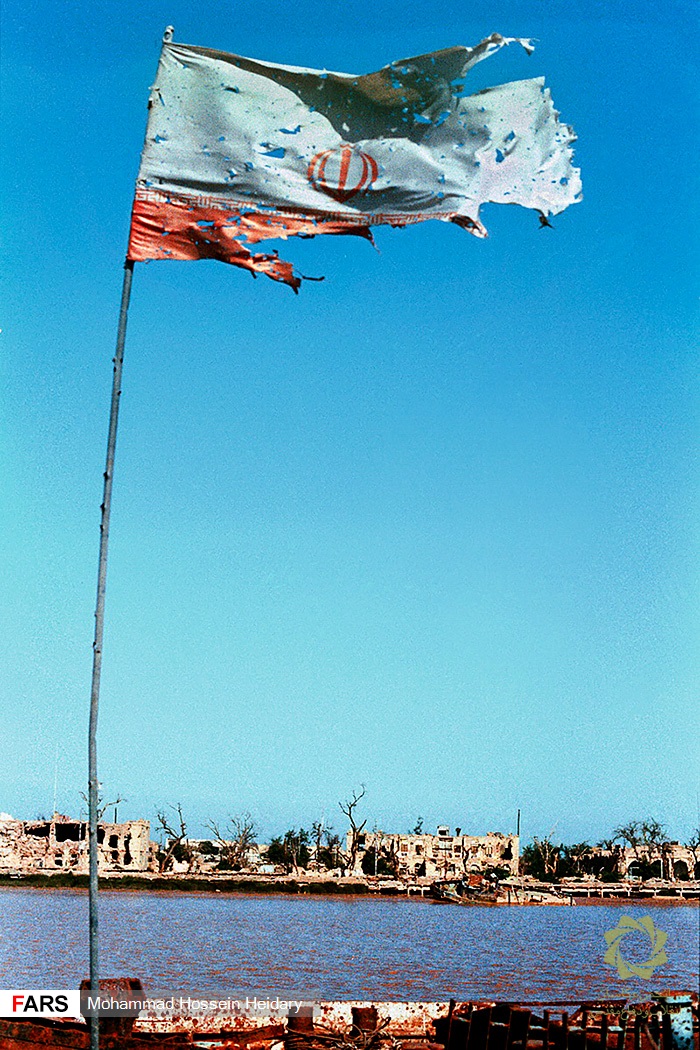
The Mullahs Have Not Grown Stronger — Europe’s Miscalculation Toward Tehran
Over the past four decades, Western policy toward Iran has almost always oscillated between two options: either attempting to change the regime’s behavior through negotiations, concessions and appeasement, or resorting to war.
After the recent war, this cycle is repeating itself. On the one hand, global concern is growing over the security of the Strait of Hormuz, the nuclear program and regional instability. On the other, there is renewed talk of negotiations and “crisis management.” Yet the reality is this: both approaches have failed the test of time. Neither has the policy of appeasement moderated the Iranian regime, nor has war been able – or can it ever be able – to resolve the Iran question. This is precisely the point at which Europe must rethink its strategy.
Today, the Islamic Republic is not only holding the Iranian people and the rule of law hostage inside the country; in effect, it is also holding the security of the region and parts of the global economy hostage. The threat to close the Strait of Hormuz is not merely a temporary tactic. It is part of the survival logic of a regime that uses external crises to compensate for its internal crisis.
Iran did not grow stronger for having survived
One of the most dangerous misreadings of recent months is the claim that the Iranian regime has become stronger because it survived the war.
This narrative is being deliberately promoted by Tehran. Some voices in the West have also adopted it. The logic appears simple: the Islamic Republic suffered heavy military blows, its regional position was weakened, numerous commanders were eliminated — and yet the regime did not collapse. Therefore, it must be more resilient and stronger than previously assumed.
But the reality is exactly the opposite. External displays of power cannot conceal the internal crisis of legitimacy. The Islamic Republic is today facing the deepest social, economic and political crisis in its history. None of the crises that led to the uprisings of 2018, 2019, 2022 and 2026 has been resolved: economic collapse, the depreciation of the national currency, structural corruption, the water and energy crisis, the oppression of women, massive unemployment, and the deep gulf between state and society. Through its nationwide uprisings, the Iranian people have already demonstrated the end of the legitimacy of the entire political system.
Strategically, too, the regime has been weakened. The recent war has further deepened internal rifts, the succession crisis, the erosion of the repressive forces, and the contradictions among the ruling power factions. Even an agreement with the United States would not resolve the regime’s real crisis. For the core problem is not the nuclear file, but the crisis of legitimacy and the explosive discontent of Iranian society.
Victors do not hurriedly execute political opponents
That is why the latest wave of political executions is of particular significance. If a regime speaks of “victory,” why is it executing political opponents with such haste? Since March 19, 32 political opponents have been executed. Eight of them were members of the opposition organization, the People’s Mojahedin (MEK). The others were mostly demonstrators from the 2026 uprising. The answer is clear: these executions are not a sign of strength, but of fear.
The leadership knows very well that the main danger is not an attack from outside, but the possibility of an internal uprising. What the regime fears most is the existence of an organized force inside the country capable of guiding and organizing protests. This is precisely where the false alternative of “appeasement or war” collapses.
For there is a third solution: change from within Iranian society. Regime change is an unavoidable prerequisite for freedom in Iran and for peace in the region. This change will be achieved neither through bombardment nor through deals with those in power. Its force exists inside Iran itself: in the protesting society, in the younger generation, among women, in social strikes, and in the organized resistance that the regime is trying to destroy with all its might.
A domestic opposition
The Ten-Point Plan of Maryam Rajavi, the President-elect of the National Council of Resistance of Iran (NCRI), stands for free elections, the separation of religion and state, equality, the abolition of the death penalty, and a non-nuclear Iran. It refutes the propaganda that a political vacuum would follow regime change. There is a democratic alternative – beyond religious tyranny and monarchical dictatorship. Europe must acknowledge this reality.
Beyond this, the Iran question has an immediate security dimension for Europe. The regime has long since ceased to confine its repression within its own borders. European institutions and security services have repeatedly warned of transnational repression, networks of intimidation, and operations against opposition figures on European soil. The European Union, too, has imposed sanctions several times for this reason and pointed to the threat to European security interests.
In this context, the international mega-rally in Paris on June 20 takes on particular significance. More than 100,000 participants are expected. Its importance lies not only in its size. What matters is its political message: the Iran question must not be reduced to a choice between war and dictatorship. Many Iranians want democratic change and expect the international community not to ignore this aspiration.
Europe’s greatest mistake today would be to confuse the regime’s apparent stability with real strength.
This article was originally published by RealClearDefense and made available via RealClearWire.
Franz Josef Jung is a former German Federal Minister of Defense. He was also Deputy Chairman of the CDU/CSU parliamentary group in the German Bundestag, with responsibility for foreign policy.